
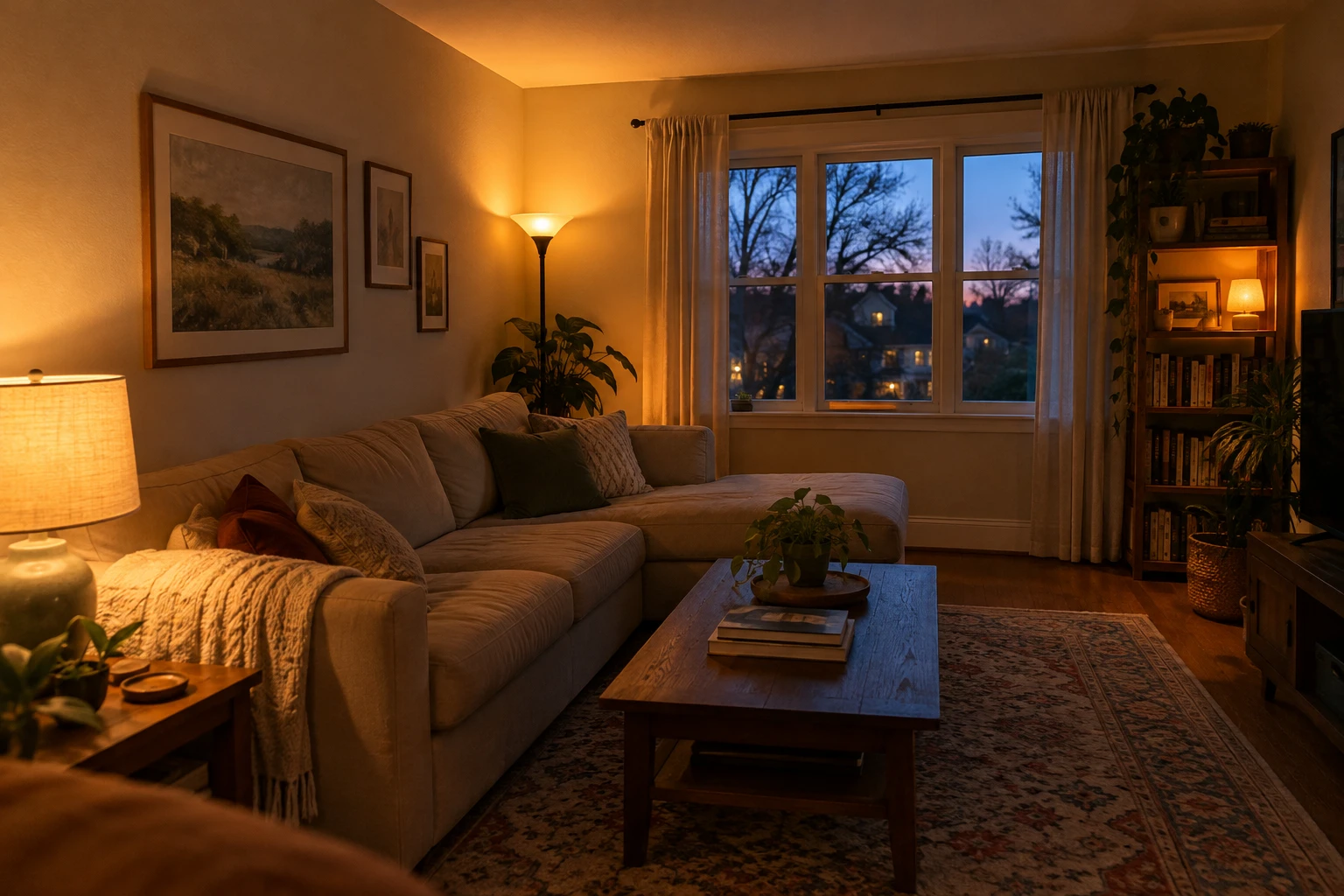
If your living room feels flat at night, the furniture probably isn’t the problem. The light is coming from the wrong place. These cozy living room lighting ideas fix the usual culprits: a harsh ceiling light, a corner that disappears after sunset and a lamp that shines straight into your eyes. Move the brightest light away from overhead and the same room feels warmer right away.
The most useful step costs nothing, and you can do it tonight. Turn off the ceiling light, switch on every lamp you own and sit in your usual seat. Notice where you can read comfortably, where the TV reflects a bulb and where someone would walk through shadow. That tells you what to fix first.
This article contains affiliate links. As an Amazon Associate I earn from qualifying purchases.
1. Give the room more than one source of light
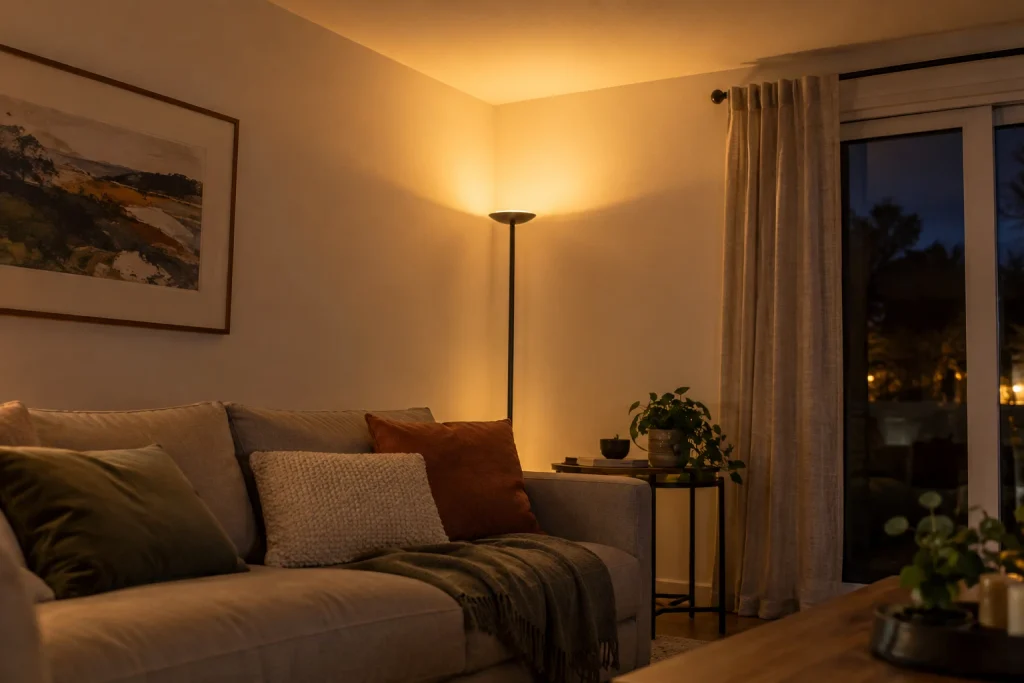
A single bright fixture forces every activity to share the same light. Watching TV, finding a lost earring and reading a paperback need different things. Layered lighting gives you choices:
| Layer | Its job | Examples |
|---|---|---|
| Ambient | General light for moving around safely | Ceiling fixture, floor uplight bounced off the ceiling |
| Task | Focused light for reading or hobbies | Adjustable floor lamp or table lamp beside a seat |
| Accent | Soft light that adds depth and atmosphere | Small shelf lamp, picture light, lamp in a corner |
You don’t need three new lamps; the ceiling light, one reading lamp and one small table lamp may already cover all three. If you buy one new lamp, I’d make it an uplight. For broad, indirect light, the Brightech Sky LED floor lamp (paid link) is a good fit. Its upward-facing design suits a corner where light can bounce off the ceiling. Measure your corner for the base before ordering.
Spread lamps around the room. If every lamp sits along one wall, the opposite side still looks flat. Try one near the sofa and another diagonally across the room, and keep enough light near doorways and steps to move safely.
2. Match the light color before adding decorations
Mixed bulb colors make a room feel disjointed. One bluish lamp next to one amber lamp creates an obvious split, especially against white walls. Check the color temperature on the bulb package, measured in kelvin (K):
- 2200K–2700K: very warm, candle-like glow; good for accent lamps.
- 2700K–3000K: warm white, a common choice for relaxed living rooms.
- 3500K–4000K: neutral to cool; better suited to kitchens, offices and task work.
Mismatched bulbs are one of the most common reasons a room looks “off” at night, so match the lamps you use together in the evening. A work lamp can be different if you only switch it on for a task. A bulb with a color rendering index (CRI) of 90 or higher makes skin tones, wood and fabrics look more natural. Before buying bulbs, confirm the socket type, the fixture’s maximum wattage and whether a dimmer needs a dimmable bulb. Integrated LED lamps may not take replacement bulbs at all.
3. Put useful light beside the seat you actually use
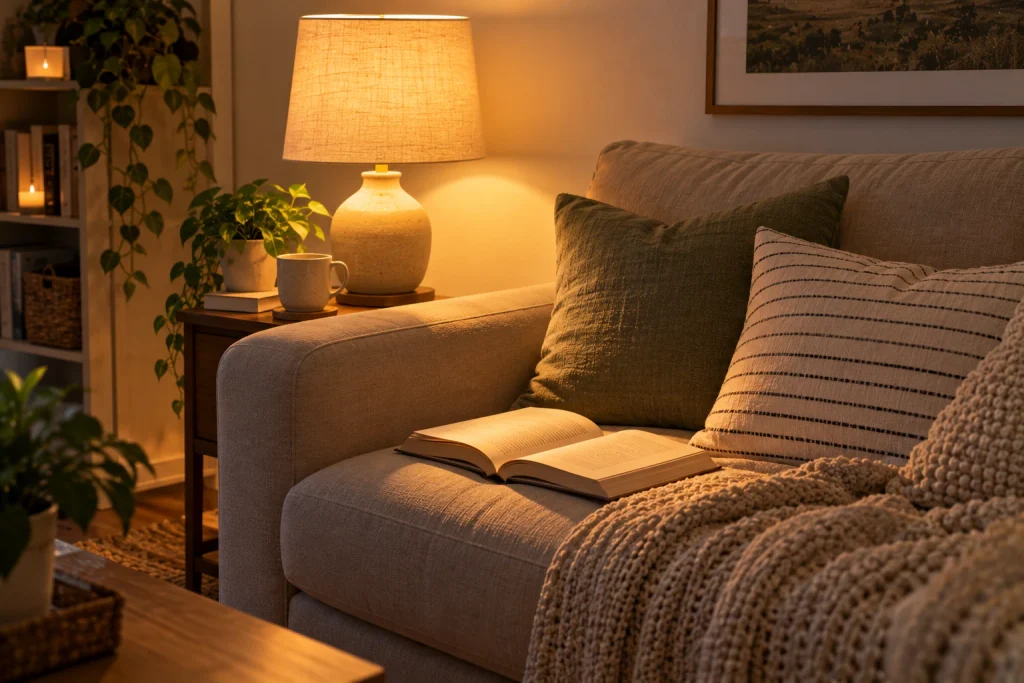
A beautiful lamp across the room won’t help much when you read on the sofa. Put the task light where it reaches your book without making you lean forward. A reading lamp around 800 lumens, roughly the output of an old 60-watt bulb, is plenty for most people.
Test the position while seated. The shade should hide the brightest part of the bulb from your normal viewing angle; if you can see a bare bulb while relaxing, move the lamp or change the shade before swapping to a weaker bulb. For a table lamp, the bottom of the shade near shoulder height when you’re seated usually works well.
In a small room, a slim floor lamp can replace a side table that only exists to hold a lamp. Keep its base out of the walkway and make sure the cord reaches an outlet without crossing the floor. These reading nook ideas show how to set up a book surface around a seat you already use.
4. Use a dark corner to create depth
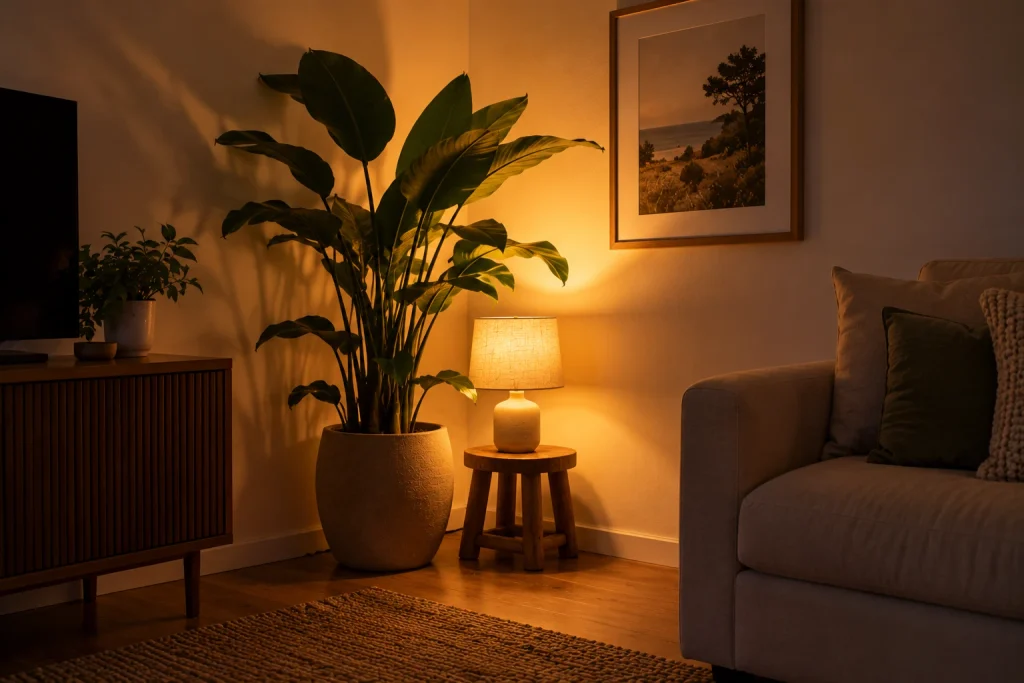
A corner doesn’t need a big plant, a chair and a stack of objects to feel intentional. Often it just needs light on the wall behind what’s already there. That light separates furniture from the background and makes the room feel larger.
Move an existing lamp a few inches at a time and watch the wall, ceiling and shadows it creates. An uplight works differently on a pale ceiling than a dark one, and a shaded lamp casts a smaller pool. Keep the corner simple while you experiment: one framed print or plant shows off the light. Good lighting makes everything more visible, including clutter you’d rather put away.
If the sofa still feels heavy after you move the light, these brown sofa styling ideas suggest gentler colors for the surrounding room.
5. Let daylight stay soft and usable

Cozy lighting isn’t only about evenings. A room can feel gloomy all day if heavy curtains still cover part of the window when open. Mount the rod a little wider than the window so the panels pull fully clear of the glass, and clean the windows before adding another light.
For a softer daytime layer, a linen-look sheer is my go-to suggestion. H.VERSAILTEX Natural Linen Blended Semi Sheer Curtains (paid link) are one to look at. The linked listing is a two-panel, 84-inch-long version; measure your own window and rod height first. Sheer panels filter light but don’t give much privacy at night, so you may need a blind or lined curtain as well. Keep fabric away from heaters.
6. Reduce TV glare before buying another lamp
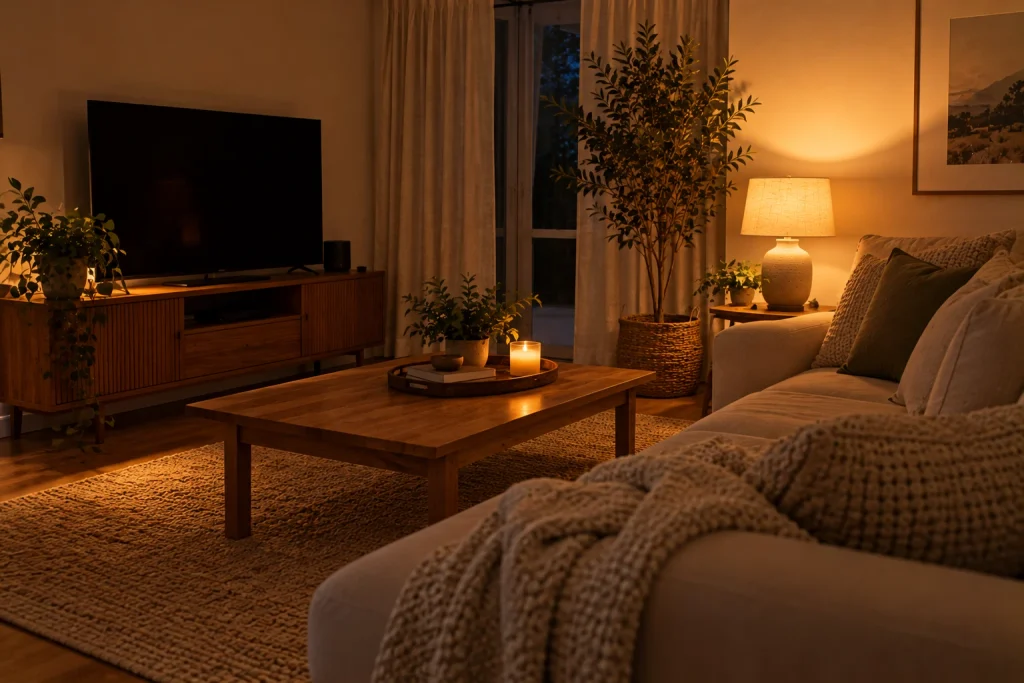
A bright reflection can make an otherwise comfortable room frustrating. Sit where you normally watch and put on a dark scene; reflections are much easier to spot on a dark screen. Then try three positions for the offending lamp: where it is now, a little to one side, and further behind the seating. Keep the one with the smallest reflection that still lights the room enough to walk through.
The best evening setup often puts lamps beside or behind the sofa rather than opposite the screen. A low, warm light behind the TV can also reduce the contrast between a bright screen and a dark wall. If several people watch together, sit in every seat.
7. Make the evening setup easy to repeat
If making the room cozy means reaching behind three cabinets, you’ll stop doing it. Keep lamp switches easy to reach, or use plug-in smart plugs or a remote switch so several lamps turn on together. Choose a simple routine: ceiling light off, two lamps on, dimmer down later in the evening.
For renters, portable lamps are the easiest upgrade because they don’t involve the ceiling fixture. Ask permission before changing wiring, don’t overload outlets and never run cords under rugs. Finally, photograph the room from the doorway in daylight and after sunset. Look for one bright hotspot, one too-dark area and any visible cords, and fix those before buying accessories. If a lamp base crowds the walkway, these small living room layout ideas help you rethink the furniture footprint.