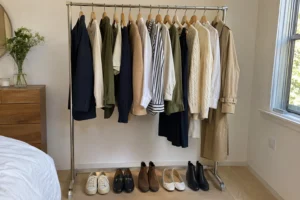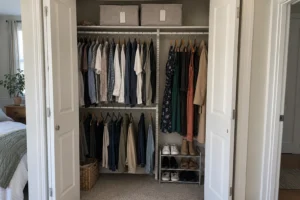

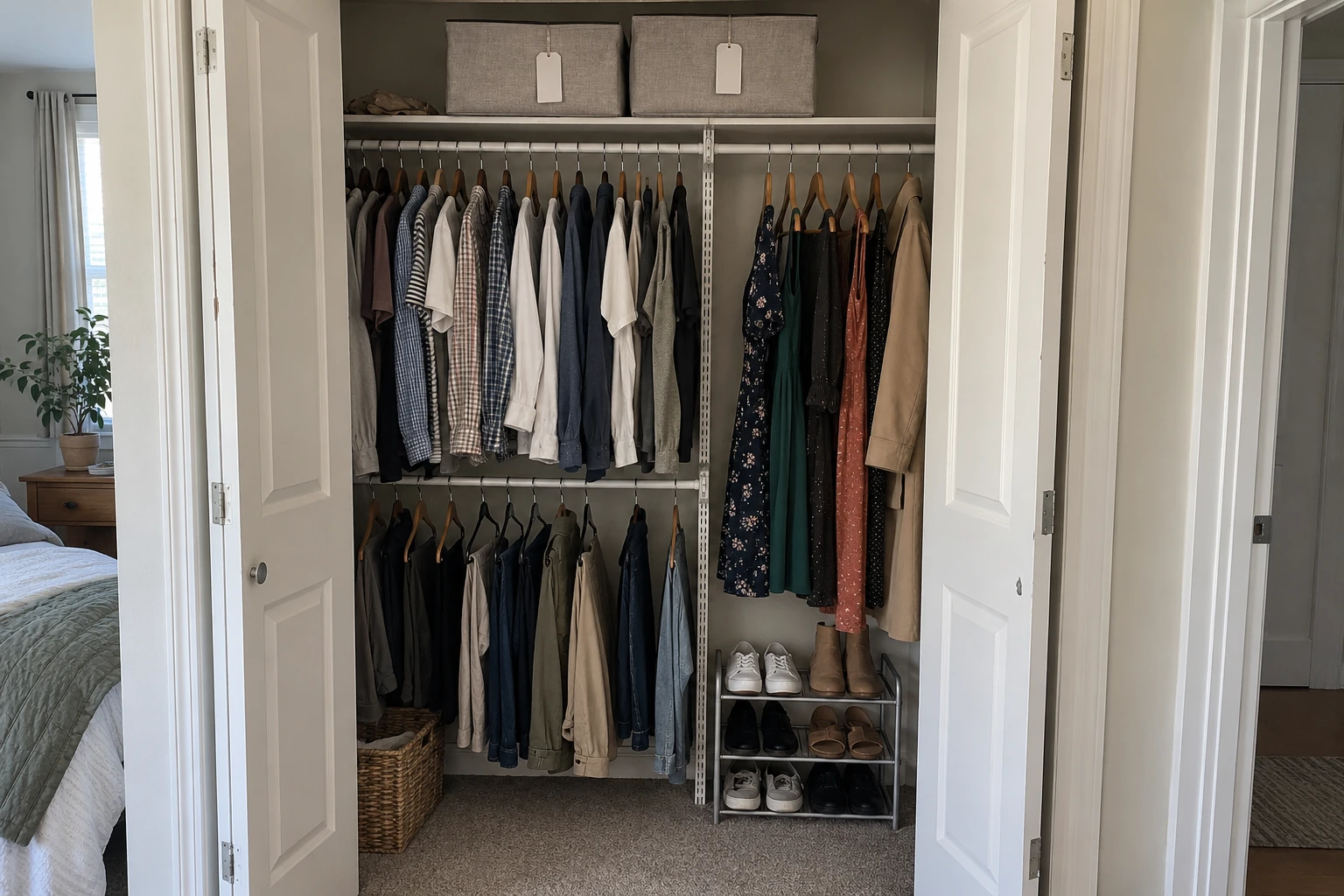
A small closet usually fails for one of two reasons. Either the rod sits at the wrong height for the clothes you own, or the shelf above it is so deep and high that whatever goes up there disappears. Buying more organizers rarely fixes either problem. Measuring does.
This guide walks through the few measurements that matter, standard rod and shelf heights in inches and centimeters, and renter-friendly ways to add hanging space without rebuilding anything. Use the numbers as a starting point and adjust them to your clothes and your height.
Start with three measurements
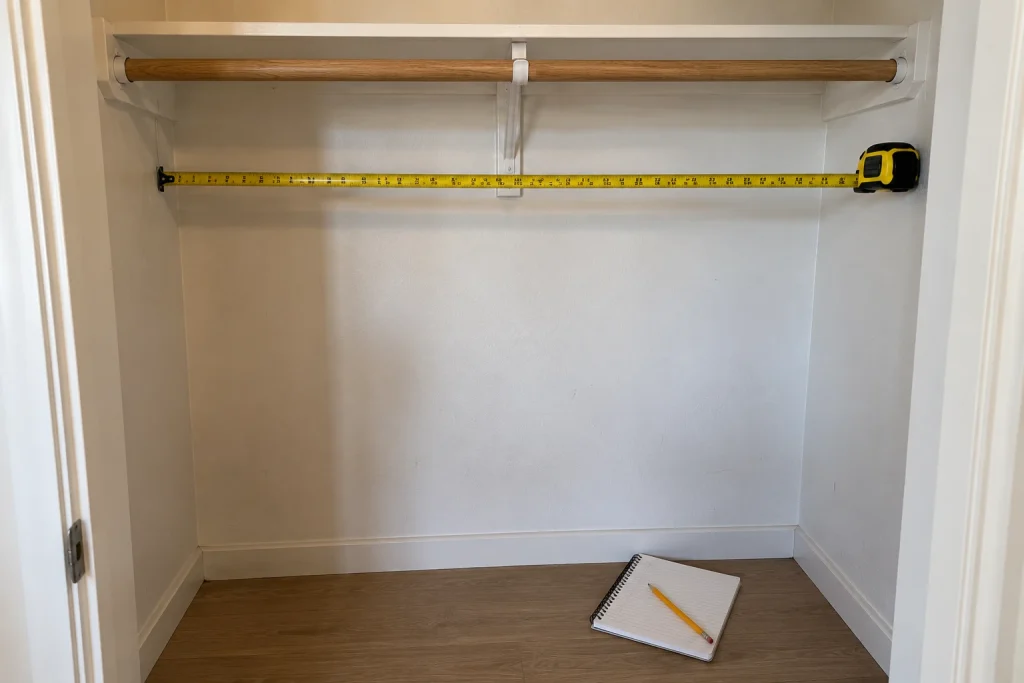
Before you move anything, measure the empty closet and write the numbers down:
- Width: wall to wall, at the height of the current rod.
- Depth: back wall to the inside edge of the door frame. For sliding doors, measure to the door itself when it is closed.
- Height: floor to the underside of the existing shelf, and floor to the ceiling.
Depth is the number that decides the most. A standard adult hanger is roughly 17 inches (43 cm) wide, so clothes on a rod need about 22 to 24 inches (56 to 61 cm) of depth to hang without brushing the back wall or catching on the door. If your closet is shallower than that, skip ahead to the section on shallow closets before buying anything.
Also note the door type. Sliding and bifold doors block part of the opening, so only one side is easy to reach at a time. Keep the clothes you wear most behind the door you open most.
Sort what you hang by length
The length of your clothes decides whether you can add a second rod. Group everything you hang, then measure the longest piece in each group from the top of the hanger hook to the hem. Typical ranges look like this, but your own numbers are what count:
| Clothing group | Typical hanging length | What it needs |
|---|---|---|
| Shirts, blouses, trousers folded over a hanger | 30–40 in (76–102 cm) | Fits on an upper or lower rod in a double-hang section |
| Jackets and blazers | 32–42 in (81–107 cm) | Usually fits a double-hang section; check the longest one |
| Trousers hung full length | 44–52 in (112–132 cm) | Needs a medium or long-hang section |
| Dresses and long coats | 50–64 in (127–163 cm) | Needs a single, full-height rod section |
Next, check how much rod each group uses. Push a group together loosely, the way it hangs normally, and measure its width. If the long pieces only take up 12 inches (30 cm) of rod, you can give the rest of the width to a double-hang section.
Standard rod and shelf heights
These common heights work for most adults. If someone shorter uses the closet every day, lower the top rod and shelf to suit them.
| Setup | Typical height from the floor |
|---|---|
| Single rod | 64–68 in (163–173 cm), with a shelf just above |
| Double hang, upper rod | 80–84 in (203–213 cm) |
| Double hang, lower rod | 40–42 in (102–107 cm) |
| Rod distance from back wall | About 12 in (30 cm), so hangers sit centered |
| Space between shelves for folded clothes | 10–12 in (25–30 cm) |
A rod longer than about 48 inches (122 cm) can start to sag under a full load, especially with heavy coats. A center support bracket prevents that, but it means drilling, so ask your landlord first if you rent.
Add a second rod without drilling
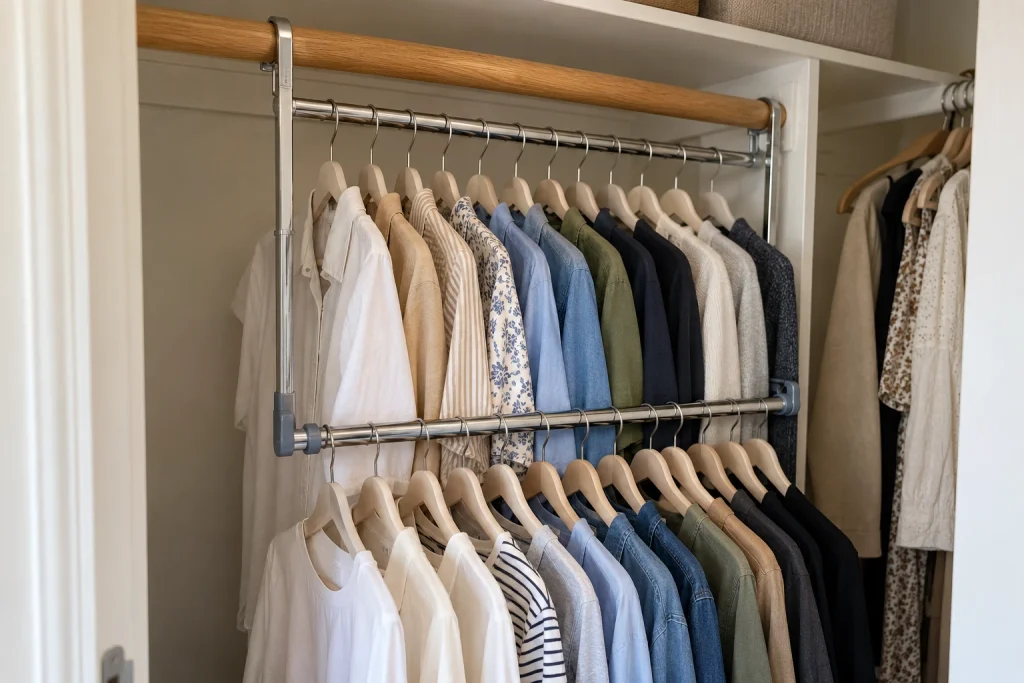
A hanging closet rod, sometimes sold as a closet doubler, hooks over the existing rod and hangs a second rod below it. Most are adjustable, so you can set the lower rod at the height your shirts need. It is the easiest way to turn a single-hang closet into a double-hang one in a rental.
Keep two limits in mind. The original rod and its brackets now carry both rows of clothes, so use it for shirts and light jackets, not heavy coats. And it works best on a short section of rod, or on a rod with a center support, rather than across a long unsupported span.
In a narrow closet with solid side walls, a tension rod can create a second rod instead. Choose one rated for the width and the weight, hang a few light items first, and check that it stays level before loading it fully.
Make the top shelf usable
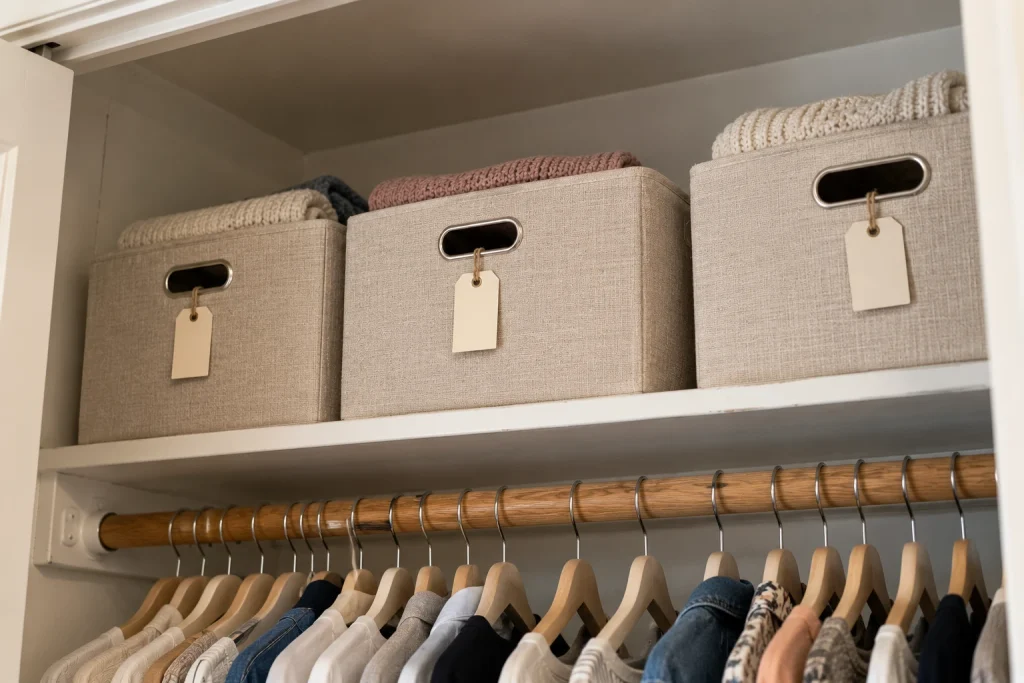
A deep, high shelf turns into a pile because you cannot see the back of it. Bins solve this if you choose them carefully. Pick lightweight bins with a handle or cutout on the front so you can slide them down without lifting them blind, and label the front edge so you know what is inside from the floor.
Use the top shelf for things you need a few times a year: off-season clothes, spare bedding, bags. Keep heavy things off it entirely. A box of books overhead is a real risk when you pull it down from a step stool.
For folded sweaters and jeans, simple shelf dividers keep stacks upright so they don’t slide into each other. Stacks of about 8 to 10 inches (20 to 25 cm) are easier to pull from than tall towers.
Use the floor and the door
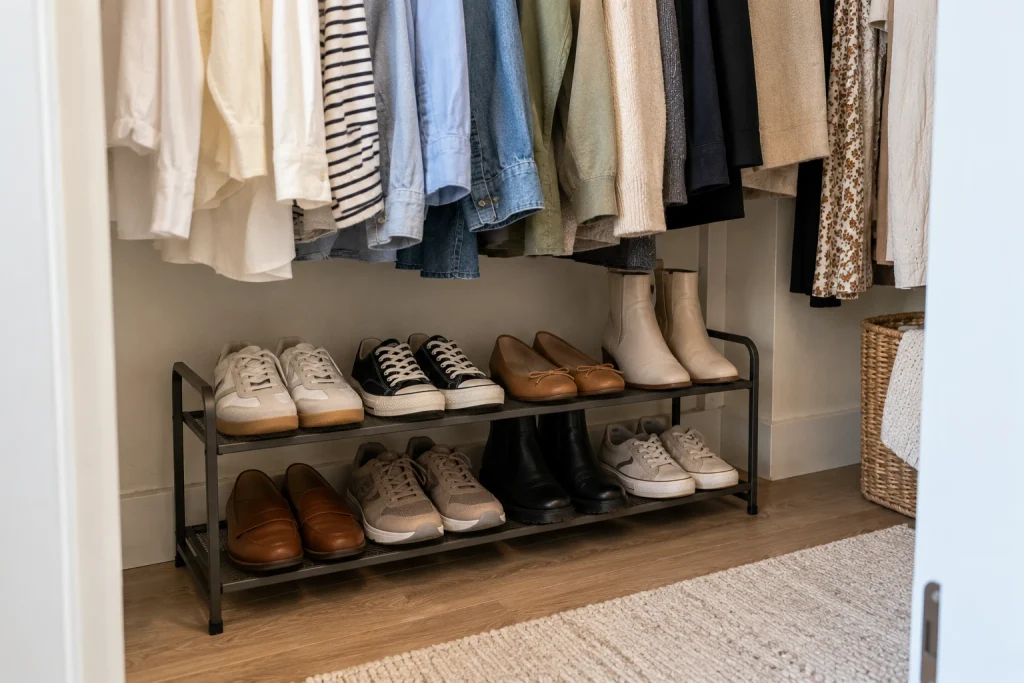
The floor under a double-hang section is open space. A low two-tier shoe rack fits there neatly, as long as it is shorter than the gap under your lower rod’s hems. Under long dresses and coats, keep the floor clear or use only very low storage so hems don’t crease.
An over-the-door hook rack can hold bags, scarves, belts or tomorrow’s outfit. Close the door slowly after fitting it to check that nothing catches on the frame or the clothes inside. Heavy coats on a door add strain to the hinges, so keep the door for lighter items.
If your closet is shallow
Closets shallower than about 22 inches (56 cm) are common in older apartments and hallways. Hangers end up angled or rubbing the door, and clothes get creased. You have two practical options.
The first is to treat it as a shelf closet. Fold most clothes onto shelves or a freestanding shelving unit, and hang only the few things that must be hung on hooks. The second, if your lease allows it, is to remove a bifold door and use a curtain on a tension rod instead. A curtain bends around the hangers, so clothes no longer catch on a hard door.
Keep it working with a monthly reset
Once the closet is set up, ten minutes a month keeps it that way:
- Return everything to its own section, long pieces with long pieces.
- Put anything you haven’t worn in a season into an “out” bag by the door.
- Check that the rods and any doubler are still level and not sagging.
- Pull down the top-shelf bins and make sure the labels still match what’s inside.
If the bedroom itself feels tight, these small bedroom layout ideas help you plan furniture around the closet door. For coats and bags that never make it into the closet, try these narrow entryway ideas.