Give a small living room more breathing room with a clear walkway, furniture that fits, and storage close to where clutter collects. These small living room ideas help you create a comfortable space with room for everyday life.
This article contains affiliate links. As an Amazon Associate I earn from qualifying purchases.
1. Arrange the seating around one main activity
Choose the activity that shapes most evenings in your living room. For watching television, give the main seats a comfortable view of the screen. For conversation, angle the seating toward each other. A reading corner needs a useful light beside a comfortable chair.
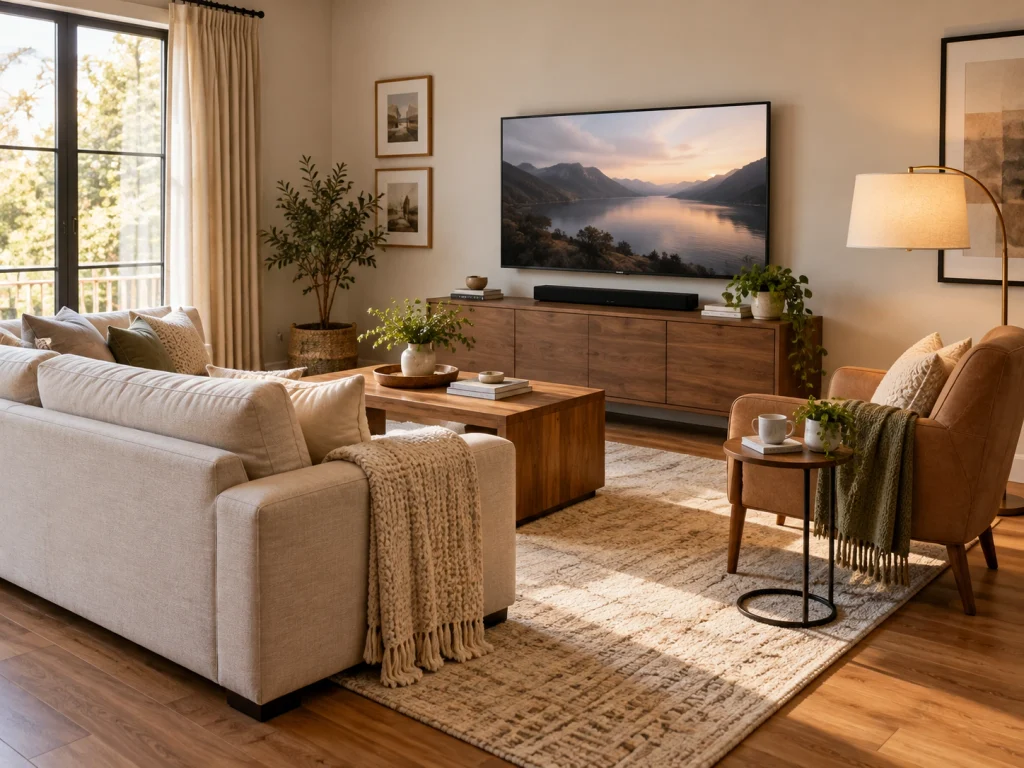
Keep occasional activities flexible. A small movable table can hold a laptop. A dining chair can provide another seat when friends visit. Avoid buying permanent furniture for situations that happen only a few times a year.
Start with the sofa and your most-used chair. Place those first. Add other pieces only after checking how the room feels during a normal evening.
2. Keep a clear path through the room
Follow the route from the entrance to the sofa, windows, and adjoining rooms. Move furniture that forces you to turn sideways or step around a corner. Check the route with cabinet doors open and someone sitting in the nearest chair.
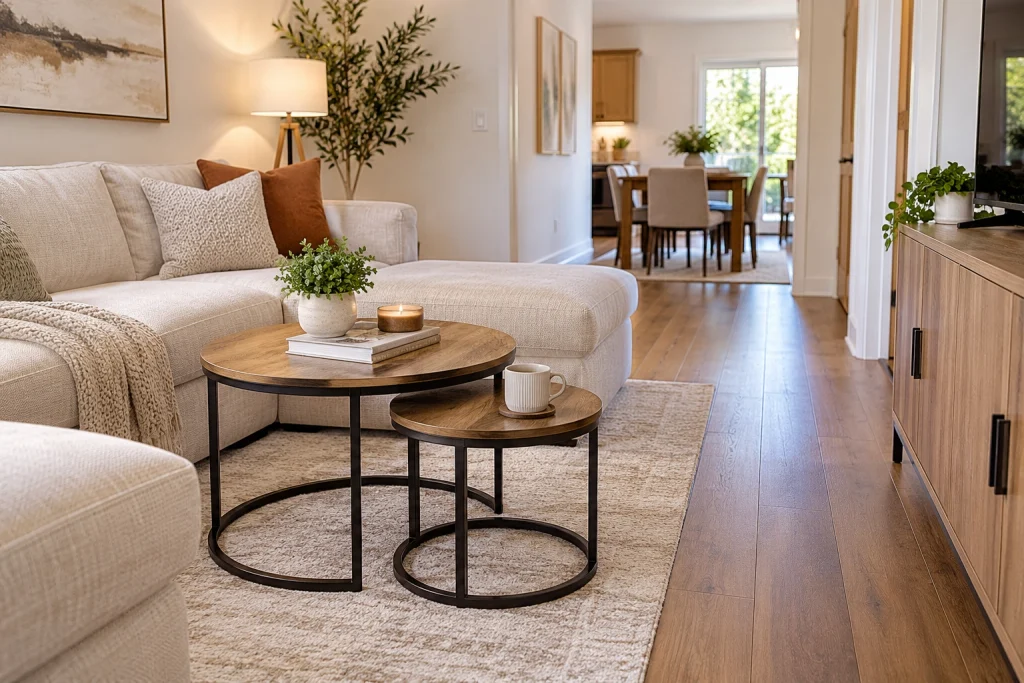
In a narrow living room, placing the sofa along the longer wall can leave a more direct route through the space. In another layout, shifting a chair away from the doorway may be enough. Let the position of your doors guide the arrangement.
Test a new furniture footprint with paper before ordering. Include the space needed to open drawers. Walk past it while carrying a laundry basket to check the everyday fit.
3. Choose a sofa with useful seating space
Look beyond a sofa’s overall width. Wide arms can take up room without adding seating. Deep cushions can suit lounging but leave less floor space in front. Compare the seat depth and arm shape with a sofa you already find comfortable.
A compact sofa with narrow arms can be a practical choice for a small apartment living room. A sectional may still work when its shape fits an unused corner. Avoid choosing either format based on the label alone.
Measure the delivery route before buying. Include stair turns, elevator openings, and the apartment doorway. Check whether the legs or other parts can be removed during delivery.
4. Swap a bulky coffee table for smaller surfaces
A large coffee table can dominate the space between your seats. Two smaller tables let you place a surface where each person needs it. A single side table may be enough if you mainly need somewhere for a drink and a book.
A pair of small round tables (paid link) can sit together or serve different seats. Round tops remove sharp corners from the layout. Check their full diameter against the available floor space before choosing a set.
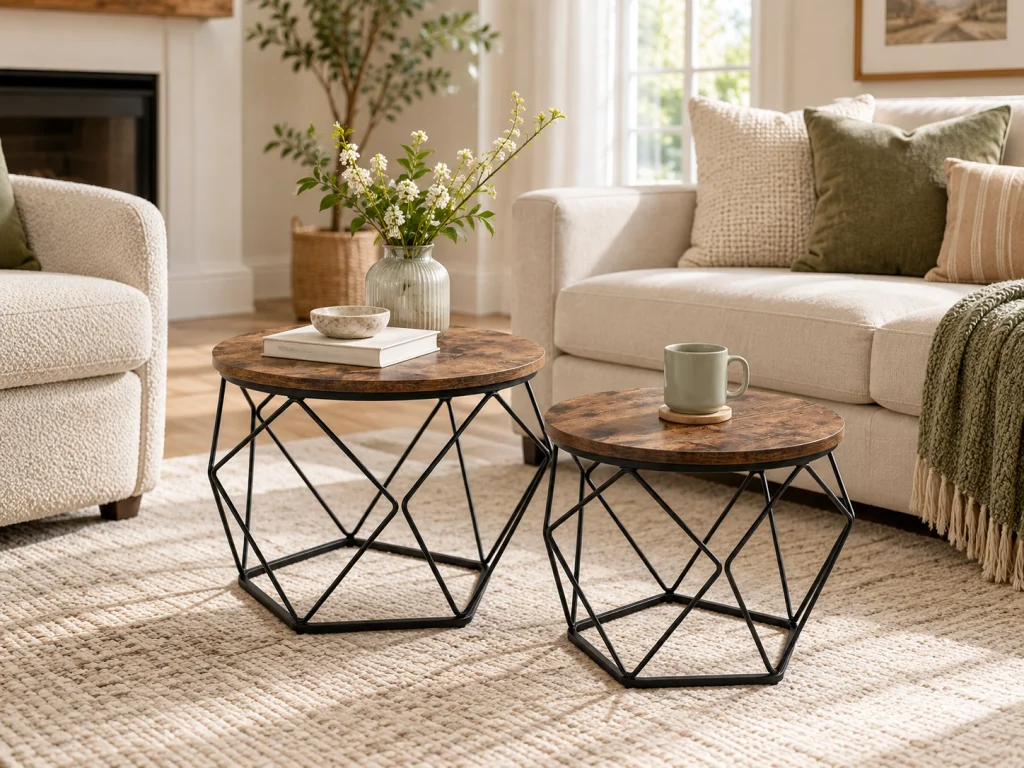
Keep table height comfortable for reaching from the sofa. Try the position with your usual mug or laptop. Leave enough surface clear for everyday use instead of filling it with accessories.
5. Put hidden storage where clutter collects
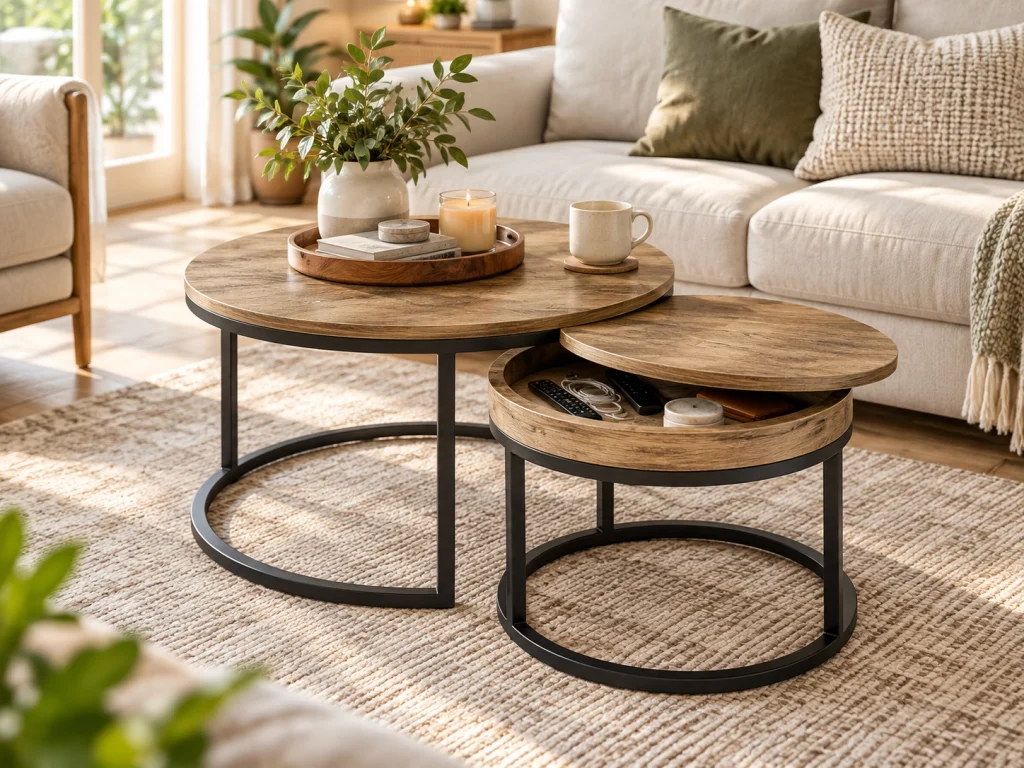
Give remotes, chargers, and other small items a home close to the sofa. A storage solution across the room may be ignored during a busy evening. Choose something you can open and close without moving another piece of furniture.
These nesting tables with hidden storage (paid link) include a compartment in the smaller table. Consider this style if you need a useful surface and somewhere to tuck away small belongings. Compare its dimensions with your layout before replacing your current table.
Use a separate basket for throws or larger items. Leave space inside for a quick return after use. A tightly packed container often creates a new pile beside it.
6. Size the rug around your seating
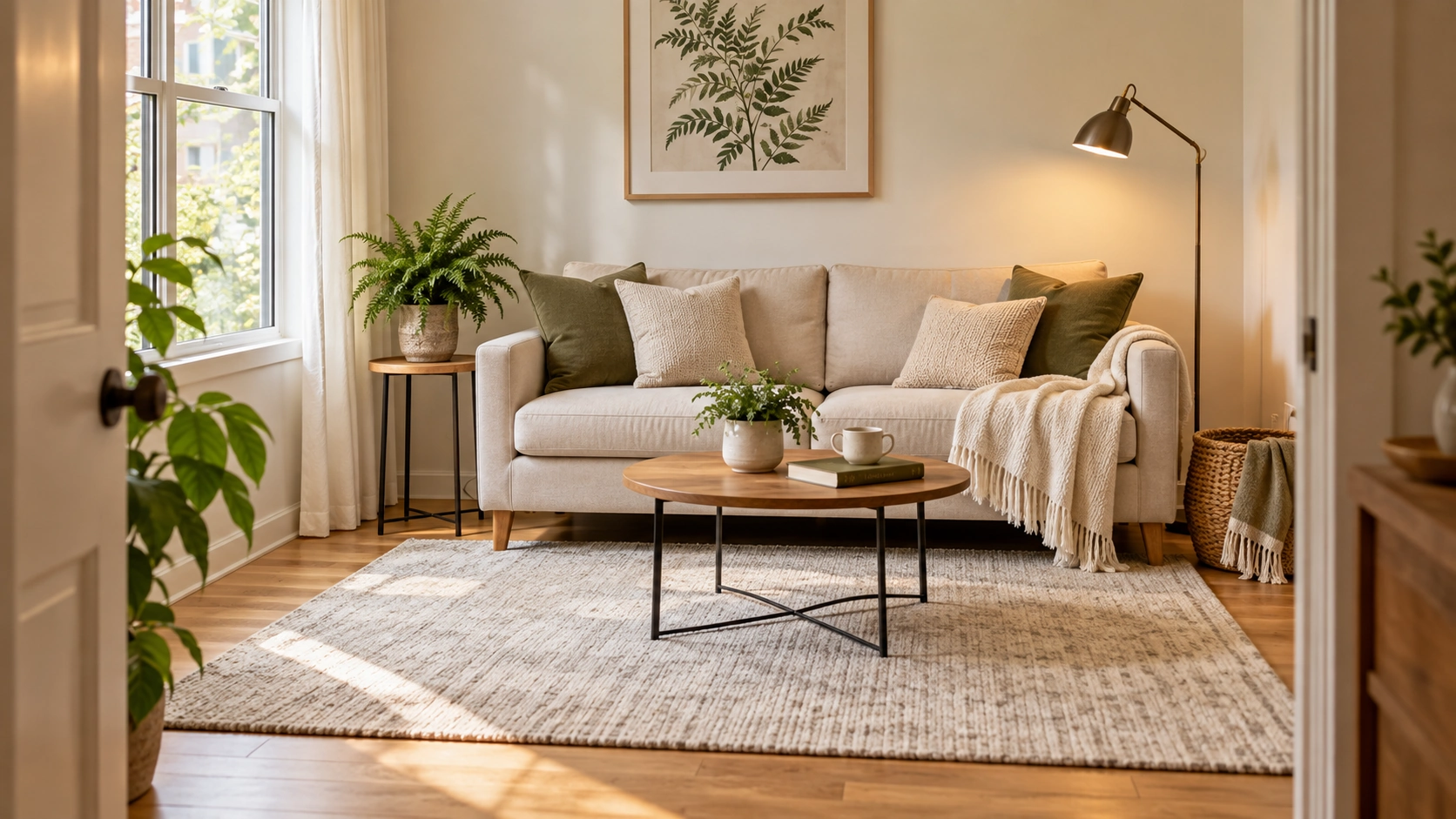
A rug can bring the sofa, chair, and table into one seating area. Measure that arrangement before choosing a rug size. Try placing the front legs of the main seats on the proposed rug area to see whether the group feels connected.
Mark the corners with paper. Check door clearance and nearby furniture. The rug should fit the way you move through the room as well as the way the seating looks from the entrance.
Choose a quieter pattern when your sofa or curtains already have a strong print. Consider pile height and cleaning needs too. Use a suitable rug pad for your flooring where recommended.
7. Add lighting beside the seats you use
A ceiling light may leave the reading chair in shadow. A table lamp beside the sofa can make that seat more useful after dark. Position the light while sitting down to check for glare and awkward shadows.
A slim floor lamp can work beside furniture when there is no room for another table. Measure its base and the reach of its shade. An oversized arc lamp can occupy more space than expected.
Keep switches within comfortable reach. Route cords away from walkways. Choose the fixture and bulb for the task, especially when the seat is used for reading or detailed hobbies.
8. Give the walls one clear focal point
One larger artwork can give a small living room a stronger focal point than several unrelated decorations. A group of personal photos can work just as well. Arrange the frames on the floor first to judge their spacing.
A mirror is useful when its reflection adds something pleasant. Check the view from the sofa before hanging it. A reflection of a crowded shelf can make the room feel busier.
Use shelves for a limited collection of books or favorite objects. Leave gaps between groups. Secure shelves and mirrors with appropriate hardware for the wall and the item’s weight.
9. Let curtains open without crowding the window
Choose curtain dimensions from the window and the intended rod position. Allow room for the panels to move aside where the wall space permits. Check whether furniture prevents them from opening fully.
Light-filtering curtains can soften daylight when privacy needs allow. A room with strong television glare may need a more effective light-control option. Watch the window at the times you normally use the living room before selecting fabric.
Keep hems from collecting in a busy walkway. Follow clearance guidance around heaters. Choose a fabric you can maintain easily, especially beside a door or a pet’s favorite resting place.
10. Repeat a few colors across the room
Use the sofa, rug, or a favorite artwork as the starting point for your colors. Repeat one or two accent shades in smaller pieces. Olive cushions might connect with a botanical print. A cream lamp shade can echo a lighter detail in the rug.
Keep useful personal items in the arrangement. A familiar photograph or a well-loved blanket gives the room character without requiring another shopping trip. Remove accessories that repeatedly get pushed aside during normal use.
Make one change at a time. Try the new layout for a few evenings before buying anything else. Keep the pieces that make sitting, reading, and moving through your small living room easier.