
You probably don’t need a reading chair. You need better light next to the seat you already use. These reading nook ideas for small spaces work at the end of a sofa, in bed or around a chair by a window, and the biggest upgrade in all three is the same: a lamp in the right spot.
Pick the spot where you already end up with a book, then use the setup below.
This article contains affiliate links. As an Amazon Associate I earn from qualifying purchases.
What every reading nook needs
A good reading spot comes down to four things. Get these right before thinking about decor:
| Element | What to aim for |
|---|---|
| Light | A lamp that lights the page from beside or slightly behind you, without shining in your eyes |
| Light color | Warm white around 2700K–3000K for evenings; a bulb around 800 lumens (similar to an old 60-watt bulb) is plenty for most reading lamps |
| Surface | A table within easy reach, about level with the sofa or chair arm |
| Support | One cushion or pillow that supports your back or neck |
That’s the whole kit. If you’re tempted by a dedicated reading chair, I’d spend that money on a good lamp first.
1. Make one end of the sofa your reading corner
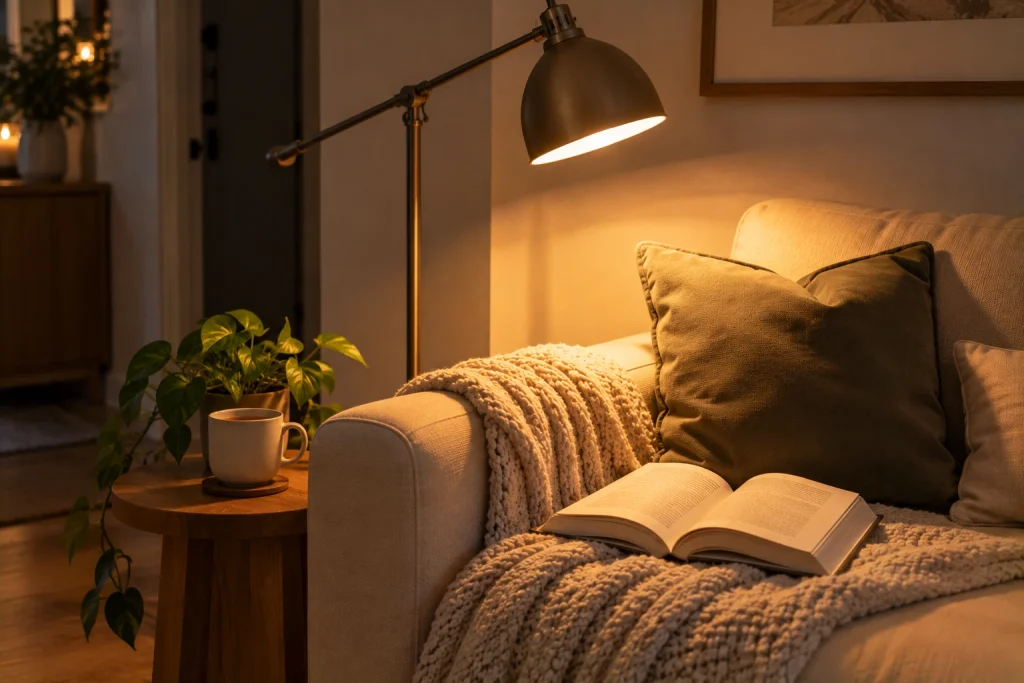
Of the three nooks here, this is the one I’d start with. Most living rooms rely on a ceiling light that leaves the sofa in shadow, and an adjustable reading floor lamp (paid link) fixes that by putting light right on the page. The linked Brightech Litespan 2nd Edition offers selectable light tones and a built-in dimmer. Measure the floor space for its base first.
Set up the lamp while sitting in your usual reading position:
- Place it beside or slightly behind your shoulder, so light falls over your shoulder onto the book.
- Angle the head so you can’t see the bulb from where you sit; glare tires your eyes faster than dim light.
- Test it after dark, when the room’s other lights are low.
Keep the lamp base and cord out of the walkway. Use an existing side table for your book and drink. If the coffee table is already within easy reach, you may not need another surface at all. Before buying one, reach for your mug from the seat. If you have to twist or lean across the sofa, move the table you have closer, or pick a side table roughly level with the sofa arm.
Add one supportive cushion, and a throw only if you like having one nearby. The sofa should still be easy for others to share. To give the corner its own feel, repeat one color in the cushion and a nearby book cover or print rather than decorating it in a completely different style from the rest of the room.
For more detail on lamp position and glare, these cozy living room lighting ideas walk through placement in the whole room.
2. Create a bedroom reading nook without extra furniture
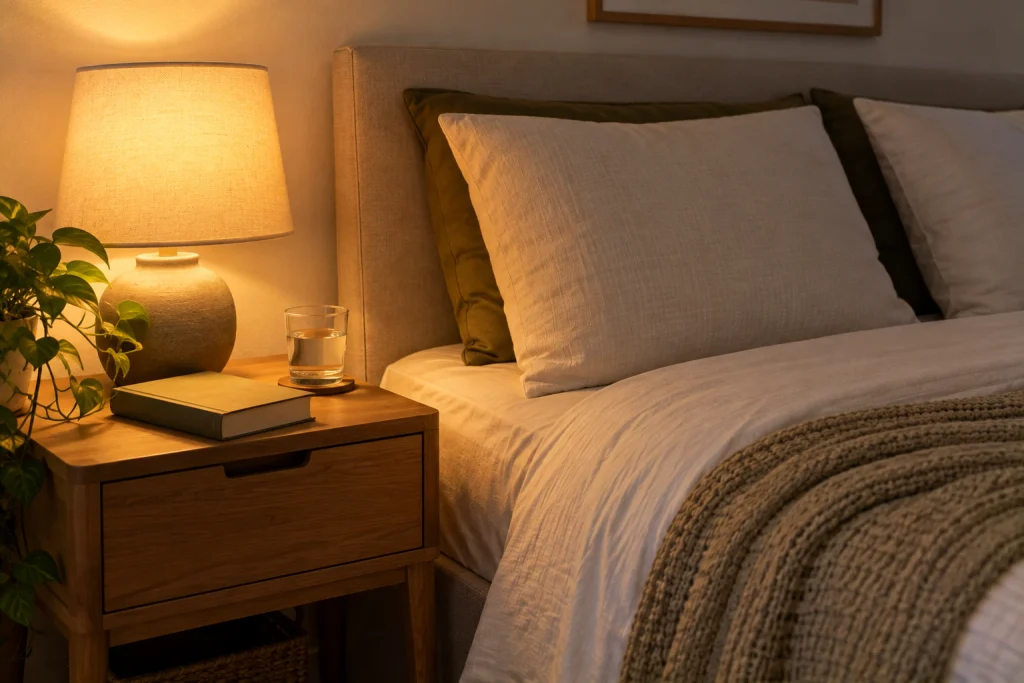
Reading in bed needs the least setup of all, which is why I think it’s the most underrated nook. Clear enough of the nightstand for the book you’re reading now, a glass of water and your glasses. Move finished books to a shelf; a tall stack crowds out practical items and makes the surface harder to use.
Try the existing bedside light first. You should be able to reach the switch without getting out of bed. If someone sleeps beside you, check where the light falls from their side too. A lamp with a shade that directs light downward, or a small clip-on light aimed at your book, keeps the rest of the bed darker.
For comfort, sitting up with two firm pillows behind your back is easier on your neck than lying flat with a book held overhead. A pile of decorative cushions isn’t useful if you have to move them every night before settling in.
Use colors from the bedding already in the room: a warm wood surface next to cream fabric feels inviting with very little added. A colored lampshade can be the accent, but check how it changes the light on the page before choosing it for looks alone. A slim pressed flower bookmark keeps your place without adding another object to the nightstand.
3. Give an existing chair a quieter corner
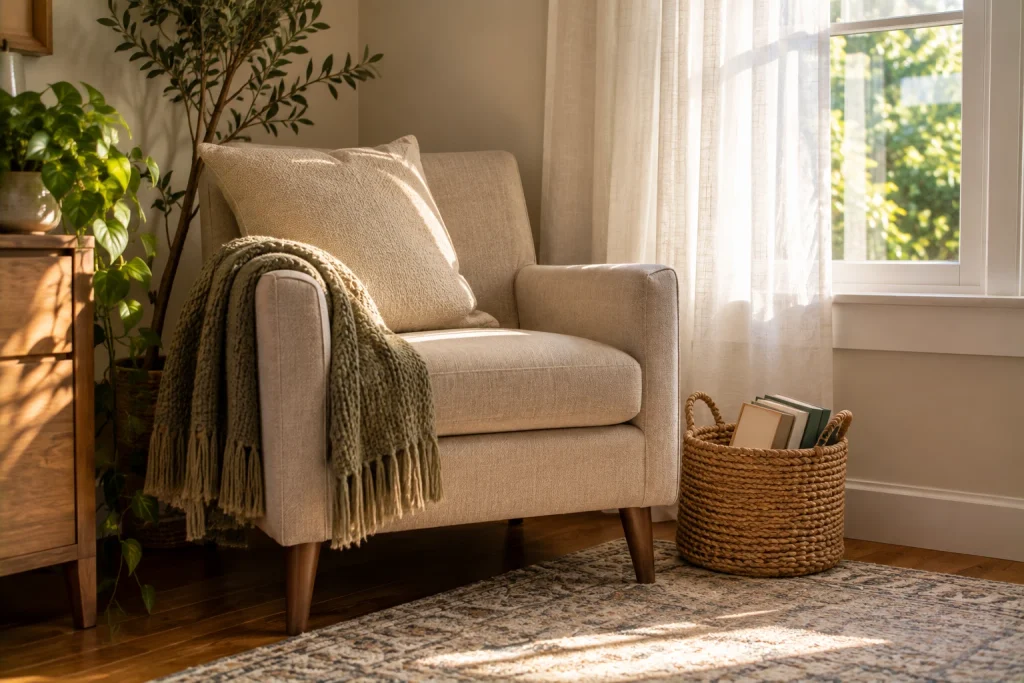
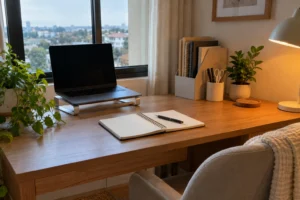
You may already have a chair by a window or in a home office. Try reading there before moving any furniture, at the time of day you’d normally read, and notice the noise, glare and interruptions.
Daylight is pleasant but not always comfortable. If direct sun falls across the page, a sheer curtain or a half-lowered blind softens it. Keep an evening lamp nearby for darker hours. If the chair sits in a home office, put away the laptop and paperwork before you sit down, so the corner doesn’t feel like another task.
If the chair also belongs at the dining table, keep the reading accessories portable. Store a book and throw together on a shelf, bring them over when you want to read and put the chair back for meals.
Keep only current reads nearby
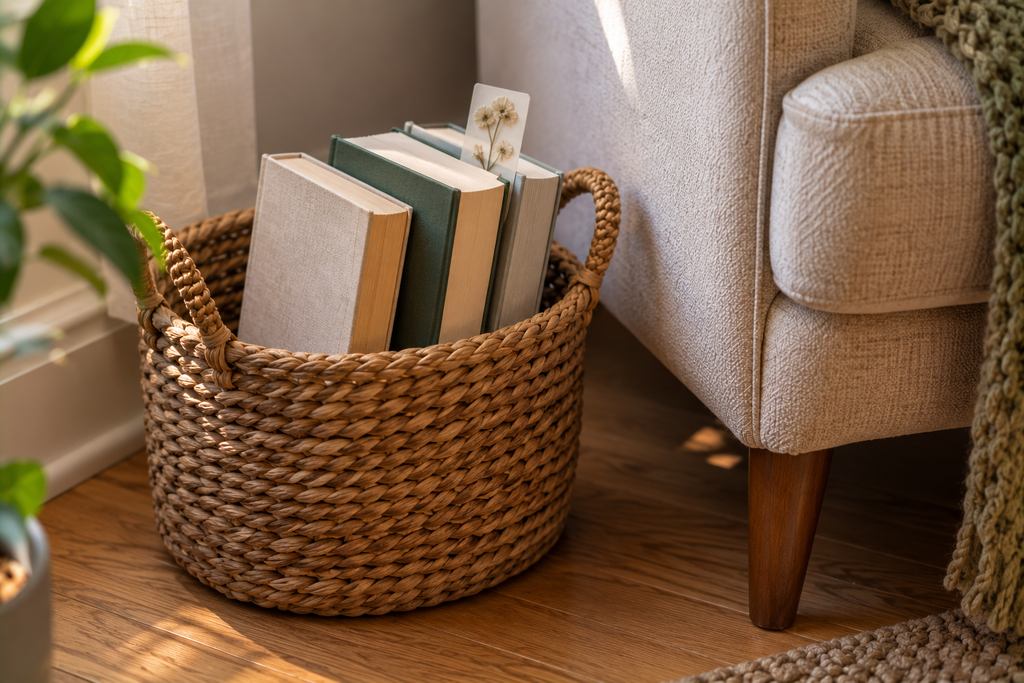
A small basket holding two or three books is enough for any reading nook. Keep it beside the seat as long as it doesn’t narrow the walkway. Your full book collection can stay on shelves elsewhere. When the basket fills up, return finished books before adding new ones.
Choose the spot that matches your reading habit
- You read in short breaks during the day: start with the sofa end you already use.
- You read before sleep: set up the bedside with a reachable light and clear surface.
- You read on weekend mornings: test the window chair at that time of day.
A seat that’s distracting during dinner preparation may be lovely later in the evening, so test at the hours you’ll actually read. The best reading nook ideas for small spaces also respect the room’s other jobs: keep doors, storage and shared seating usable.
Run a quick comfort check
- Sit for ten minutes with a real book, not just a quick test.
- Check that you can see the page clearly without leaning toward the lamp.
- Reach for your drink and put it down without looking.
- Stand up and walk away without stepping over a cord or a basket.
- Look at the spot from the doorway: it should read as part of the room, not a pile of extras.
If any step feels awkward, fix that one thing first. Usually it’s the lamp angle or the table distance, and both cost nothing to change.
Leave a book in your chosen spot for a week and notice whether you go back to it naturally. If you don’t, move the setup before buying furniture. A useful reading nook grows out of comfort and convenience, not a dedicated room or a wall of shelves.
For warmer days, these ideas for a small balcony reading corner show how to set up one outdoor chair while keeping the door route clear.