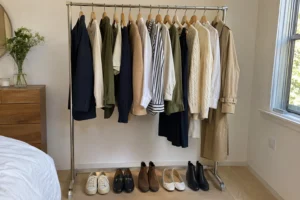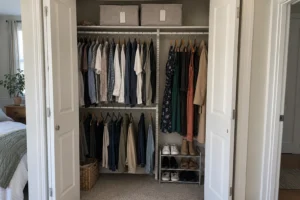

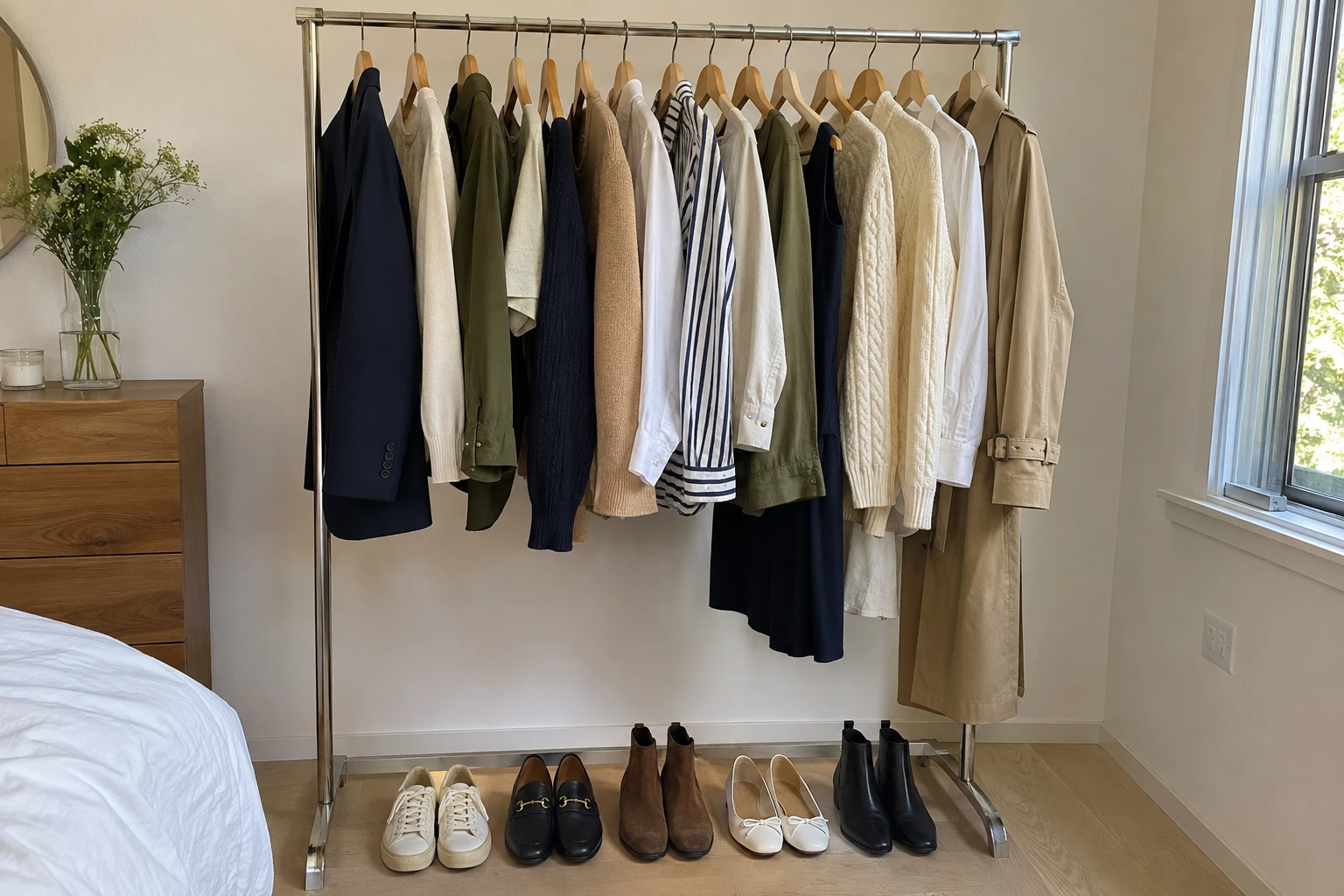
A capsule wardrobe isn’t about owning as little as possible. In my opinion, it’s about owning clothes you actually wear, in colors that mix without thinking. Everything works together, so you get many outfits from fewer pieces, which is why the idea keeps coming back on Pinterest: it fixes the full-closet, nothing-to-wear problem. This guide shows how to build a capsule wardrobe for women step by step.
This guide walks you through building one step by step, with a 30-piece plan you can adapt, a simple color formula, an outfit math check and tips for keeping the capsule working through the seasons.
Step 1: Audit what you already own
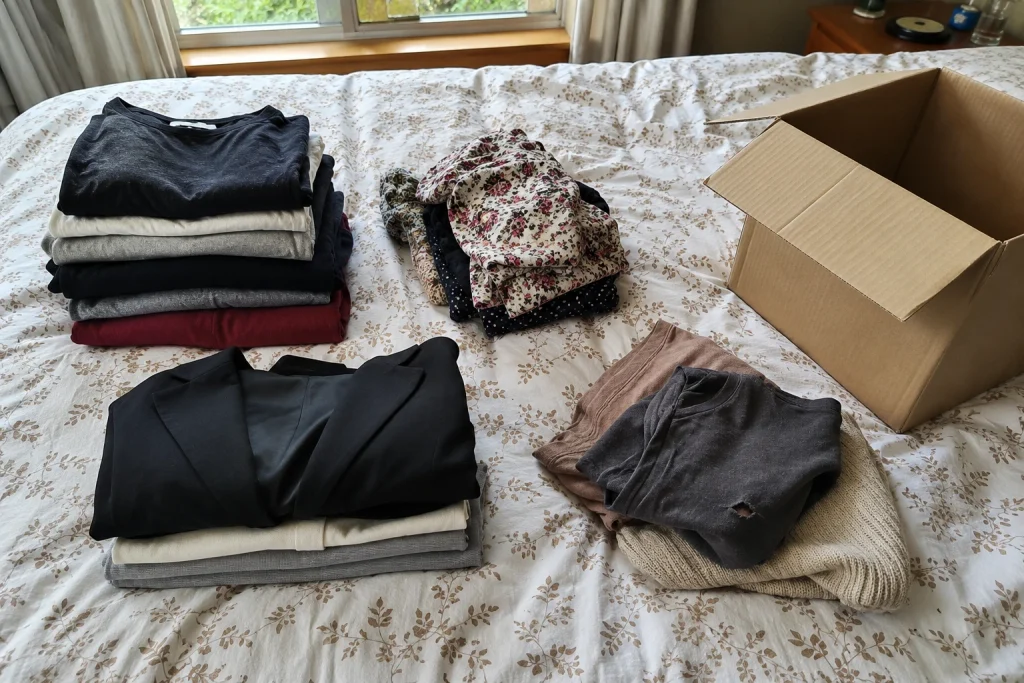
This is the step I’d never skip, because it usually shows you need far less than you think. Start with your current closet, not a shopping list. Take everything out and sort it into four piles:
- Love and wear: pieces you reach for weekly that fit well.
- Like but don’t wear: ask why. Wrong fit, wrong color, nothing to wear it with?
- Doesn’t fit your life now: clothes for a job or lifestyle you no longer have.
- Worn out: damaged beyond repair.
Your “love and wear” pile is the start of your capsule. It also tells you which colors and shapes you naturally prefer, which matters more than any trend.
Step 2: Match the capsule to your actual week
Estimate how you spend a typical week. For example: 50% work, 30% casual weekends, 15% at home, 5% going out. Your capsule should roughly follow those percentages. A common mistake is a capsule full of dressy pieces when most days are spent in casual clothes, or the opposite.
Step 3: Choose a color palette
My advice: pick your neutrals first and your accent color last. A capsule works because the colors mix. A simple formula:
- Two main neutrals for most pieces, such as navy and cream, black and gray, or camel and white.
- One or two accent colors that you love and that suit you, such as olive, rust, burgundy or soft blue.
Every top should work with most of your bottoms. Patterns are fine; just choose ones that include your neutrals or accents, such as a navy-and-cream stripe.
A 30-piece capsule wardrobe plan
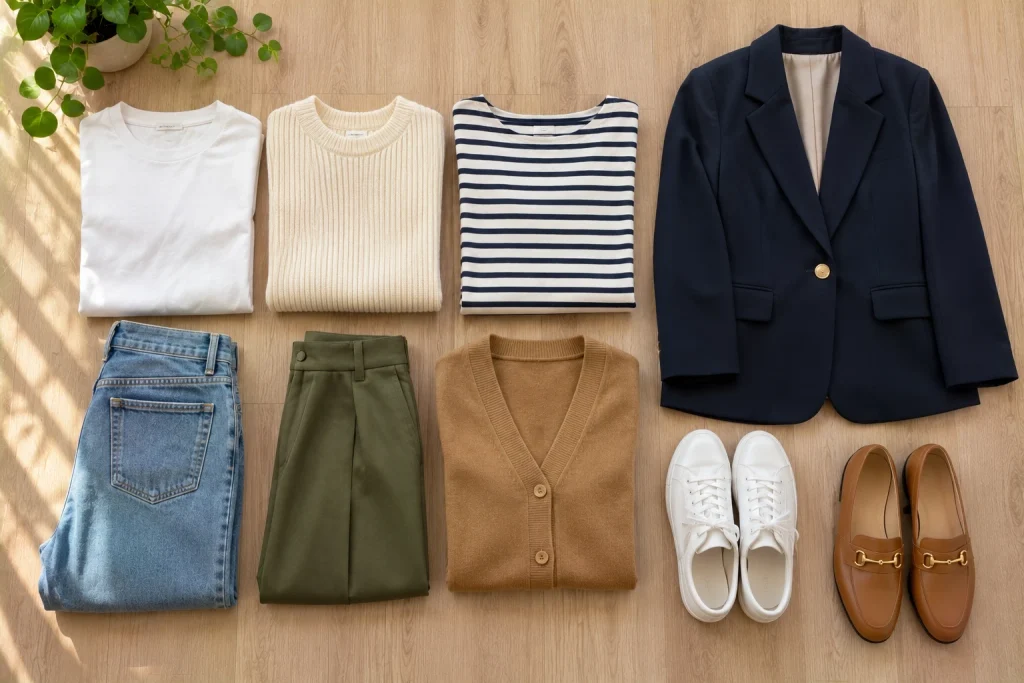
Thirty pieces is a popular size for one season. Shoes and bags count; jewelry, underwear, workout clothes and pajamas don’t. Adjust the numbers to your life.
| Category | Pieces | Example |
|---|---|---|
| Tops | 9 | 3 tees, 2 button-down shirts, 2 knit tops or sweaters, 2 nicer blouses |
| Bottoms | 6 | 2 jeans, 2 trousers, 1 skirt, 1 casual pant |
| Dresses or jumpsuits | 2 | 1 casual, 1 that can be dressed up |
| Layers | 4 | 1 blazer, 2 cardigans, 1 casual jacket |
| Outerwear | 2 | 1 coat suited to your climate, 1 lighter jacket or trench |
| Shoes | 5 | Sneakers, flats or loafers, ankle boots, sandals or heels, weather boots |
| Bags | 2 | 1 everyday bag, 1 smaller bag |
A smaller capsule of 20 to 25 pieces works well for minimalists or warm climates; a larger one of 35 to 40 suits people with varied workdays.
Step 4: Check the outfit math
Before buying anything new, check how many outfits your pieces make. With 6 bottoms and 9 tops that all work together, you have 54 basic combinations before adding layers, which multiply that further. If a top only works with one bottom, it’s not pulling its weight. Lay pieces out on the bed and try to make three outfits with every item. Anything that can’t make three outfits is a candidate to swap.
Step 5: Fill the gaps slowly
Honestly, this is where most capsules go wrong: buying everything at once. Write a short list of missing pieces, such as “navy trousers that fit” or “a cream cardigan,” and buy them one at a time. Prioritize pieces you’ll wear most often, and choose quality where it counts: everyday shoes, coats and jeans get the most wear. Secondhand and thrift shops are excellent for capsule basics.
Fit and fabric matter more than brand
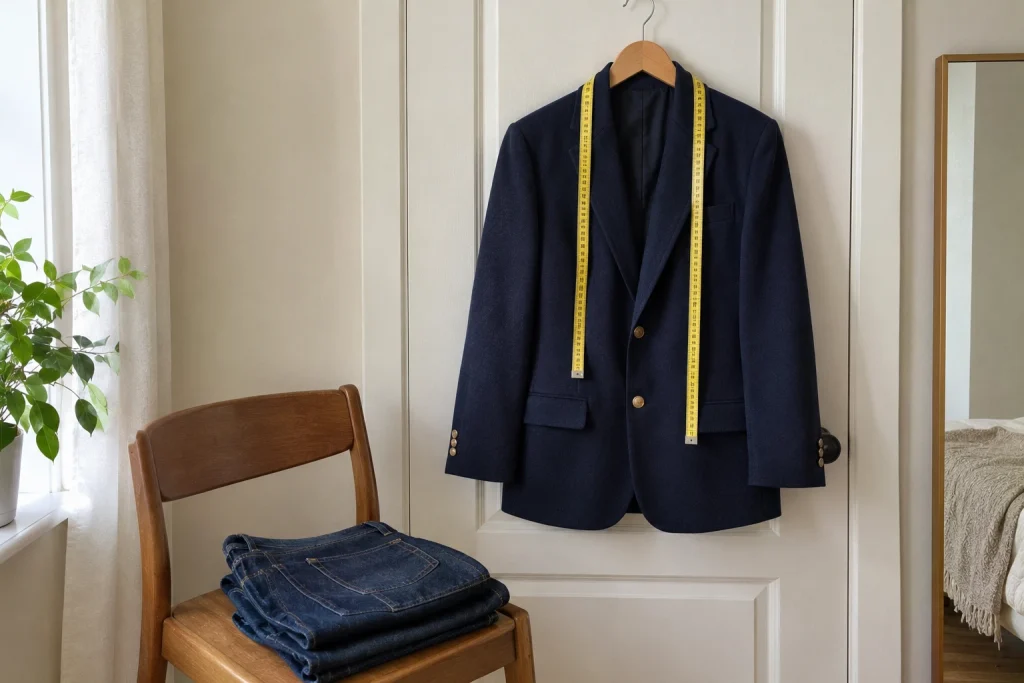
A small wardrobe gets worn a lot, so fit and fabric are everything. Look for shoulder seams that sit at your shoulder, trousers that don’t pull at the hips, and fabrics that wash well, such as cotton, wool, linen and good-quality blends. A tailor can shorten hems and sleeves inexpensively, which makes basic pieces look far more expensive.
Seasonal swaps
Most people don’t keep the exact same capsule all year. Keep year-round basics, such as jeans, tees, a blazer and sneakers, and swap 10 to 15 seasonal pieces in and out: linen and sandals for summer, knits and boots for winter. Store off-season items in a box under the bed or on a high shelf.
Sample outfits from the plan
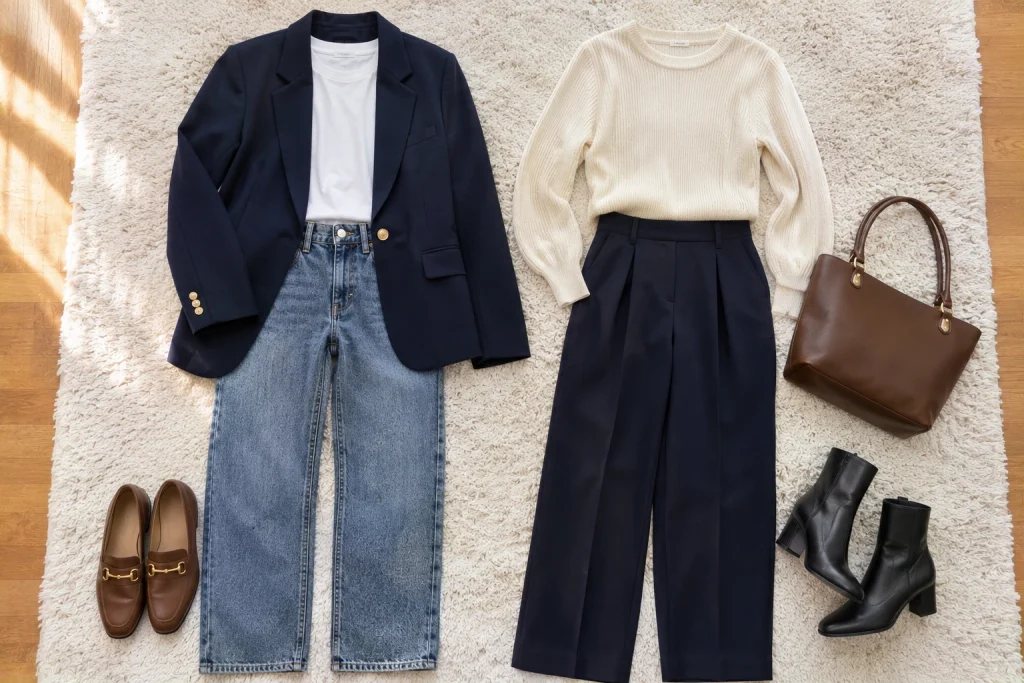
- White tee, straight jeans, navy blazer, loafers.
- Cream sweater, navy trousers, ankle boots, everyday bag.
- Striped button-down, olive casual pants, sneakers.
- Casual dress, cardigan, flats, small bag.
- Knit top, skirt, trench coat, ankle boots.
- Blouse, dark jeans, blazer, heels or loafers for an evening out.
Building a capsule on a budget
A capsule doesn’t require a shopping spree. Most people already own 60 to 70% of their capsule once they’ve done the audit. Fill the rest gradually:
- Shop secondhand first for blazers, wool coats, knitwear and leather bags, which hold up well.
- Spend more on the few pieces you wear almost daily, such as shoes, jeans and a coat, and less on trend pieces.
- Alter what you have: a hem, a taken-in waist or new buttons can bring an unworn piece back into rotation.
- Wait a week before buying anything not on your gap list.
How to tell if your capsule is working
After a month, look at what you actually wore. Pieces you skipped every week are telling you something: they might not fit, not suit your days or not match enough else. Swap them out. If you keep reaching for the same three outfits and still feel put together, the capsule is doing its job.
Common capsule mistakes
- Copying someone else’s list instead of building from your own life and closet.
- Too many neutrals that don’t match each other, such as black, brown and navy all as main colors.
- Getting rid of everything at once. Pack doubtful items in a box for a month first.
- Forgetting comfort. If shoes hurt, you won’t wear them, however well they match.
If you’re not ready for 30 pieces, start with a 10-piece mini capsule for one week of work and weekends. It’s the easiest way to see whether the idea suits you.
For outfit ideas using classic capsule pieces, see these casual blazer outfits and these linen shirt outfits for women.