
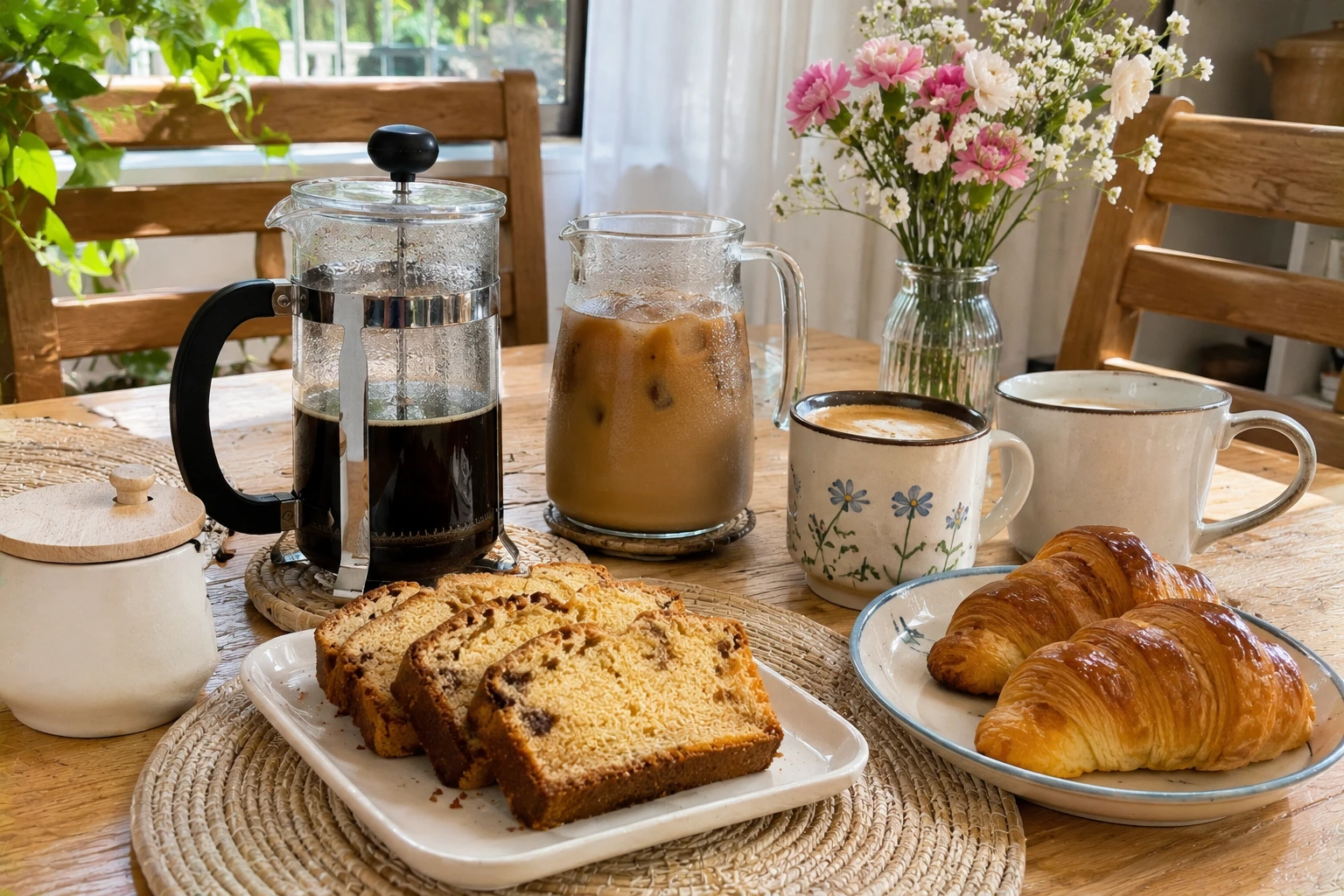
You don’t need an espresso machine to host a great home cafe party. Honestly, skipping it can make the afternoon better, because you’re not stuck pulling shots while everyone else chats. Keep the guest list small, offer a short menu and set up one self-serve drink spot, and you get the feel of a favorite cafe without the shift work.
Decide what the gathering is mainly about: conversation, a shared activity or tasting a few drinks. That choice keeps you from adding decorations and equipment that don’t help the afternoon. A few comfortable seats, clean mugs and something simple to eat do most of the work.
This article contains affiliate links. As an Amazon Associate I earn from qualifying purchases.
1. Choose a menu you can make calmly
Three drinks is the sweet spot, in my opinion; any more and you’ll spend the party in the kitchen. A menu that works for four to six guests:
- Hot brewed coffee, with or without frothed milk.
- Iced coffee made ahead as cold brew.
- A non-coffee option, such as tea, hot chocolate or a decaf.
Write the menu in plain words on a card. “Coffee with frothed milk” is easier to make consistently than a drink with three syrups and a garnish. If you want one special drink, practice it the day before.
French press coffee
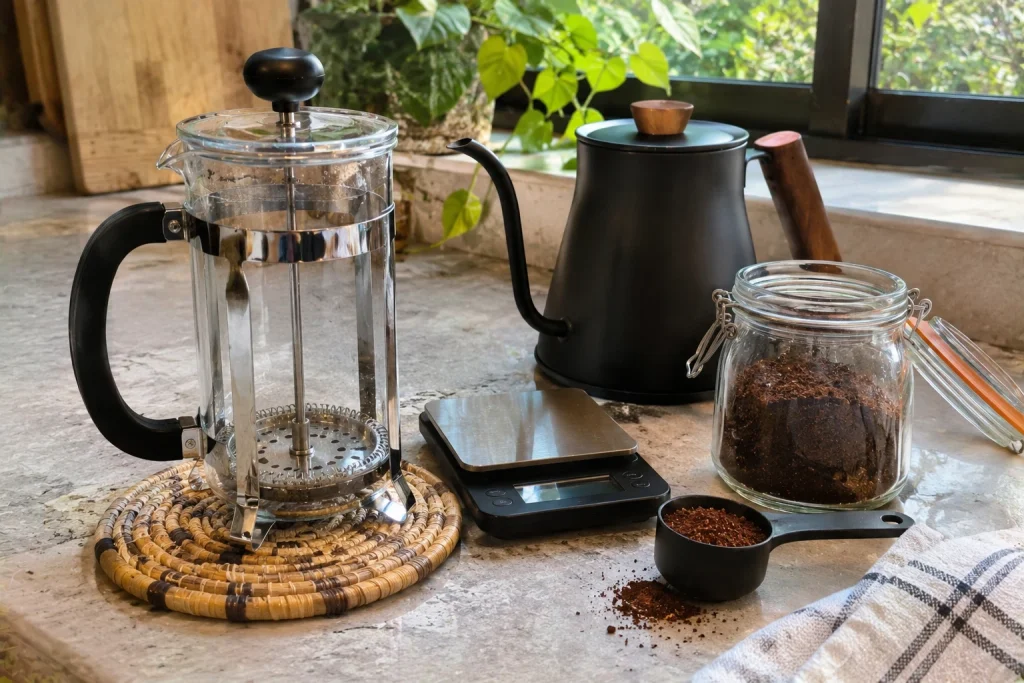
For brewed coffee, a French press is the easiest crowd-pleaser I know of: no filters, no machine, and it looks nice on the table. The Bodum Chambord 34-ounce French press (paid link) is a classic. Its 34-ounce (1 liter) capacity is listed as “8 cups,” but those are small 4-ounce cups, so expect about three or four regular mugs per batch. A reliable starting recipe:
| Step | Guide |
|---|---|
| Ratio | About 1:15 coffee to water by weight, such as 55 g coffee to 800 ml water |
| Grind | Coarse, like breadcrumbs |
| Water | Just off the boil, around 200°F (93°C) |
| Steep | 4 minutes, then press slowly |
| Serve | Pour it all out right away into a carafe so it doesn’t over-extract |
Follow the press’s handling instructions, don’t fill it above the marked line and press with a slow, even push to avoid hot splashes.
Cold brew for iced coffee
Cold brew is the host’s best friend because it’s done before anyone arrives. Make it the night before: mix coarse coffee and cold water at about 1:8 by weight, steep in the fridge for 12 to 18 hours, then strain through a paper filter. Serve over ice diluted about half and half with water or milk. It keeps in the fridge for several days, so leftovers aren’t wasted.
Ask about allergies and dietary needs when you invite people, and keep the original packaging of milks and snacks out so guests can check ingredients themselves.
2. Separate the making area from the collecting area
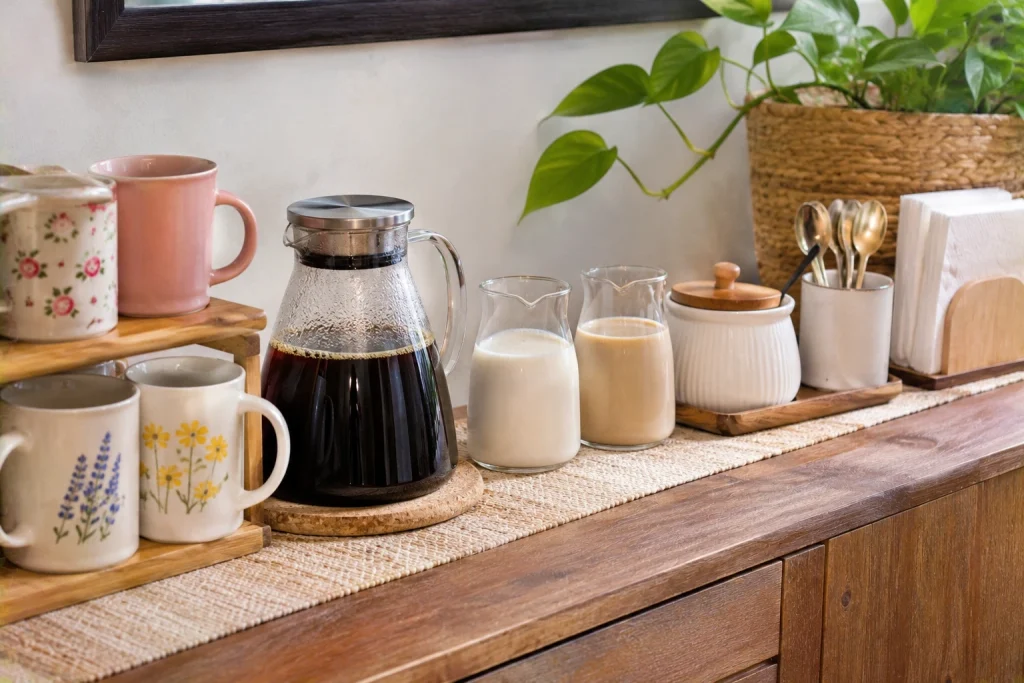
Keep hot equipment in the kitchen or somewhere guests won’t crowd around it or reach across cords. Then set up a self-serve station in a line, in the order people use it:
- Mugs and cups.
- Coffee carafe and the iced coffee jug with a bowl of ice.
- Milks, sweeteners and spoons.
- Napkins and a small bowl for used spoons at the end.
That flow stops everyone from bunching up at the same spot. Label milk alternatives, give each its own spoon or jug, and set out small amounts you refill rather than the whole carton. Perishable items like milk and cream shouldn’t sit out for more than about two hours at room temperature, so swap in fresh cold portions as needed. For everyday coffee setups, this compact coffee station guide covers supplies and cleanup.
Add cafe-style foam without a steamer
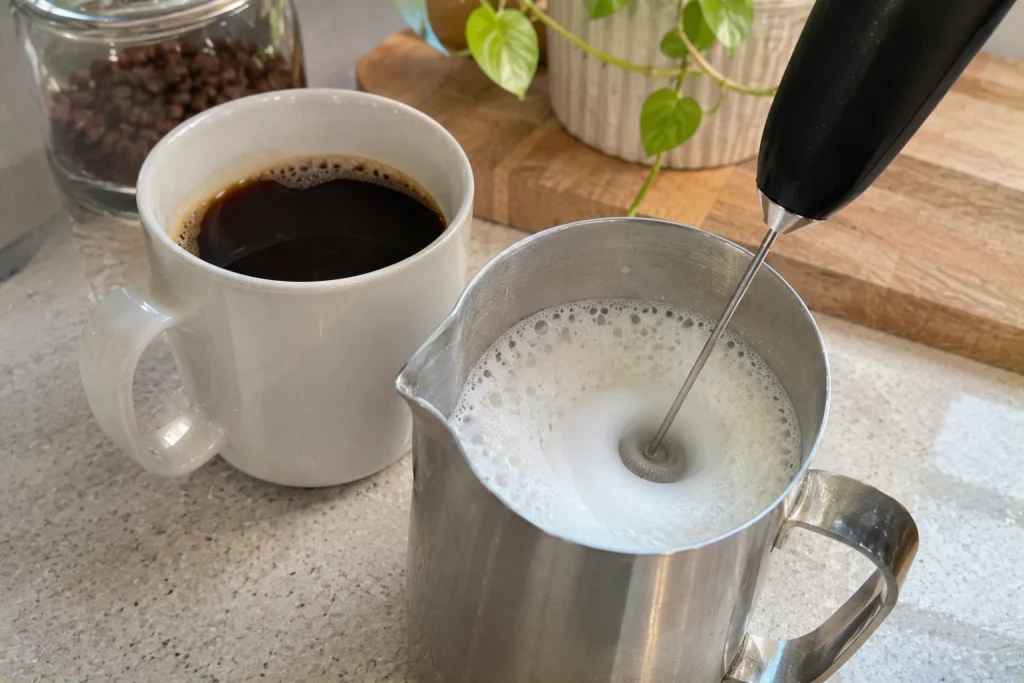
A handheld frother is the cheapest way to make drinks feel cafe-special. The Zulay handheld milk frother (paid link) whisks milk into foam, but it doesn’t heat it. Warm the milk first in a small pan or the microwave until steaming but not boiling, around 140–150°F (60–65°C), then froth it in a tall jug so it doesn’t splash. Whole milk and barista-style oat milk foam most easily. Practice a couple of times before the party.
3. Plan food that doesn’t need attention
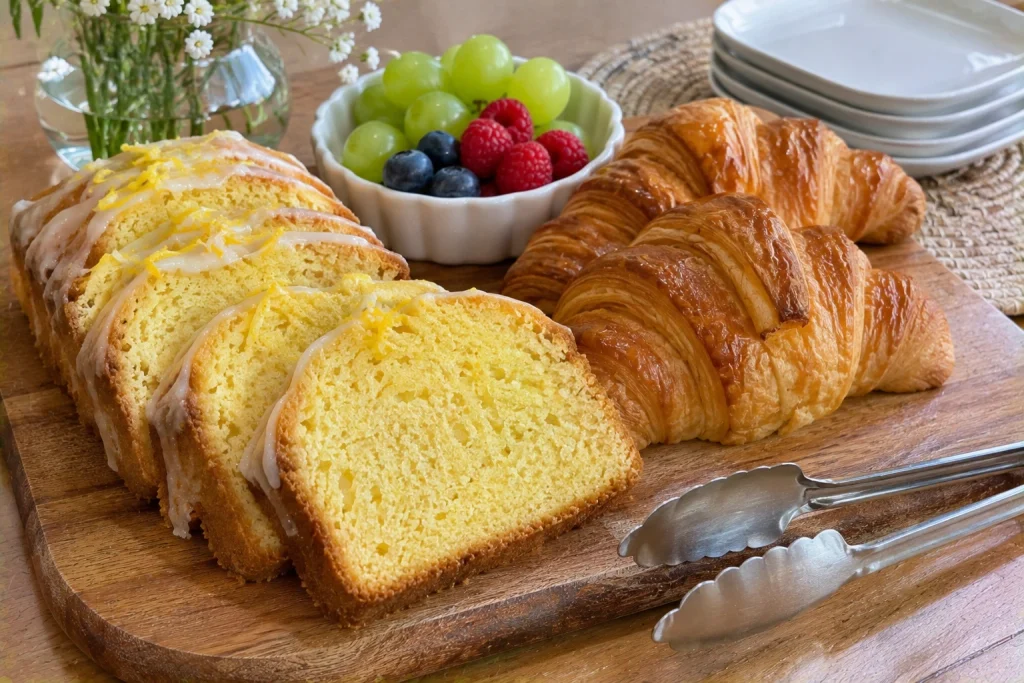
Choose food that’s easy to portion and serve: a bought loaf cake, a few pastries, cookies or a bowl of fruit. You don’t need a full brunch for a coffee gathering. For four to six people, one loaf cake plus a small plate of pastries is usually plenty for a two-hour afternoon.
Slice things before guests arrive and put out tongs or a cake server so nobody has to hunt in drawers. Keep the food near the drinks but leave room for people to set down a mug while they choose. Mixed plates and mugs you already own feel relaxed and personal; a consistent napkin color ties the table together.
4. Make the room feel welcoming with a few details
Choose one visual theme, such as warm neutrals, a favorite color or a bakery-style menu card, and repeat it in two or three places. Then stop. It should still feel like your home, not a set.
- Seating: make sure everyone has a seat and a nearby surface for a hot drink, not a sofa arm.
- Music: quiet enough that nobody has to raise their voice.
- Lighting: bright enough to see faces; a lamp or two plus daylight is ideal.
- Flowers: one small, low arrangement, kept out of the serving path.
5. Offer an optional activity
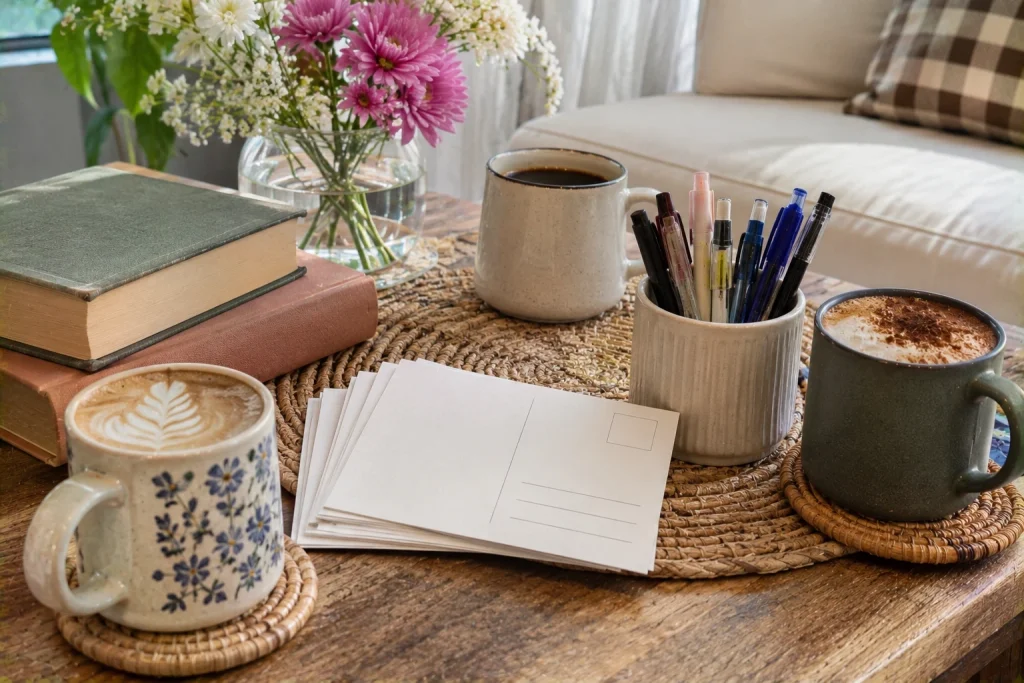
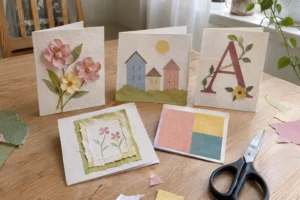
A home cafe gathering can be lovely with conversation alone. If you want an activity, choose something that can start and stop casually: writing postcards, swapping book recommendations or sketching the mugs on the table. Keep the supplies in one small box and away from the drinks.
Avoid anything messy that needs aprons or clearing the table. Make participation optional, so a guest who just wants to sit and chat doesn’t feel left out. For a light creative option, these beginner junk journal pages start with a few paper scraps and short notes.
A simple hosting timeline
- The day before: make the cold brew, check mugs and seating, buy food and write the menu card.
- Two hours before: set up the drink station, slice food and clear surfaces.
- Thirty minutes before: boil water, brew the first French press and put out cold milk.
- When guests arrive: serve the first round yourself, then show them where to help themselves.
Above all, leave yourself time to sit down before anyone arrives. A relaxed host matters more than any decoration. Afterward, note one thing that made serving awkward and one detail guests enjoyed, and use that next time rather than making the menu bigger. For a gathering with a more structured activity, this small-space game night plan covers seating and a simple schedule for six adults.