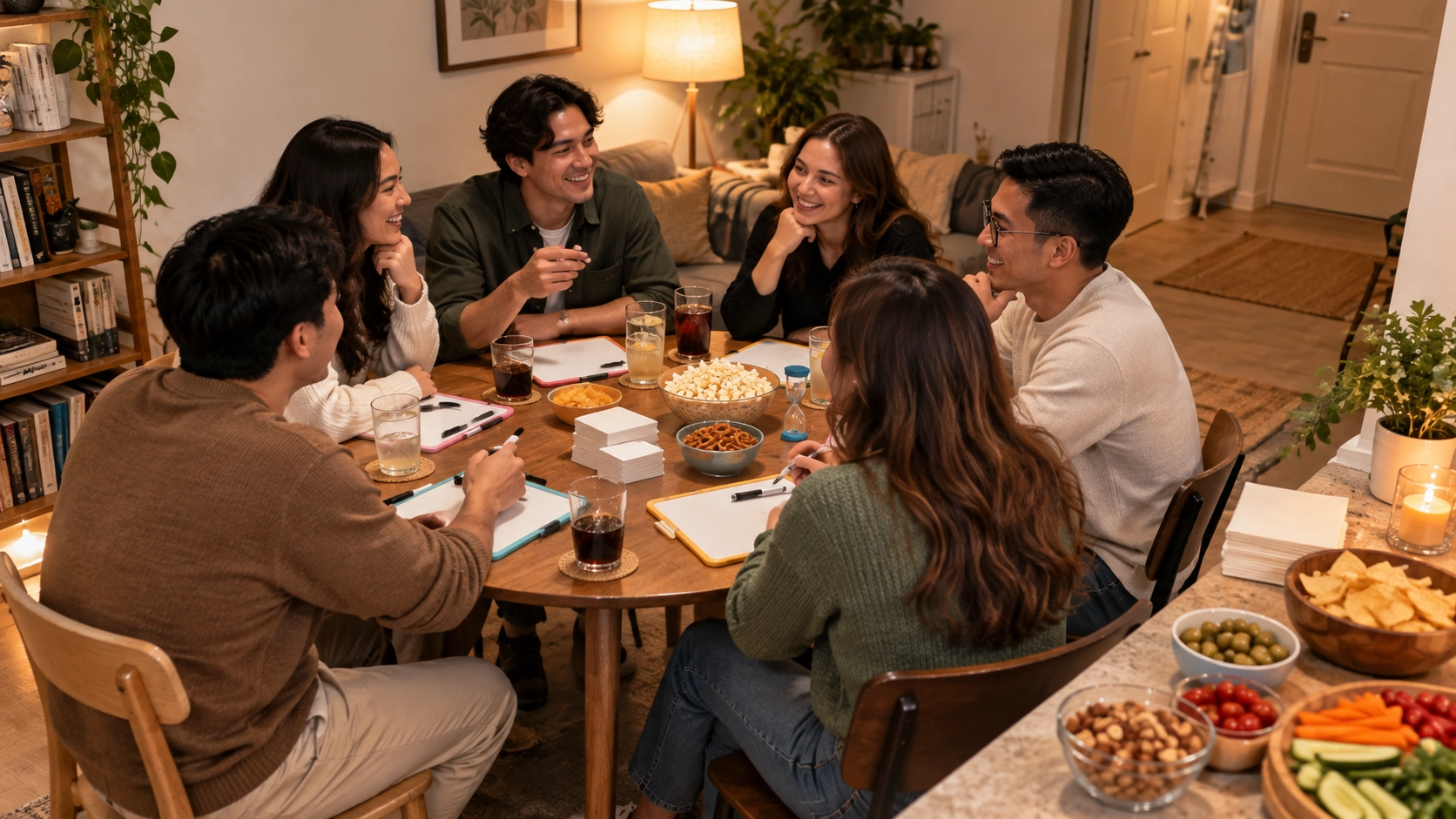
A game night for 6 adults works best when everyone can play at the same time, the rules are easy to explain, and the room gives each person somewhere comfortable to sit. You do not need a dedicated games room or an elaborate snack table. You need one suitable game, a clear surface, and a simple plan for the evening.
Start by confirming that six means six total players, including you. That small detail prevents choosing a game that leaves the host watching from the sidelines.
This article contains affiliate links. As an Amazon Associate I earn from qualifying purchases.
Choose one game that includes the whole group
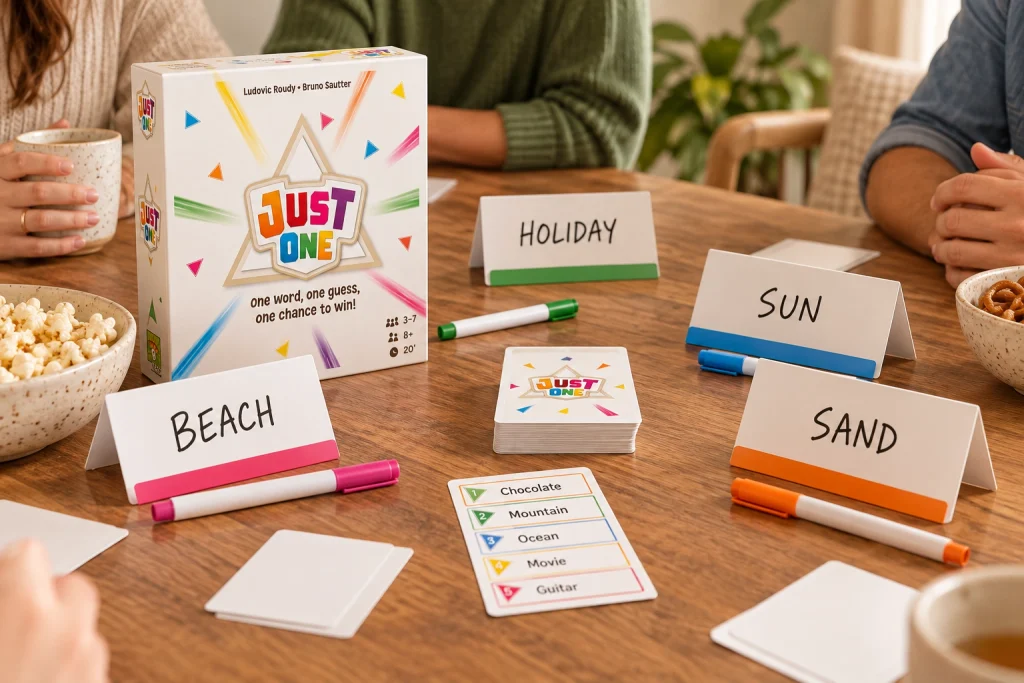
Just One (paid link) is a possible main game for this setup because it supports three to seven players. It is a cooperative word game in which players offer clues and matching clues cancel out. Check the edition and language before buying, especially if your group includes people who prefer playing in a different language.
The appeal for a mixed group is the shared objective. Nobody needs to study a personal strategy for half an hour before joining in. Still, a word game will not suit every guest, so ask whether people enjoy that type of activity rather than assuming everyone does.
If you already own a suitable six-player game, use it. Choose based on the people attending and the space available. A familiar game that starts quickly is often a better evening choice than a new purchase with an ambitious setup.
Have one low-effort backup available, such as a simple conversation game using prompts you write yourself. You do not need a stack of unopened boxes. Too many options can turn the first part of the night into a long discussion about what to play.
Arrange six actual seats before guests arrive
Count usable seats at the playing surface. A sofa may seat three people comfortably for conversation but put the person in the middle too far from a low table to reach game components.
Test the layout with the game out. Can everyone see the shared area, write if necessary, and place their materials without leaning across another person? Bring in appropriate chairs from other rooms if that improves access.
Keep the route to the bathroom and front door clear. Avoid floor cushions unless your guests are comfortable getting down and back up. Matching furniture matters much less than a seat that works for each person.
For a small table, remove the decorative centerpiece and move drinks to stable nearby surfaces when possible. Leave enough room for elbows. A table that fits six dinner plates is not automatically comfortable for six people writing clues or handling cards.
Check the lighting from every seat. Glare on glossy cards or shadows over someone’s writing area can make a simple game unexpectedly tiring. Use existing lamps thoughtfully and keep cords out of the walking route.
Make the invitation answer the practical questions
Tell guests the start time, expected finish, and whether you are serving a meal or snacks. A clear message such as “Come at seven for snacks and games; we will wrap up around ten” helps people plan without guessing.
Mention that the game is suitable for beginners if that is true. Some people hear “game night” and imagine several hours of complicated strategy. Naming the general style of play makes the invitation less intimidating.
Ask about food needs and access requirements privately when appropriate. You can accommodate people more easily before arranging the furniture and shopping for snacks than after everyone arrives.
If you would like guests to bring something, make the request specific and optional where possible. One person bringing drinks is easier to coordinate than everyone arriving with a large dish that needs counter space.
Let guests know if parking, stairs, a door code, or another arrival detail needs explaining. Removing these small uncertainties allows the evening to begin with conversation instead of repeated trips to the entrance.
Plan the evening in three easy parts
Use the first twenty or thirty minutes for arrivals, drinks, and catching up. Put the game in view, but do not start a round while someone is still finding parking unless the group agrees to treat it as practice.
Next, explain the main game and play an unscored demonstration round. People usually understand a turn more easily after seeing it than after hearing every exception at once. Use the official rules for your edition when a question comes up.
After a few rounds, pause for a short break. This is a natural moment to refill drinks, use the bathroom, and decide whether everyone wants to continue. A break also gives quieter guests a chance to say they would prefer a different activity.
Keep the final part flexible. Continue the game if the group is engaged, try the backup, or let the evening become conversation. Finishing on a good moment is better than insisting on one more round because it was written in your plan.
If someone arrives late, bring them in at an appropriate stopping point. Avoid making the rest of the group replay a long explanation while the game sits paused. A quick practice example can help the new player catch up.
Serve snacks that protect the playing space
Choose a few foods that are easy to portion and do not require a full place setting. Set them on a separate counter or side surface if your room allows, keeping the main table available for the game.
Provide napkins and a visible place for trash. Small individual bowls can reduce reaching across cards, but use dishes you already own before buying themed accessories. The best serving setup is one that does not interrupt play.
Keep messy dips, sticky desserts, and very crumbly foods away from shared components. They can still be part of the evening; serve them during the break and give people a chance to clean their hands before continuing.
Label foods clearly enough for guests to identify them, especially when ingredients are not obvious. Keep beverages stable and away from the edge of the table. Alcohol is optional, and nobody needs to explain why they prefer another drink.
Help everyone participate without putting them on the spot
Explain that questions are welcome and that the first round is for learning. Avoid teasing someone for misunderstanding a rule or needing more time. A relaxed host sets the tone more effectively than any decorative theme.
During a cooperative game, give people room to make their own choices. One confident player can accidentally take over by commenting on every decision. Step back when necessary so quieter guests can contribute.
Watch the group’s energy rather than the clock alone. Repeated phone checking, long pauses, or side conversations may mean people want a break. Ask a simple question about continuing without treating a change of plan as a failure.
For your next game night for 6 adults, reuse the seating arrangement and adjust only what felt awkward. Before everyone leaves, gather game pieces together and check under chairs while the room is still occupied. Offer a clear ending instead of leaving guests unsure whether another game is about to begin. A comfortable evening that ends when promised makes the next invitation easy to accept.