
The most common balcony mistake is buying furniture for the parties you imagine instead of the mornings you actually have. Good small balcony seating ideas start with how you’ll really use the space: two people sharing coffee need a different setup from one person reading with their feet up. Pick that everyday activity first, then leave room to open the door and move around.
Below are three layouts and the measurements to take before you buy. My bias, for the record: less furniture almost always wins on a small balcony.
This article contains affiliate links. As an Amazon Associate I earn from qualifying purchases.
Know the space each layout needs
Furniture listings show the size of the chair, not the space a person needs to use it. Use these rough clearances when you plan:
| Space | Rough guide |
|---|---|
| Bistro table for two | About 24 inches (60 cm) across |
| Typical small outdoor chair footprint | About 18–22 inches (45–55 cm) wide and deep |
| Room to pull a chair out and stand up | About 24 inches (60 cm) behind the table edge |
| Walking path past furniture | At least 24 inches (60 cm); more is better at the door |
| Door swing | The full arc of a swinging door, kept completely clear |
On a balcony about 4 feet (120 cm) deep, these numbers usually rule out a sofa-style set but leave room for any of the three ideas below.
1. Use a folding bistro set for coffee for two
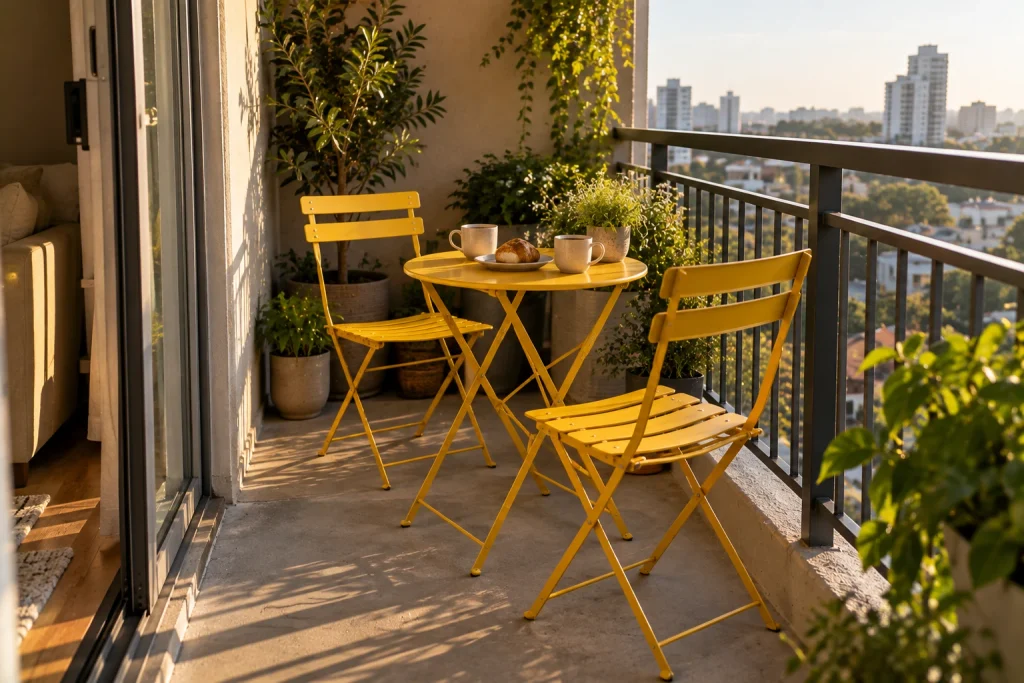
For two people, a folding bistro set is the layout I’d try first, because it packs away when you need the floor back. The Grand patio folding bistro set (paid link) is a cheerful option. The linked yellow set includes two folding chairs and a table. Compare the current dimensions, weight limits and care instructions with your balcony before ordering. Furniture that folds still needs space when it’s open.
Mark the table and chairs on the floor with painter’s tape or pieces of cardboard, then add the pull-out space behind each chair. Sit down, stand up and walk to the door with a cup in your hand. If anything feels tight, try the set at one end of the balcony instead of the center; that often leaves a more direct route from the door. The right spot depends on your door swing, railing and balcony shape, so test a few positions.
Keep the tabletop simple: two cups, a small plate and maybe a short plant. A big lantern in the middle takes the space you wanted for breakfast. Yellow furniture works as the main accent against neutral walls; if your furniture is plain, a colored seat cushion can do that job. Choose outdoor fabric and plan where cushions go when it rains.
Folding chairs are only useful if you have somewhere to put them folded. Leaning them against the railing isn’t a storage plan, especially in wind or with children and pets around.
Prepare drinks indoors with these small coffee station ideas, and carry out only what you’ll use so the table stays clear.
2. Build a one-chair balcony reading corner
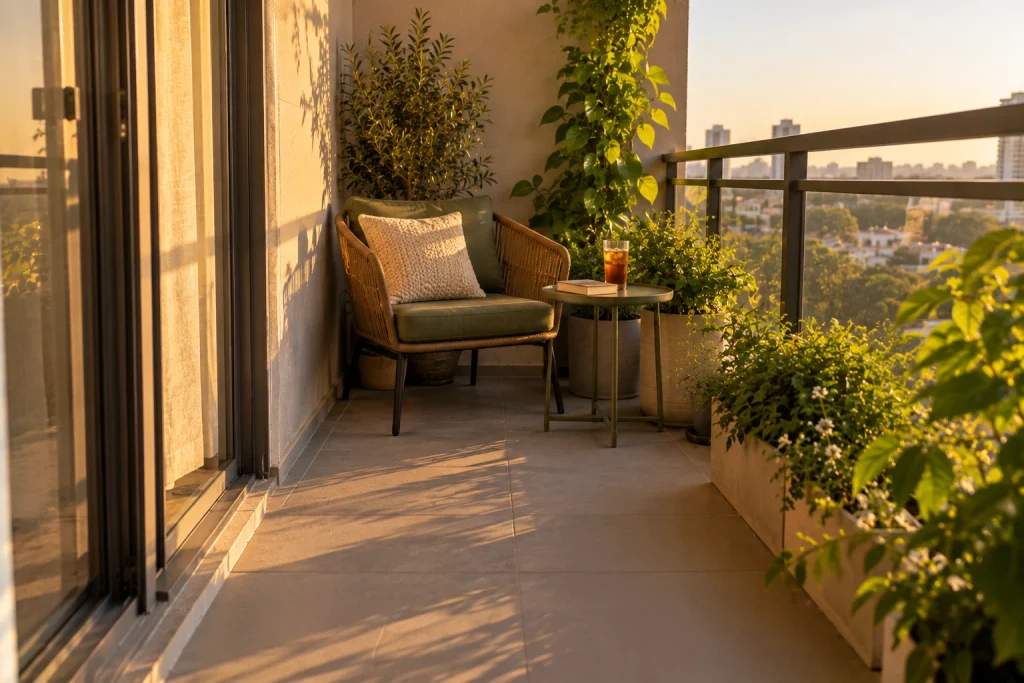
If you usually go outside alone, one comfortable chair may serve you better than a matching set. Sit where you’d naturally want to and notice the sun, glare, wind and view from that spot at the time of day you’ll use it.
Choose a chair for support, not looks. Honestly, I’d skip the deep lounge chair on a shallow balcony, however good it looks online; it rarely leaves room to stand up or turn around. An upright outdoor chair with a good cushion fits more easily and is easier to get out of.
- Side table: a small, stable table, about 12–16 inches (30–40 cm) across, is enough for a drink and a book. Never balance mugs on the railing.
- Footrest: optional. A light stool you can move is more flexible than a fixed ottoman, but it still needs a storage spot outside the walkway.
- Door: place the chair where the open door won’t hit it or trap a seated person behind it.
Keep a clear route back inside, especially after sunset when furniture edges are harder to see. Repeat one textile color from the room inside so the balcony feels like part of your home. For the days the weather doesn’t cooperate, these indoor reading nook ideas use the sofa, bed or a chair you already own.
3. Keep the center open with two lightweight chairs
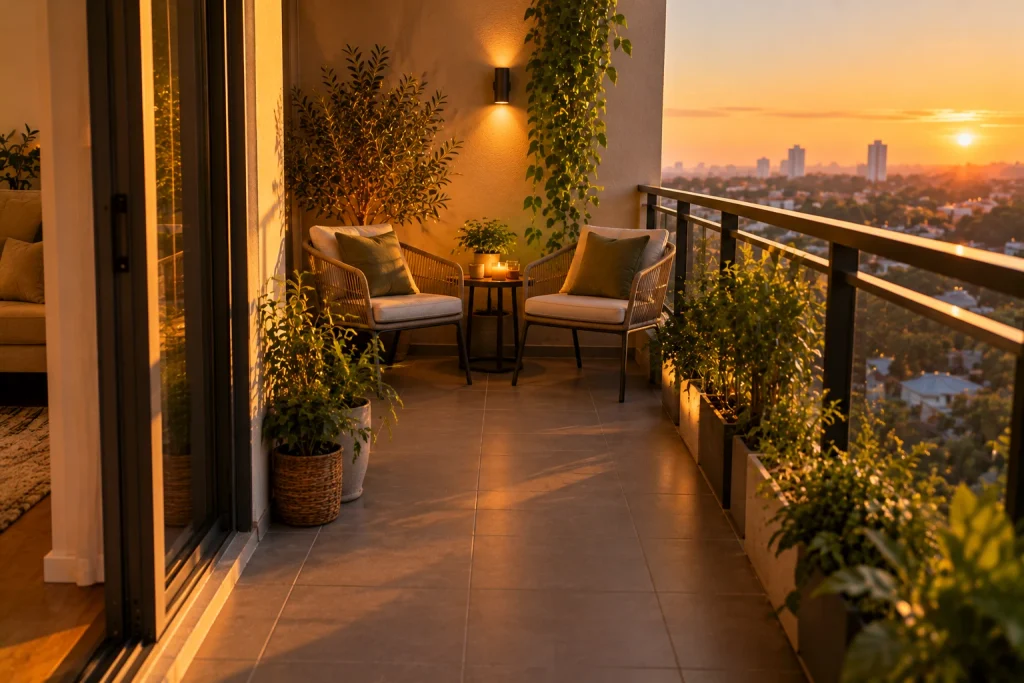
Some balconies need to host a conversation without becoming a permanent dining area. Two separate outdoor chairs with a small shared table give you more placement options than a matching lounge set.
Angle the chairs slightly toward each other, then sit down to check the distance. You should be able to talk easily without twisting. Put the table within reach of both seats, ideally against the wall rather than in the middle, so nobody steps over its legs.
On a long, narrow balcony, placing a chair at each end can keep the middle open, as long as the distance still feels conversational. On a very small balcony, one chair may simply be the better choice.
Mismatched chairs can look deliberate with a pair of similar seat pads or a table in the same finish as one of them. You don’t need to replace a perfectly good chair because it didn’t come in a set.
Add greenery without losing floor space
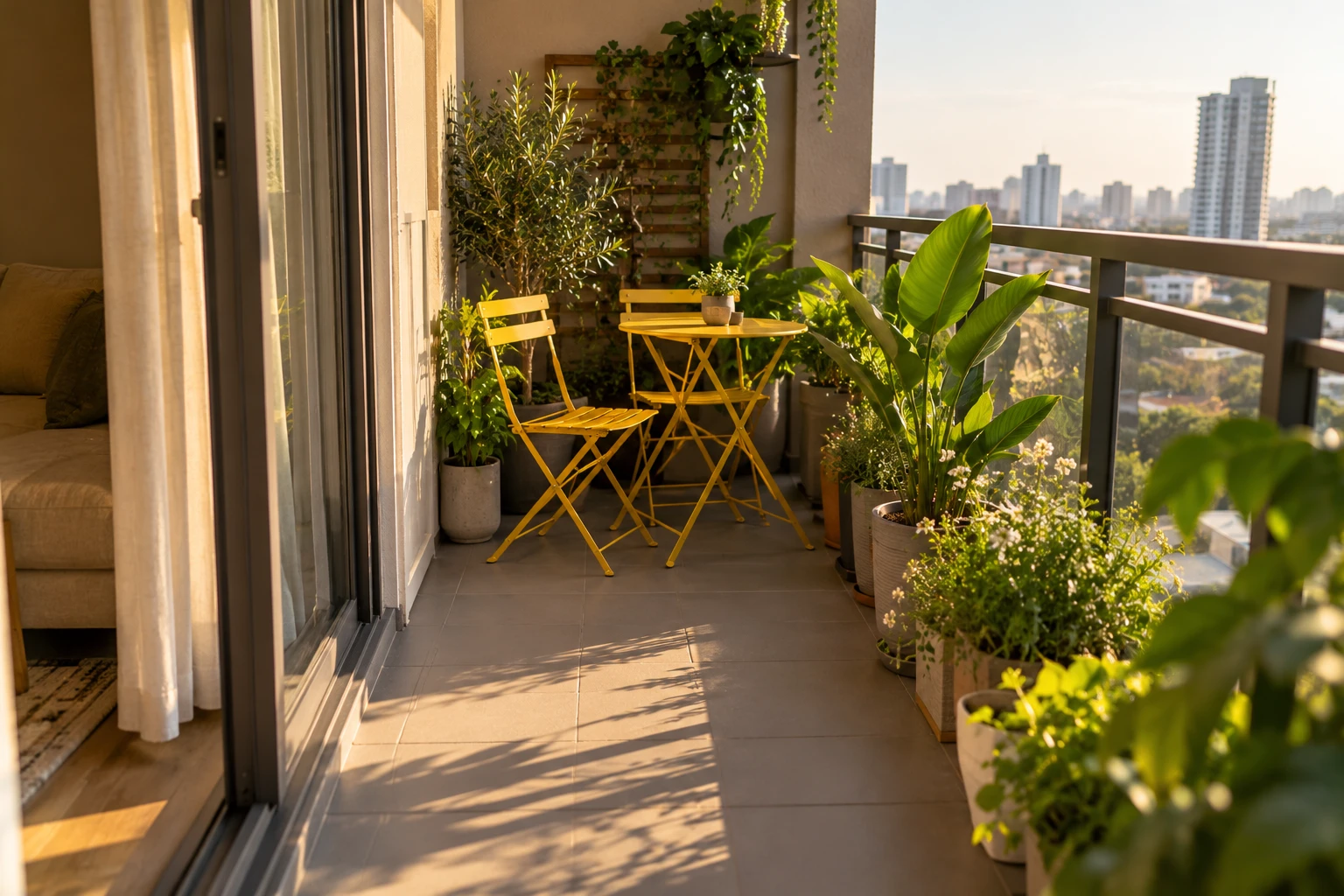
Plants make a balcony feel finished, but a row of floor pots quickly eats the walking path. Use height instead: a narrow plant stand in one corner, a railing planter where your building allows it, or a single tall plant beside the chair. Choose plants for your real conditions. Herbs like basil and thyme want several hours of direct sun, while a shady balcony suits ferns or pothos better. Put a saucer under each pot so water doesn’t drip onto the balcony below.
Plan for wind, weight and safety
Lightweight furniture is easy to move but not always stable. Bring cushions, small decorations and folded chairs inside when strong wind is forecast, so nothing blows off the balcony. Keep chairs, stools and planters away from the railing where a child could climb on them.
Check your building’s rules on balcony loads, attachments, screening and grills before adding anything permanent. Wet soil in large planters is much heavier than it looks, so don’t add heavy pots based on an inspiration photo alone. Keep the drain clear and never drill into the railing.
Measure the whole setup, including the person using it
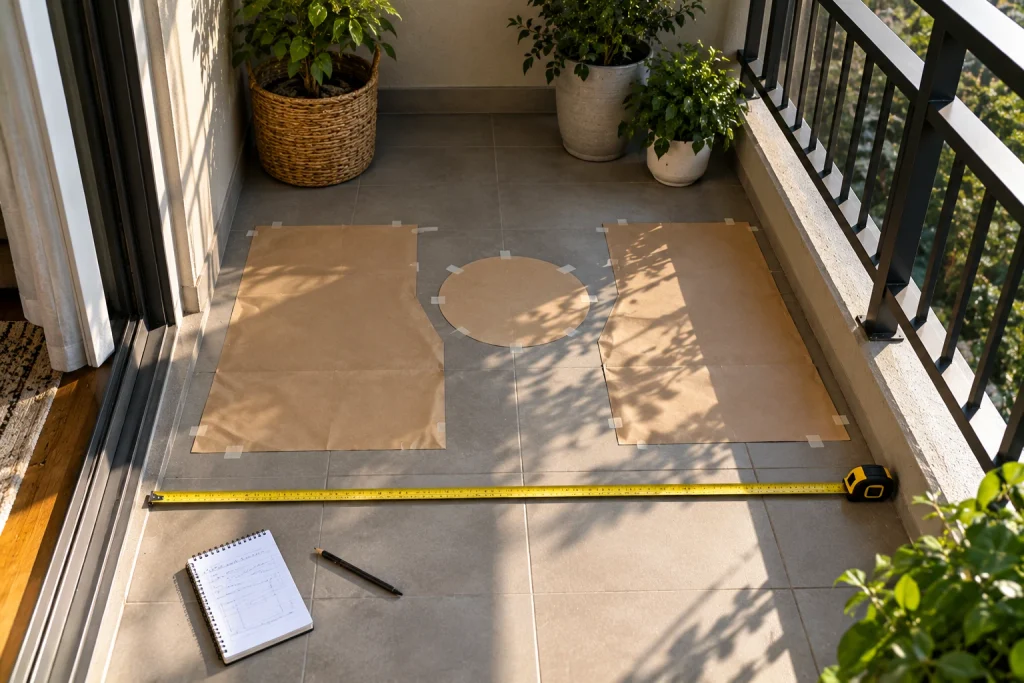
Write down these five measurements before shopping:
- Usable floor width and depth after any fixed obstructions.
- The space the door needs when fully open.
- Each chair’s footprint while someone sits down and stands up.
- The table space left once your cups and plate are on it.
- Where folded furniture and cushions will be stored.
Test the layout with an indoor chair first, then bring it back inside. Carry a cup, sit, stand, open the door and walk past the seat. If each action means shifting something, simplify before you buy. A balcony set up for two quick coffees gets used far more than one packed for gatherings you rarely host, and that’s the version I’d always choose.