
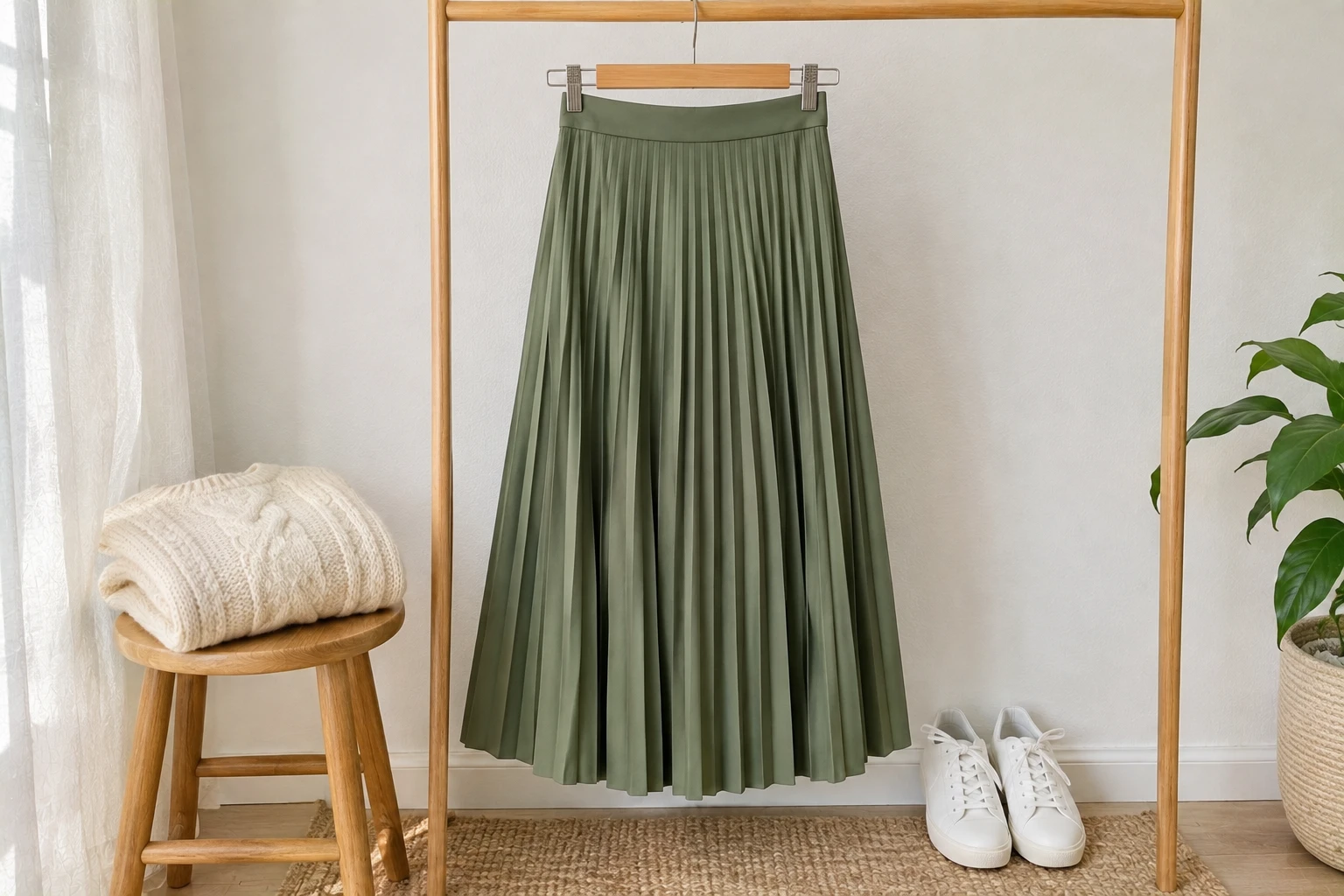
A pleated midi skirt is one of the hardest-working pieces you can own, and one of the most underused, because it looks dressier on the hanger than it really is. Pleated skirt outfits come together once you decide what the skirt needs around it: a clear waist, a relaxed top or shoes that suit the day. The same skirt can go from errands to lunch to dinner by swapping a few pieces.
Start with a skirt that’s comfortable to sit and walk in. Notice where the waistband sits on you and where the hem falls. Those details matter more than copying a model’s proportions, because the same listed length looks different on different heights.
This article contains affiliate links. As an Amazon Associate I earn from qualifying purchases.
If you’re buying one, I’d start with a dark or neutral color; it works with the most tops. The GRACE KARIN pleated midi skirt (paid link) is one to explore. Look over the current colors, size chart, length and lining before ordering. The outfits below are styling formulas that work with most pleated midi skirts, not a promise that every color in the listing has the same fabric or fit.
Know your pleats and your length
| Pleat type | What it looks like | Easiest to style with |
|---|---|---|
| Accordion (sunray) | Fine, narrow pleats that swing as you walk; often satin or chiffon | Fitted knits and tees |
| Knife | Pleats all folded in one direction | Shirts and short jackets |
| Box | Wider, flatter pleats with more structure | Simple fitted tops; can look more preppy |
A midi length usually lands somewhere between just below the knee and mid-calf. If the hem hits the widest part of your calf and you don’t love the look, a shoe with a lower vamp, like a loafer or flat, or a slightly shorter or longer skirt can change the balance.
1. A fitted knit and sneakers for everyday
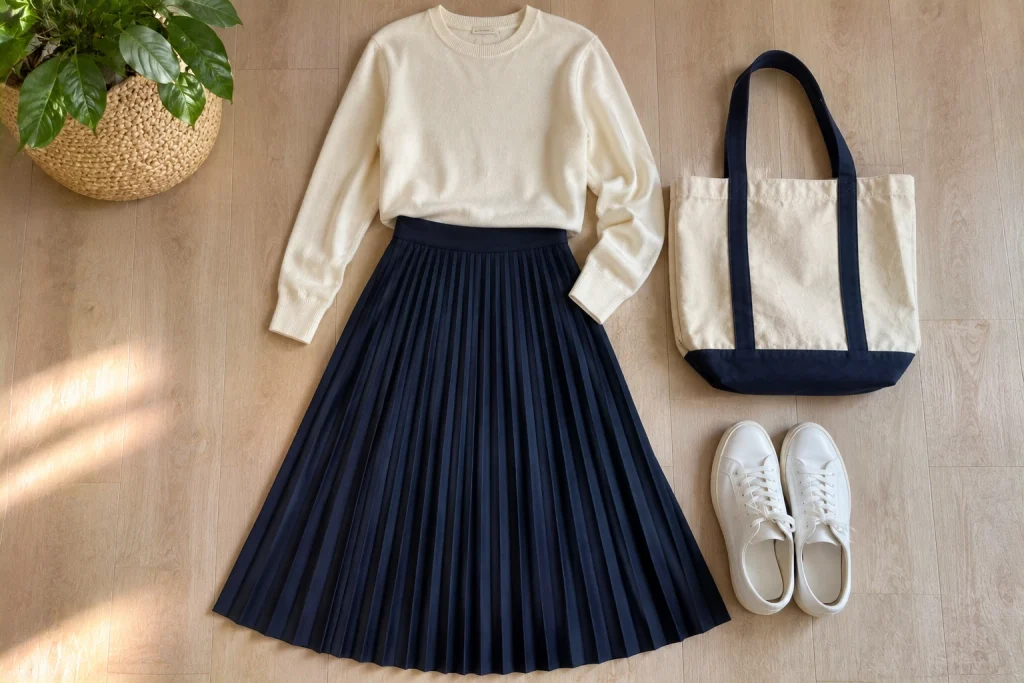
Pick a knit that ends at the waist or tucks in without a thick roll under the waistband. A thin crewneck or fine-gauge sweater gives the pleats room to move. If the knit is longer, try a small front tuck and compare it with wearing it loose.
Keep the colors simple: a dark skirt with a pale knit gives contrast, while similar tones look quieter. Repeat one color in the bag or shoes to tie it together. For shoes, a clean low-profile sneaker keeps the look light rather than sporty; consider the Dr. Scholl’s Time Off sneaker (paid link). Confirm the size, color and return terms, and judge the fit on your own feet; a product name isn’t a promise of comfort for everyone.
If you’ve never worn a pleated skirt casually, this is the pleated skirt and sneakers outfit I’d try first. It’s comfortable, it moves well and it doesn’t need a single accessory.
2. A button-down shirt for a relaxed lunch
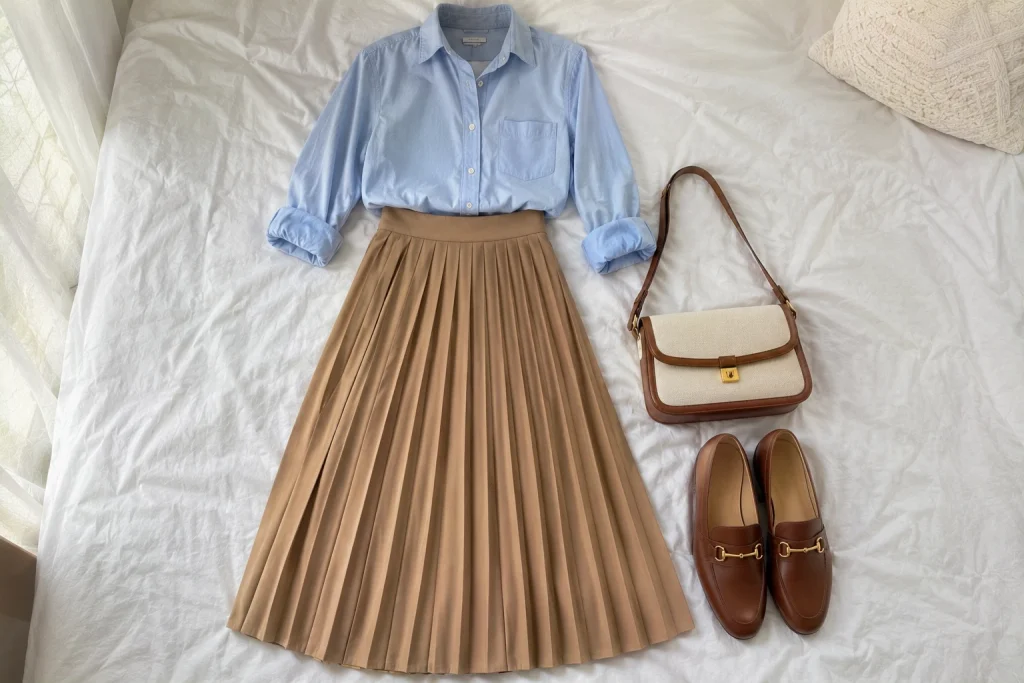
A plain button-down makes a pleated skirt look crisp without feeling like officewear. Roll the sleeves neatly to the forearm, open the collar a button or two and tuck only as much shirt as the waistband can hold smoothly.
If the shirt is very oversized, compare a full tuck with a front tuck. Tying a knot can work with some fabrics, but it may create a bulky spot or pull at the buttons. Turn sideways in the mirror, too: extra fabric at the back of a tuck can bulge even when the front looks neat.
Loafers or flats keep this look polished, and a structured bag sharpens it; a soft tote relaxes it. For more ways to wear the shirt, these linen shirt outfits include a work look and an open-shirt combination.
3. A short jacket that shows the skirt’s shape
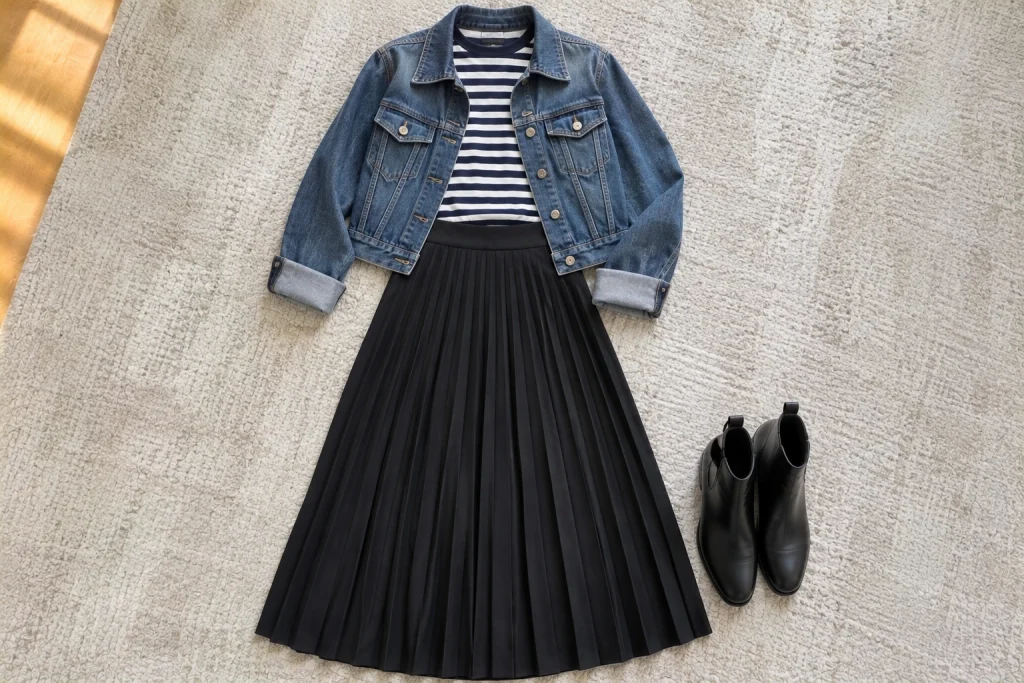
A jacket that ends at the waist or upper hip lets the pleats show. Try a denim jacket, a cropped cardigan or a short leather-look jacket you already own. Wear it open first, so the top underneath creates a vertical line and the skirt stays visible.
Keep the inner top simple, such as a striped tee or plain knit, when the jacket has pockets, seams or hardware. Ankle boots work well here in cooler weather; check that there’s a little gap between the boot and the hem, or that the hem fully covers the boot top, so the line looks deliberate.
This formula is useful when temperatures change during the day because you can take the jacket off and still have a complete outfit. For a more relaxed outer layer, these barn jacket and skirt combinations are worth comparing. Compare the jacket length with your own skirt.
4. A fitted top for an easy dinner outfit
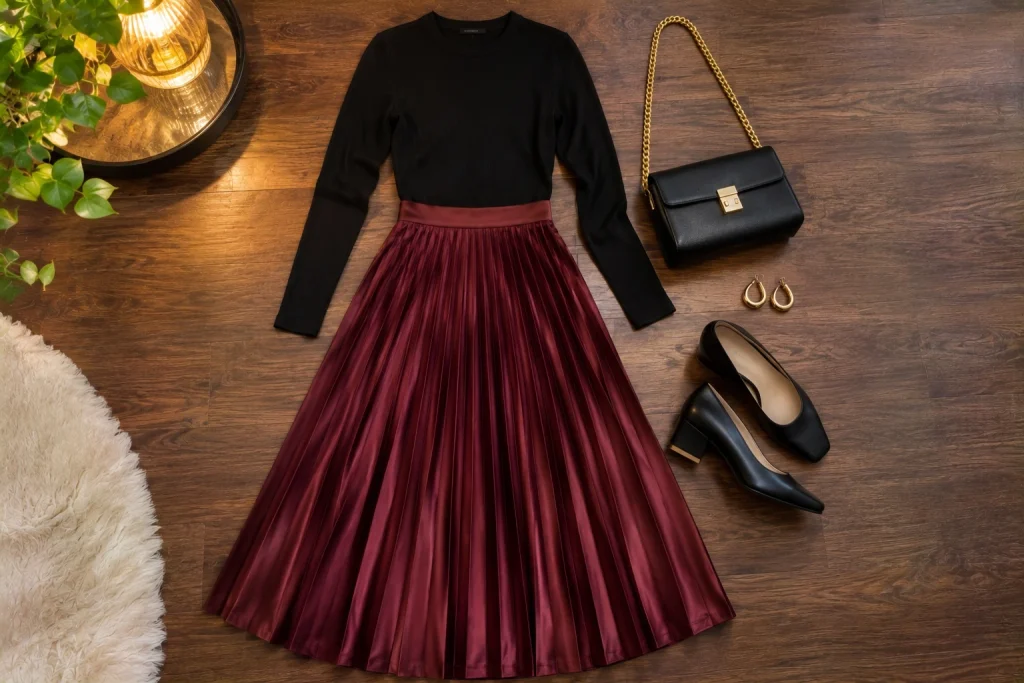
A closer-fitting top balances the volume of the pleats and makes a simple evening formula. Choose a neckline and sleeve length you like; a dressier look doesn’t need bare shoulders.
Try a tonal outfit, such as a dark skirt with a similarly dark top, then add one contrasting detail: metallic earrings, a textured bag or a shoe in a different finish. Pick one. All three at once is where an easy outfit starts to look fussy. Block heels or pointed flats suit this look; if you choose heels, make sure the hem still moves freely and you can walk comfortably to and from dinner.
Satin and thin fabrics deserve a look in the light where you’ll wear them. Some materials show outlines or turn sheer under strong light, so choose underlayers based on the actual skirt.
5. A long layer over a simple inner outfit
This one takes a little more trial and error, so I’d save it until the other four feel easy. A longer cardigan, duster or blazer can work over pleats when the layers are intentional. Keep the inner top fitted and plain and leave the long layer open, so it falls straight instead of clinging to the skirt.
Compare lengths in a mirror. A layer that ends exactly where the skirt is widest can look heavy, while one that ends a few inches above or below the hem usually looks more balanced. Use a bag that doesn’t crush the pleats as you walk; a crossbody can bunch fabric at the hip, so adjust the strap or carry it on your shoulder instead.
Check the details that make an outfit wearable
Before you head out, sit down, climb a step and walk at your normal pace. Fix one problem at a time:
- Bulky tuck: try a thinner top or a smaller front tuck.
- Jacket catches at the waist: wear it open or try a different length.
- Hem catches on shoes: compare the shoe shape and the skirt’s actual length.
- Static cling: a slip or a cotton layer underneath usually helps more than spraying the fabric.
Care for pleats so they last
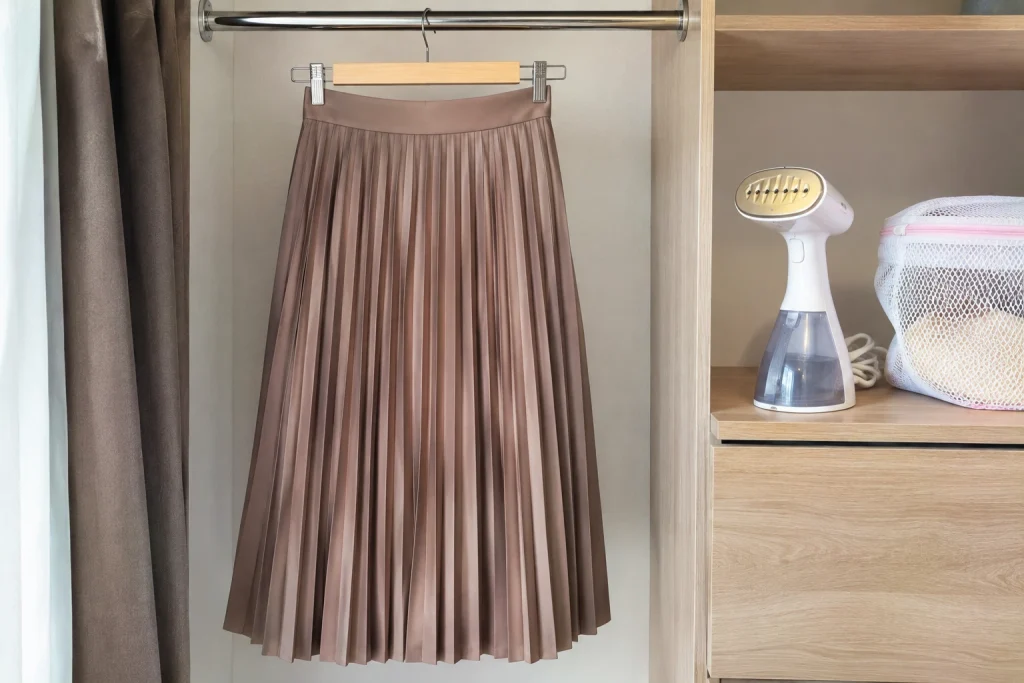
Always follow the care label. Most polyester pleated skirts have heat-set pleats that survive gentle washing: turn the skirt inside out, use a mesh bag on a cold, gentle cycle or hand wash, and hang it to dry by the waistband. Avoid high heat in the dryer, which can soften pleats.
Store the skirt hanging from a clip hanger rather than folded; it’s the best thing you can do for the pleats. If pleats crease or soften, a garment steamer held a few inches away usually revives them; don’t press an iron flat across the pleats, which can leave shiny marks or flatten them. Photograph the outfits you like best so you can repeat them without thinking.