

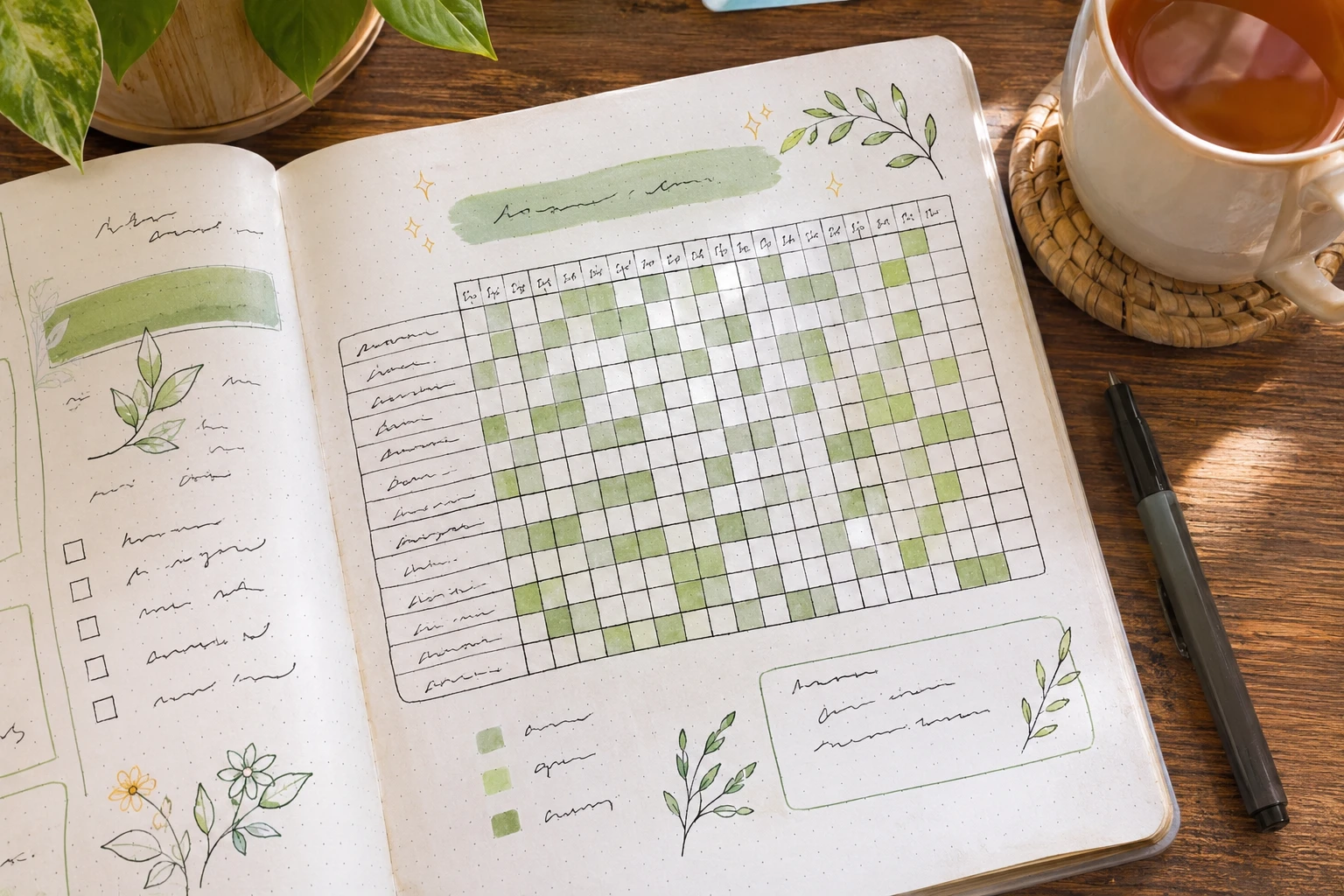
A habit tracker is about the simplest tool there is for building better routines: list a few habits and tick them off each day. In my opinion, its real value is honesty. A growing row of ticks is motivating, and the blank spaces show you exactly what isn’t working. These habit tracker journal ideas focus on layouts you’ll actually keep up with, not ones that look impressive for a week.
We’ll cover choosing habits worth tracking, quick layouts to draw, setting up your first month and reviewing it so the tracker actually changes something.
What you’ll need
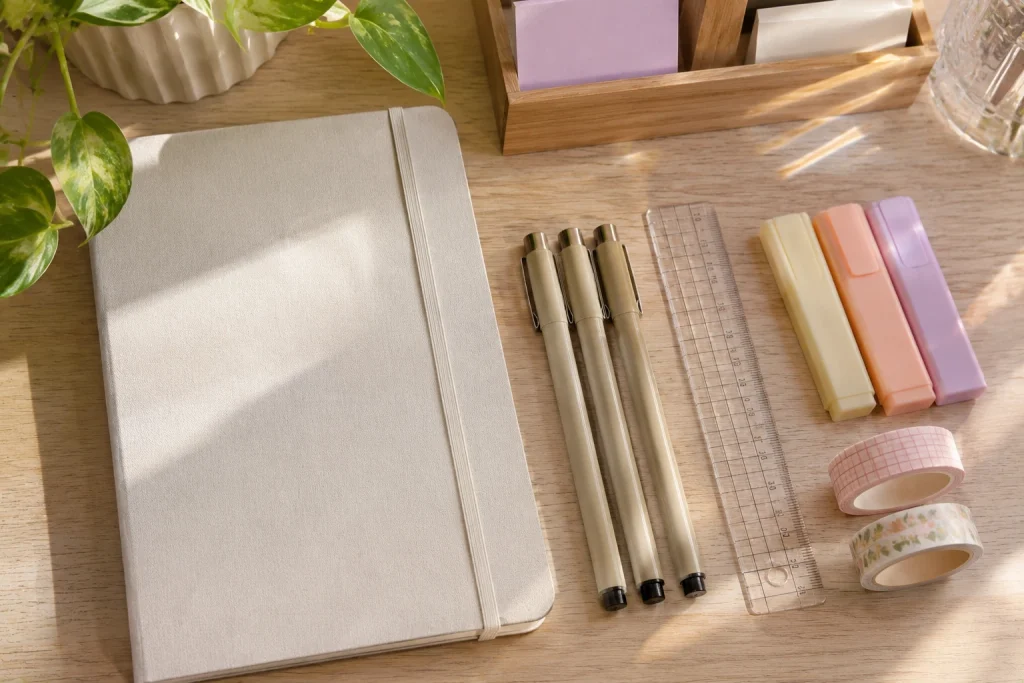
- A notebook. Dot grid notebooks make drawing grids and boxes easy. A5 size, about 5.8 × 8.3 in (148 × 210 mm), is popular because it fits in a bag but has room for a monthly grid.
- A fine-liner pen that doesn’t bleed through the page.
- A ruler.
- Optional: a few colored pens or highlighters, washi tape and stickers.
You can also print a free tracker template, but drawing your own lets you design it around your habits.
Choose 3 to 6 habits
If I could give only one tip, it would be this one. The most common mistake is tracking too much. Twenty habits make the tracker feel like a report card and are easy to abandon. Start with three to six, and make each one specific enough that you know whether you did it:
- “Exercise” becomes “a 20-minute walk.”
- “Read more” becomes “read 10 pages.”
- “Drink water” becomes “drink 6 glasses of water.”
- “Sleep better” becomes “phone away by 10 pm.”
Mix habits you want to build with one or two you already do most days. Seeing some easy ticks keeps you motivated while the harder habits develop.
Habit tracker layouts to try
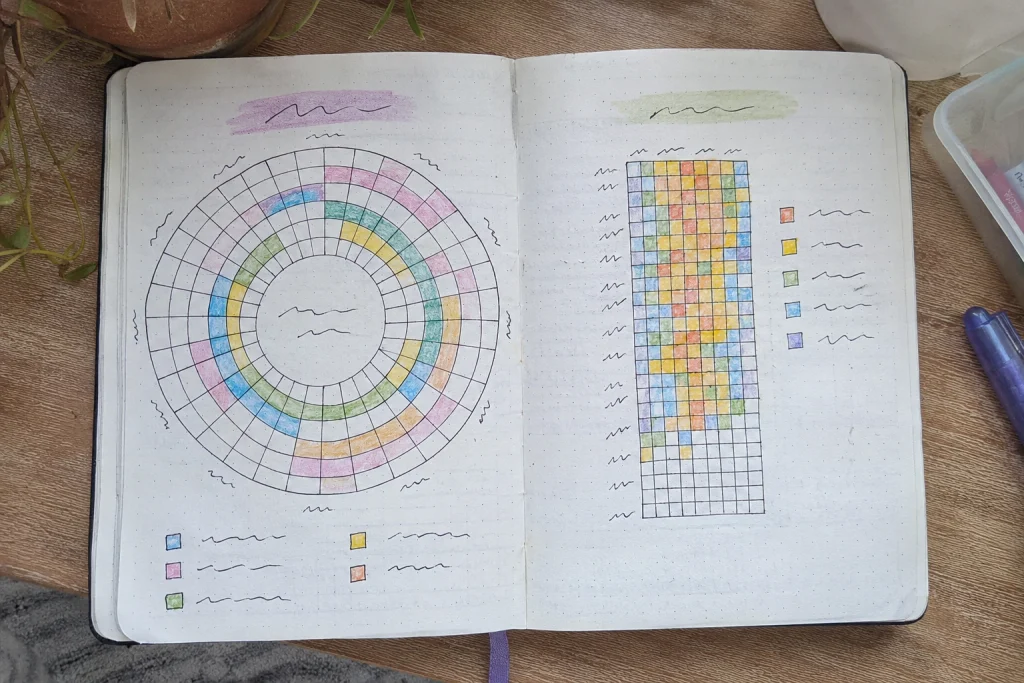
| Layout | How it works | Best for |
|---|---|---|
| Monthly grid | Habits down the side, days 1–31 across the top; fill a box each day | Seeing a whole month at a glance |
| Weekly tracker | A small grid on each weekly page | People who plan week by week |
| Circle tracker | A circle divided into 30 or 31 segments, one ring per habit | A more decorative page |
| Year in pixels | One small square per day for the whole year, colored by mood or one habit | Spotting long-term patterns |
| Single-habit page | One habit with a big visual, like a jar of 30 circles to fill | Focusing on one important habit |
| Sleep or water log | Bars or glasses to fill in daily | Health-related habits |
My pick for beginners is the monthly grid. If you’re new to journaling, the monthly grid is the easiest to start with and the quickest to fill in each day.
How to set up a monthly grid
- Write the month at the top of a fresh page.
- Down the left side, write your habits, one per row, leaving about two dot-grid rows for each.
- Across the top, number the days of the month. On an A5 page in landscape, a box of two dots per day fits 31 days comfortably.
- Draw the grid lines with a ruler, or leave it as dots for a lighter look.
- Add a small key if you’ll use different marks, for example a full fill for done and a dot for partly done.
- Leave space at the bottom for monthly notes and a short review.
Setting up a new month takes about 15 minutes, which makes it a nice end-of-month ritual.
Make it a habit to track
Ironically, tracking needs to become a habit too. Keep the journal somewhere you’ll see it, such as on your bedside table or next to the kettle, and fill it in at the same time each day. Evening works well, since you know what you did. If you miss a few days, fill in what you remember and carry on. A tracker is a tool, not a test.
Review it at the end of the month
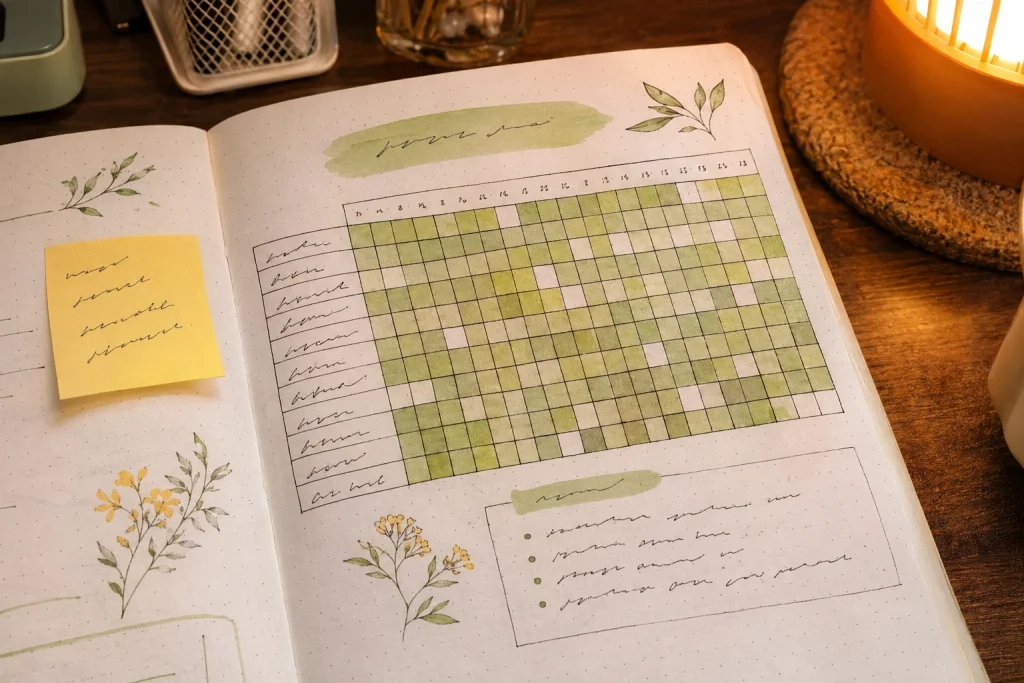
The review is where a habit tracker actually helps. Before setting up the next month, look at the grid and ask:
- Which habit did I do most consistently, and what made it easy?
- Which habit did I skip most, and why? Was it too big, at the wrong time of day, or not important to me?
- Do any patterns stand out, such as missing habits on weekends?
- What one change would make next month easier?
Make the hard habits smaller rather than giving up on them. If “20-minute walk” kept getting skipped, try “10-minute walk” next month.
Paper or app?
Personally, I’d start on paper; ticking a box by hand is part of what makes the habit stick. Habit tracking apps send reminders and keep streaks automatically, which some people love. A paper tracker has different strengths: you see the whole month at once, there’s no notification pulling you into other apps, and the act of filling a box by hand feels more deliberate. Many people use both, with an app for reminders and a journal for the monthly picture and review. Choose whichever you’ll actually open every day.
Decorating your tracker
A little decoration makes the page something you look forward to opening. Simple ideas: pick a color for each month and use it for the title and fills, add a small doodle that fits the season, or use washi tape along the top edge. Don’t let decorating become a barrier. A plain grid you use is far better than a beautiful one you never fill in.
Habit ideas to track
- Health: water, steps, stretching, a walk, vegetables with dinner, bedtime.
- Mind: reading, journaling, a few minutes of quiet, no phone in the first hour.
- Home: making the bed, a 10-minute tidy, dishes done before bed, watering plants.
- Creativity: drawing, practicing an instrument, a crochet row, writing a letter.
- Money: no-spend days, packing lunch, checking your budget weekly.
- Connection: messaging a friend, calling family, a screen-free evening.
Common mistakes
- Tracking too many habits at once.
- Vague habits you can’t clearly tick off.
- Spending more time decorating than tracking.
- Treating a missed day as failure. Patterns matter more than perfect streaks.
- Skipping the monthly review, which is where change happens.
My advice: start next month with just three habits. If you tick them most days, add a fourth. Growing slowly beats starting with ten and quitting by week two.
If you enjoy collaging and decorating your pages, these junk journal ideas for beginners are a fun next step. For colorful touches, try a little paint from this watercolor guide for beginners.