
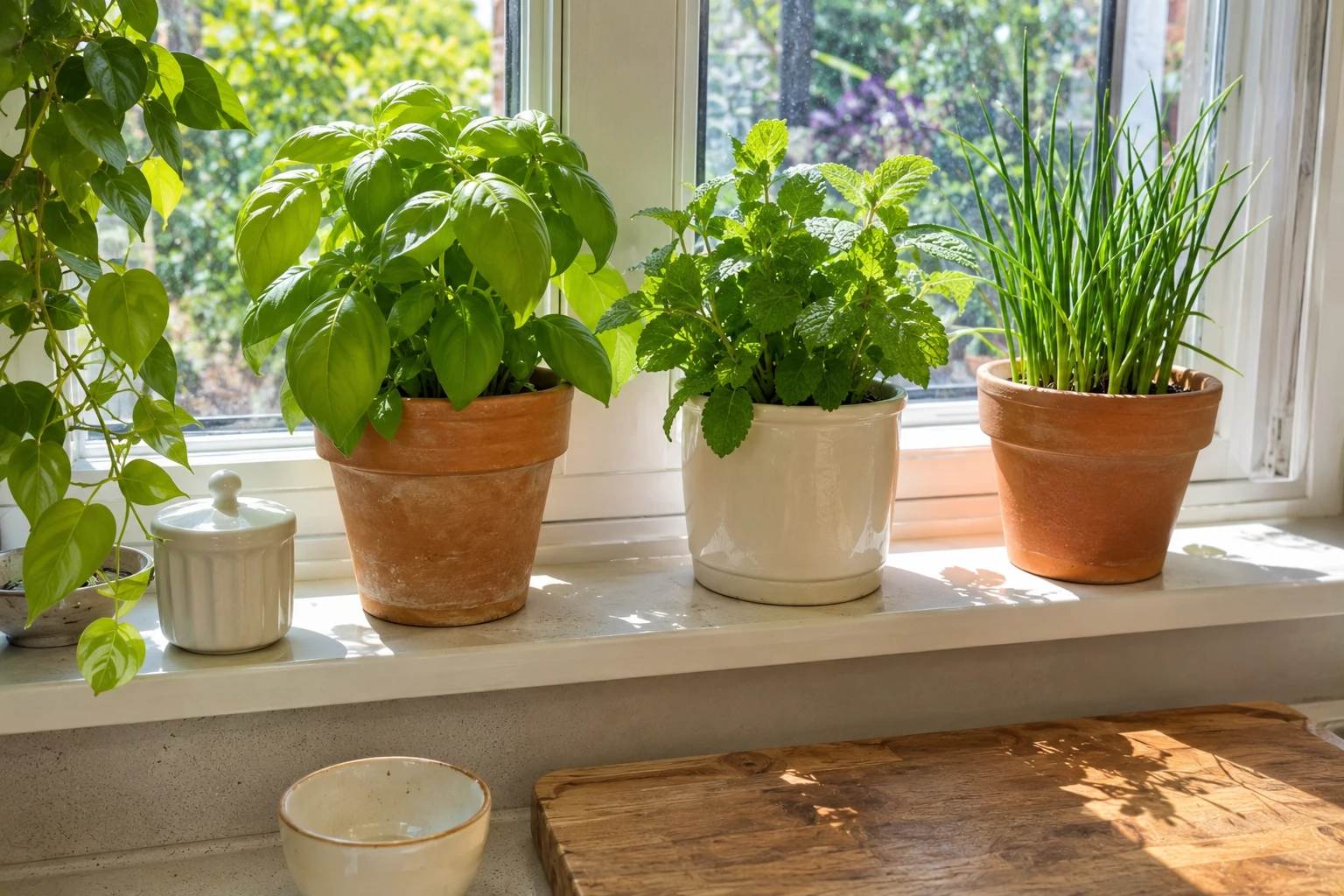
Fresh herbs make everyday cooking taste better, and the little plastic packs from the store wilt within days. An indoor herb garden on a sunny windowsill gives you basil for pasta, mint for tea and chives for eggs whenever you want them. In my opinion, herbs are the most rewarding plants for beginners, because you get to use what you grow. This indoor herb garden for beginners guide covers which herbs grow best indoors, how much light they need and how to water and harvest them so they keep producing.
Light is the most important factor
Most culinary herbs come from sunny places and need a lot of light. As a guide, aim for at least six hours of bright light a day. In the Northern Hemisphere, a south- or west-facing window usually works best, while east-facing windows can work for herbs that tolerate a little less sun, such as mint, parsley and chives. North-facing windows rarely give enough light for herbs.
If your windows are dim, an LED grow light solves the problem. Keep it close to the plants, often around 6 to 12 inches (15 to 30 cm) above them, and run it for about 12 to 16 hours a day on a timer. Follow the light’s instructions for distance.
The best herbs to grow indoors
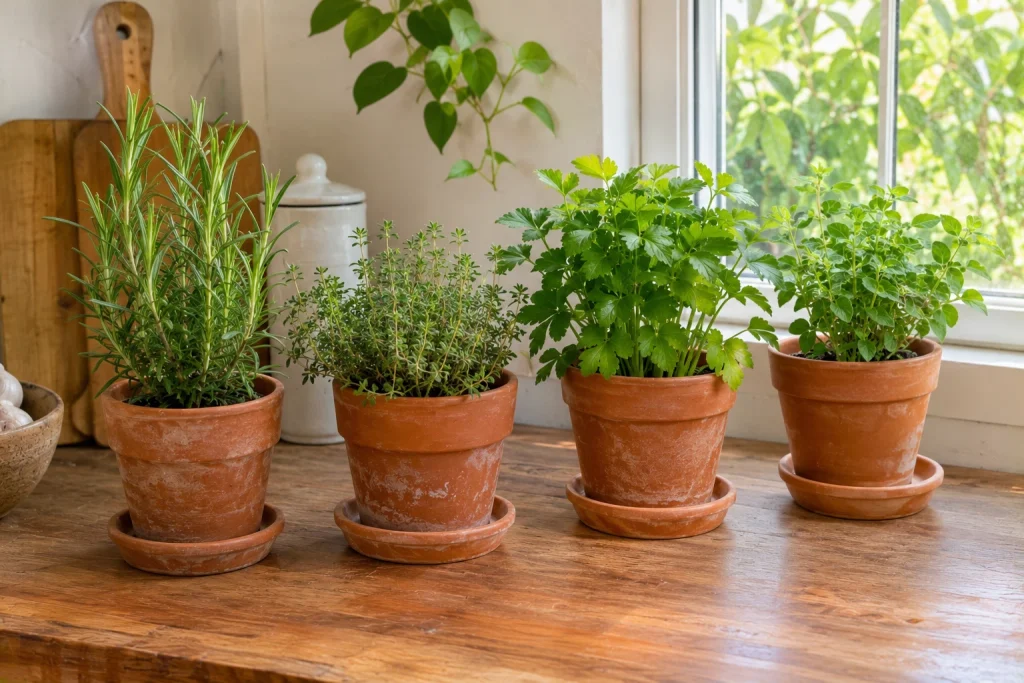
| Herb | Light | Water | Tips |
|---|---|---|---|
| Basil | Lots of sun; warmth | Keep lightly moist | Pinch off tops to keep it bushy; keep away from cold glass |
| Mint | Medium to bright | Keep moist | Spreads fast; always give it its own pot |
| Parsley | Medium to bright | Keep lightly moist | Grows slowly from seed; seedlings are easier |
| Chives | Medium to bright | Water when the top inch is dry | Cut from the outside; regrows quickly |
| Thyme | Bright | Let soil dry between waterings | Likes gritty, fast-draining soil |
| Rosemary | Very bright | Let soil dry between waterings | One of the harder herbs indoors; needs the most light |
| Oregano | Bright | Let soil dry between waterings | Trailing habit; harvest often |
| Cilantro (coriander) | Bright but cool | Keep lightly moist | Flowers and fades quickly; sow small batches every few weeks |
If you grow just one, I’d make it mint or chives. For a first garden, basil, mint, chives and parsley are the most forgiving.
Seeds, seedlings or supermarket pots?
For a first garden, I’d buy young plants rather than starting from seed. Seeds are cheapest and fun to watch, but some herbs, like parsley and rosemary, are slow to start. Young plants from a garden center give you a head start. Supermarket herb pots are crowded with many seedlings in one small pot and often collapse within weeks; if you buy one, gently divide it into three or four smaller clumps and repot each in fresh potting mix.
Pots and soil
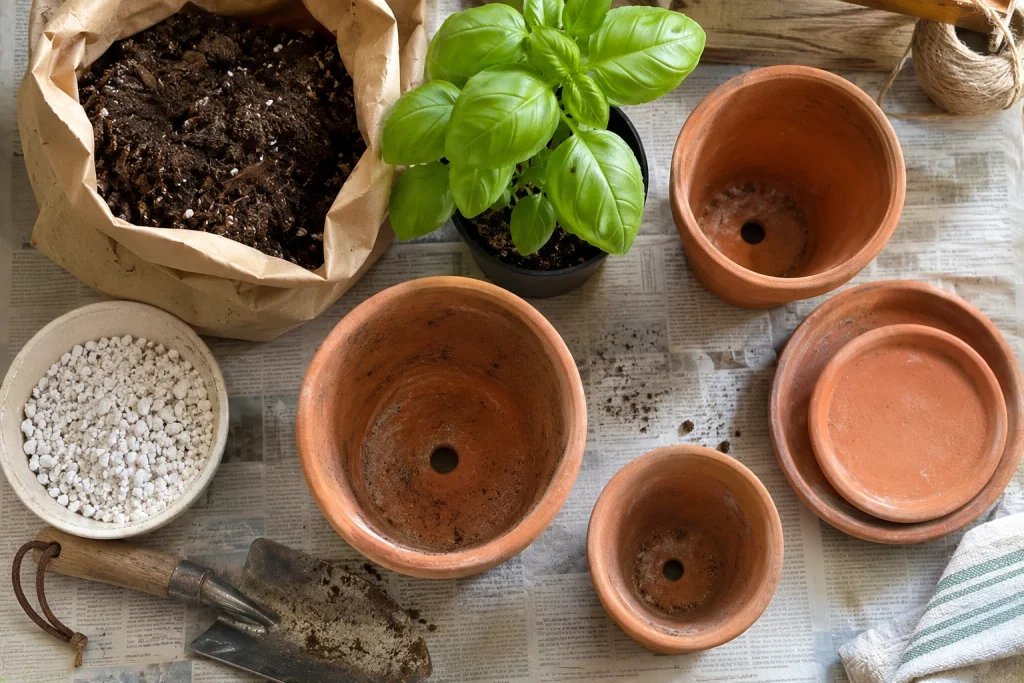
Every pot needs drainage holes, because herbs hate sitting in wet soil. Use pots at least 5 to 6 inches (13 to 15 cm) across for most herbs, and a saucer underneath to protect the windowsill. Terracotta dries out faster, which suits thyme, rosemary and oregano. Plastic or glazed pots hold moisture longer, which suits basil, mint and parsley.
Fill pots with indoor potting mix, not garden soil, which compacts in containers. For Mediterranean herbs like rosemary and thyme, mix in some perlite or grit for extra drainage. Grouping herbs with similar watering needs together in one long planter makes care easier.
Watering
Overwatering is the most common way indoor herbs die. Check the soil with a finger before watering. Herbs that like moisture, such as basil and mint, need water when the surface feels dry. Mediterranean herbs need the top inch or two to dry out first. Water thoroughly until a little drains out, then empty the saucer after 15 minutes so roots aren’t standing in water.
In winter, when light is weaker, herbs grow more slowly and need less water.
Harvest often, but not too much
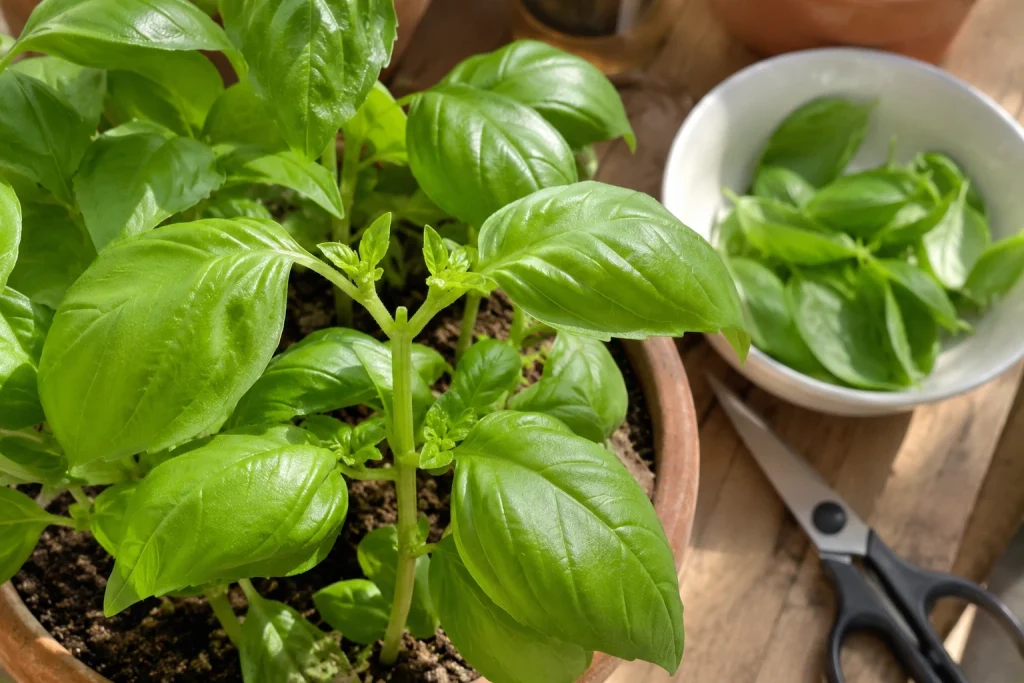
This is the step most beginners are too shy about. Regular harvesting keeps herbs bushy and productive. A good general rule is to never take more than about a third of the plant at once, so it has enough leaves left to recover.
- Basil: pinch off the top pair of leaves just above a leaf joint. Two new stems will grow from there. Remove flower buds as soon as they appear.
- Mint and oregano: cut whole stems back by a third.
- Chives and parsley: cut the outer stems near the base and leave the young center growing.
- Rosemary and thyme: snip the soft green tips, not the woody stems.
Feeding
Potting mix contains nutrients for a few weeks to a few months. After that, a diluted liquid fertilizer every few weeks during spring and summer keeps leaves green and growing. Use less than the label suggests for edible herbs, since too much fertilizer can reduce their flavor.
Common problems
| Problem | Likely cause | Fix |
|---|---|---|
| Leggy, stretched stems | Not enough light | Move to a sunnier window or add a grow light |
| Yellow lower leaves | Overwatering | Let soil dry more; check drainage |
| Wilting with dry soil | Thirst | Water thoroughly |
| Black spots on basil leaves | Cold drafts or cold glass | Move away from the window at night in winter |
| Tiny flies around the soil | Fungus gnats from wet soil | Let the top layer dry out between waterings |
Using and storing your harvest
Cut herbs just before cooking for the best flavor. If you harvest more than you need, stand soft herbs like basil and parsley in a glass of water on the counter, like flowers. Chop extras and freeze them in an ice cube tray topped with water or olive oil, ready to drop into soups and sauces. Woody herbs like rosemary and thyme dry well: tie small bundles and hang them upside down somewhere warm, dry and out of direct sun, then store the leaves in a jar.
A note for pet owners
Not all herbs are safe for cats and dogs. The ASPCA lists basil, rosemary and thyme as non-toxic to cats and dogs, while mint, oregano, chives and parsley appear on its list of plants toxic to pets. Check the ASPCA plant database for anything you grow, and keep toxic herbs well out of reach.
Styling your herb garden
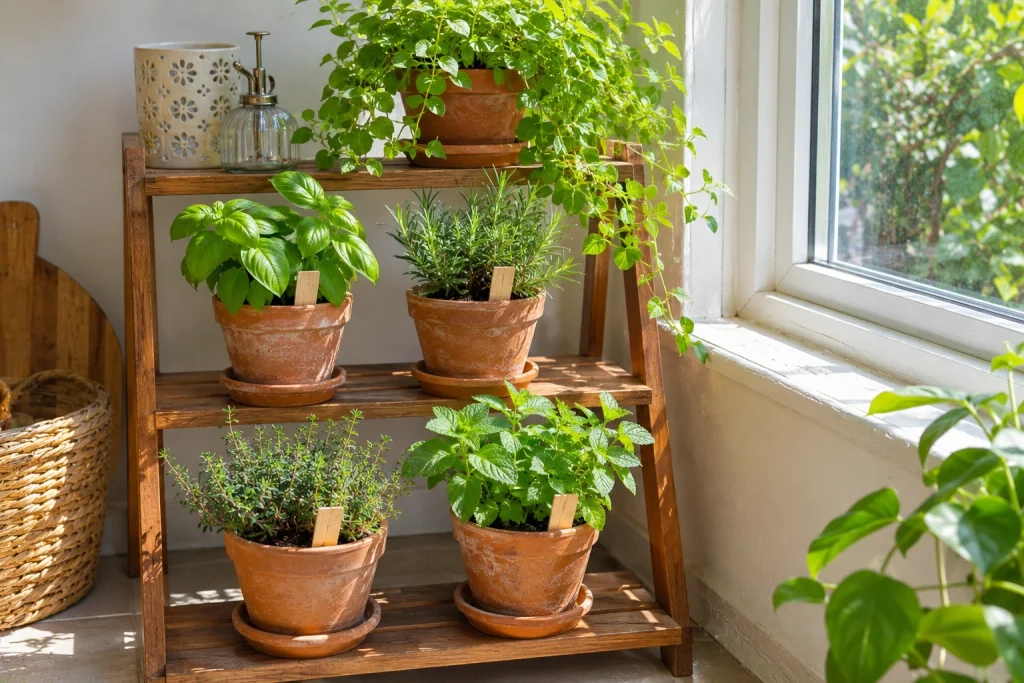
A row of matching terracotta pots on a windowsill always looks good. Other ideas: a long rectangular planter, a tiered plant stand beside a sunny window, or a wall-mounted rail with hanging pots. Label each pot with a small wooden marker, especially while seedlings look alike.
If you’re unsure, start with two pots on your sunniest windowsill. Once you’ve kept those going for a month, add a third.
If you have a sunny balcony, these small balcony seating ideas leave room for herbs outdoors in summer. Once your herbs are growing, these small pantry organization ideas help you keep dried herbs and spices tidy too.