
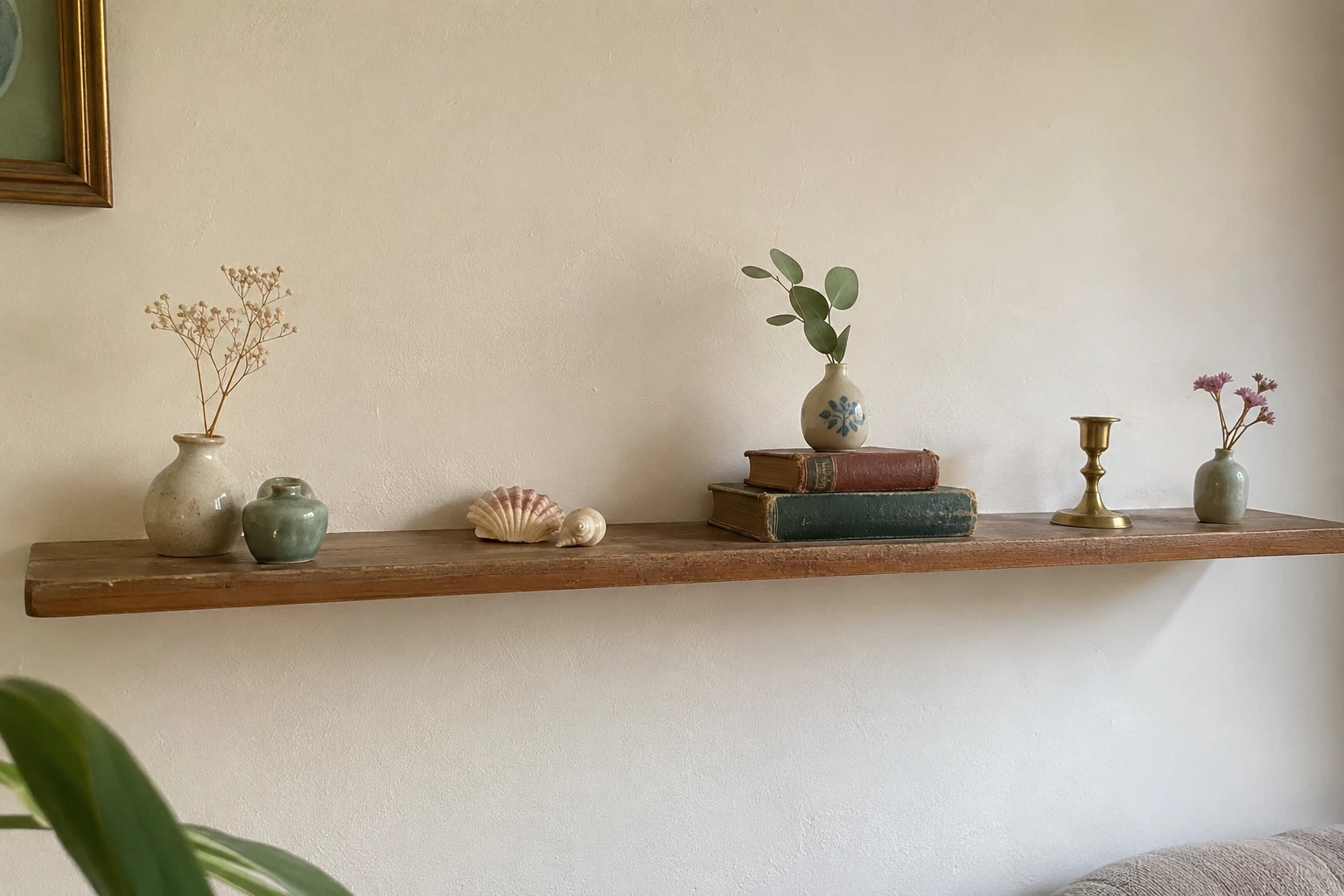
I think every home needs one spot where the small, meaningful things get seen: the shell from a trip, the tiny flea-market vase, the ceramic bird you couldn’t leave behind. Spread across every surface, those pieces turn into clutter you dust around and stop noticing. A trinket shelf gives them one home, and these trinket shelf ideas show how to make it look curated instead of crowded.
We’ll cover choosing a shelf that fits your collection, grouping pieces so they look intentional and keeping everything dust-free and secure. You don’t need new decor to start. Honestly, the best trinket shelves are built almost entirely from things people already own.
What makes a trinket shelf look curated, not cluttered
The difference usually comes down to five habits. Edit before you arrange. Group similar pieces instead of spacing them evenly. Repeat a color or material at least twice. Vary heights so the eye moves along the shelf. And leave empty space between groups, so each one has room to be noticed.
Keep those five in mind as you work through the steps below. If a shelf ever starts to feel busy, one of them is usually missing.
1. Start with what you already have
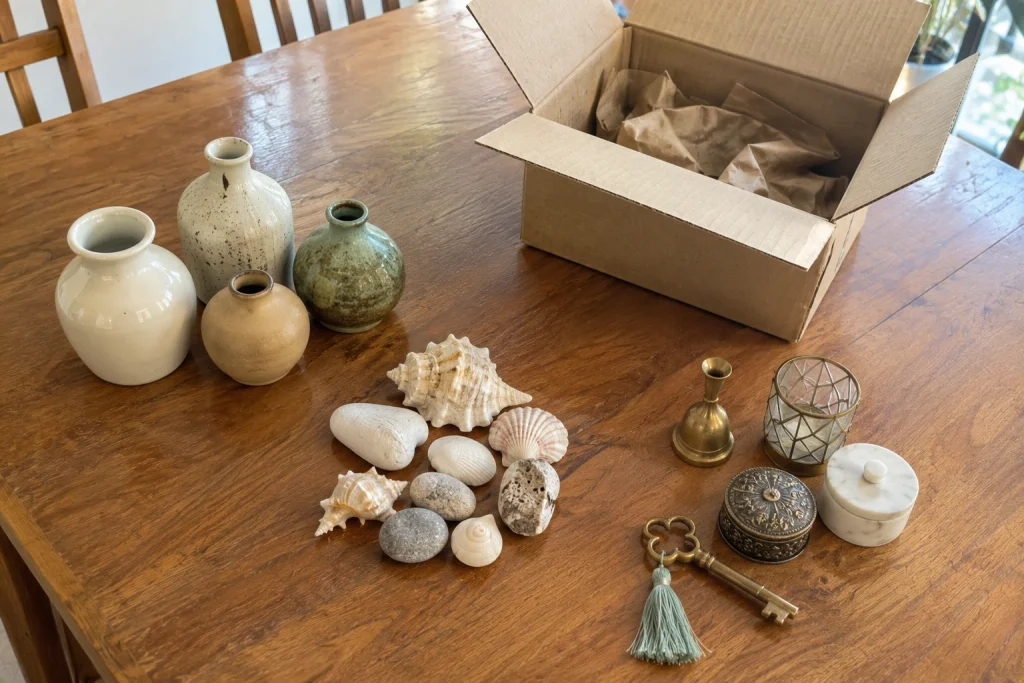
Gather every small decorative object in the house onto a table or the bed. Seeing them together shows you what your collection actually is: mostly ceramics, mostly travel finds, mostly things in one color. That pattern becomes the theme of the shelf.
Sort everything into three piles:
- Display: pieces you love looking at and that suit the theme.
- Rotate: pieces you like but that don’t fit right now. They go into a labeled box for later.
- Let go: broken pieces, duplicates and things you kept out of guilt.
Be strict with the display pile. A shelf with 15 well-chosen objects almost always looks better than one with 40.
2. Choose a shelf that fits the size of your collection
The shelf should suit the scale of what goes on it. Tiny objects disappear on a deep bookshelf, while tall vases won’t fit in a compartment shelf. Use this as a guide:
| Shelf type | Best for | Typical depth |
|---|---|---|
| Compartment or cubby shelf (like an old printer’s tray) | Very small pieces under about 2 in (5 cm) | 1.5–3 in (4–8 cm) per compartment |
| Picture ledge | Flat items, postcards, small frames, plates | 3–4 in (8–10 cm) |
| Floating or wall shelf | Mixed heights and small groups | 6–8 in (15–20 cm) |
| Glass-front cabinet | Fragile or valuable pieces that collect dust | Any |
A compartment shelf is the classic trinket shelf, because each little box frames one object and does the organizing for you. If you already have a bookcase, you can dedicate a single shelf at eye level to trinkets instead of buying anything new.
3. Group by color, theme or material
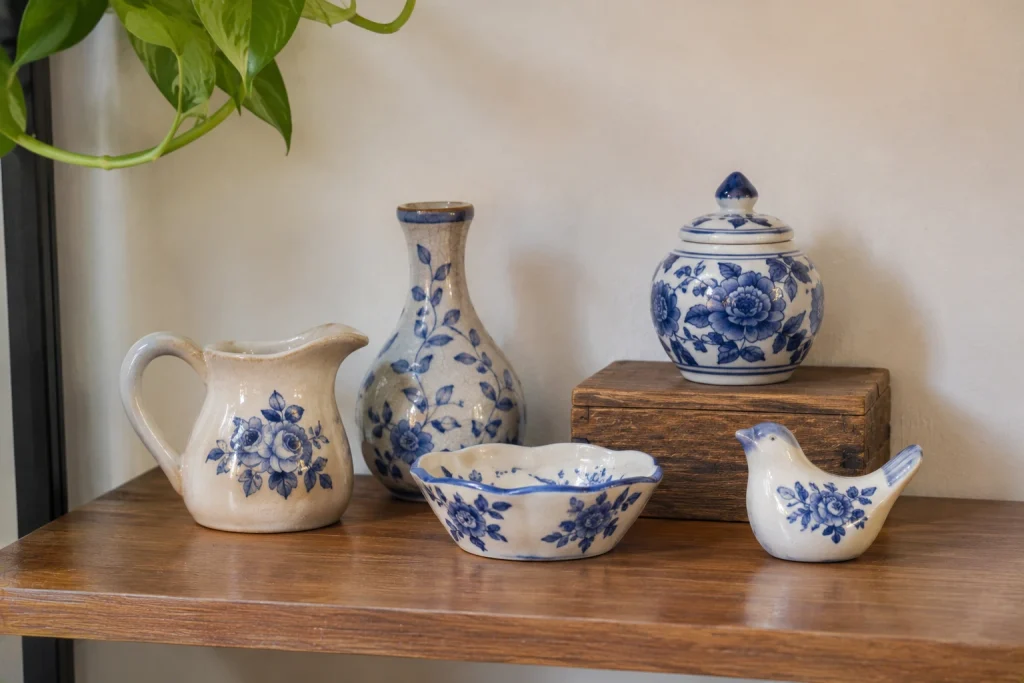
Grouping is what turns a collection into a display. Choose one way to group and stick to it for each shelf or section:
- By color: all the blue and white pieces together, or a shelf that moves gradually from warm to cool tones.
- By theme: travel souvenirs, nature finds such as shells, stones and seed pods, or miniature animals.
- By material: ceramics on one shelf, brass on another, glass where light can shine through it.
Groups of three or five usually look more natural than pairs or long even rows. Within each group, overlap pieces slightly front to back rather than lining them up like soldiers.
4. Vary the height with simple risers
If your shelf looks flat, this is the fix I’d try first. When everything sits at the same height, a shelf looks flat. Lift smaller pieces on a short stack of books, a small wooden box, an upturned bowl or a clear acrylic riser. Then arrange each group as a loose triangle: one taller piece at the back, a medium piece beside it, and the smallest at the front.
Repeat that triangle along the shelf with the tall pieces in slightly different positions. A zigzag of taller points across the shelf keeps the eye moving without looking planned.
5. Leave breathing room
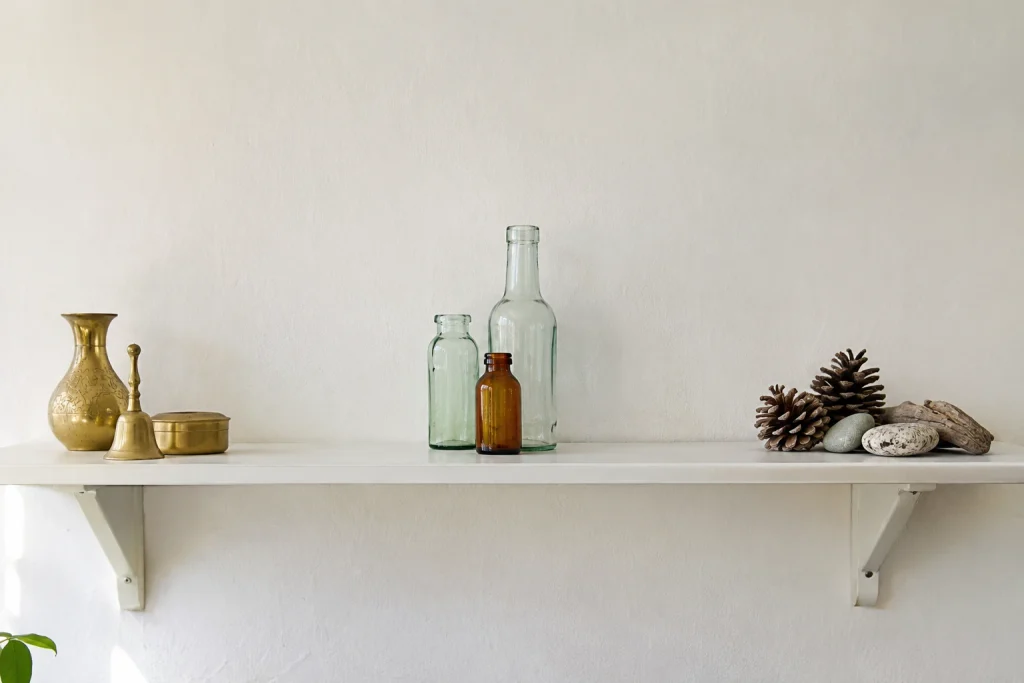
If you remember one rule from this post, make it this one. Empty space is part of the display. As a starting point, aim to leave roughly a third of each shelf clear, with 1 to 2 inches (2.5 to 5 cm) between groups. It feels like too much space at first, but it’s what lets each object stand out.
If you can’t stop adding pieces, set a simple limit: one new object in means one object out to the rotate box. That rule keeps the shelf from slowly filling back up.
6. Keep it dust-free and secure
Small objects collect dust quickly. A soft makeup brush or a clean paintbrush dusts tiny pieces faster than a cloth, and a weekly two-minute pass keeps the shelf looking fresh. If dusting feels like a chore, a glass-front cabinet or a shelf with a door saves a lot of time.
Secure anything fragile. A small piece of museum putty or display gel under each item stops it from sliding when a door slams or a cat explores. Mount wall shelves into studs or with anchors rated for the weight, and keep breakable or tiny swallowable pieces well out of reach of young children and pets.
Trinket shelf ideas by theme
If you’re not sure where to begin, pick one of these themes for a single shelf and build from it:
- Vintage finds: tiny brass bells, old perfume bottles, thimbles, small enamel boxes and mismatched egg cups. Brass and glass look warm together, and one small vintage tray can hold the smallest pieces.
- Nature table: shells, sea glass, smooth stones, seed pods, a feather and a bud vase with one dried stem. Keep it to natural colors and add a single piece of wood or slate as a base.
- Tiny ceramics: mini vases, small pinch pots, a ring dish and a little bird or animal. Choose one glaze color, such as white, cream or blue, and let the shapes do the work.
- Travel souvenirs: a small object from each trip, perhaps with a folded ticket or postcard tucked behind it. Group by region or by color rather than by date.
- Miniatures: tiny books, doll-house food, model cars or little figures. Compartment shelves suit miniatures best, since each one gets its own frame.
- Kitchen trinkets: small spice tins, egg cups, tiny jugs and a framed recipe card on a narrow ledge above the counter, away from the heat of the stove.
Mixing two themes can work, but keep a link between them, such as a shared color. Three or more themes on one shelf is where the clutter feeling usually creeps back in.
7. Rotate the display through the year
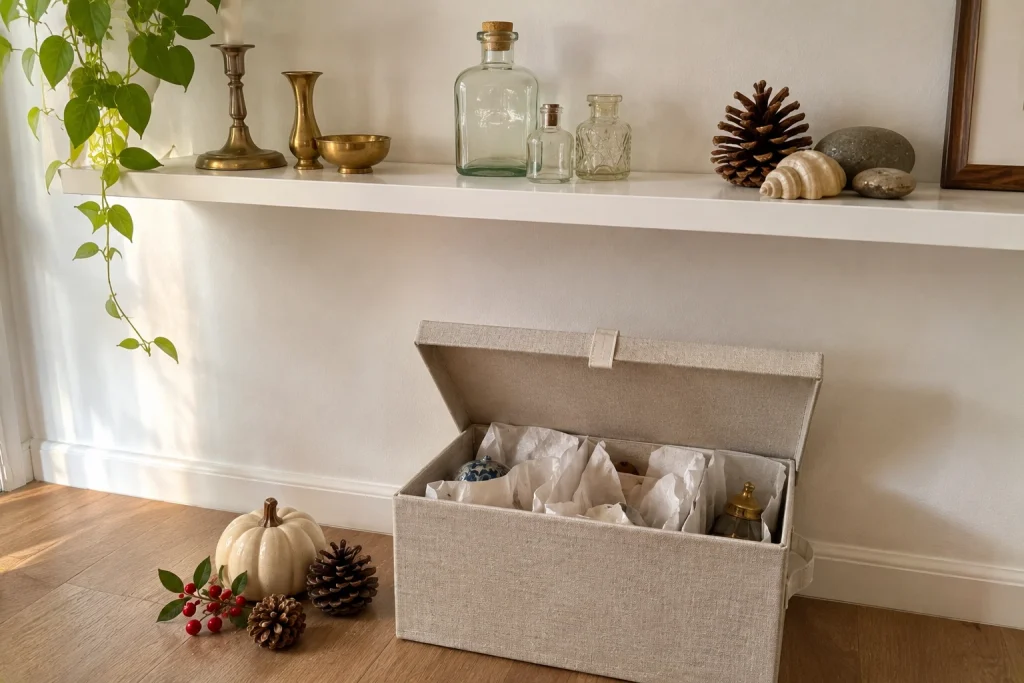
Rotation is my favorite idea on this list, because it keeps the shelf fresh without adding a single new object. A rotate box keeps the shelf interesting without adding clutter. Every few months, or with the seasons, swap a few pieces: shells and sea glass in summer, small pumpkins and pinecones in autumn, tiny ornaments in December. You enjoy more of your collection, and the shelf never stays exactly the same long enough to fade into the background.
Short on time? Do just three things today: edit the collection, group by one color or material and clear about a third of the shelf. That alone gets you most of the way to a display that looks curated.
Handmade pieces suit a trinket shelf especially well. These air-dry clay trinket dishes are small enough to fit a compartment shelf, and a few painted terracotta pots can add color and height to a wider shelf.