
“Business casual” might be the most confusing dress code there is, because it means something different in every workplace. In a creative studio it can mean dark jeans and a sweater; in a law office, tailored trousers and a blazer every day. In my opinion, the smart move is a small set of pieces that covers the whole range. These business casual outfits for women show what the dress code usually includes, the core pieces worth owning and ten outfits you can copy.
The single most useful tip comes first: watch what respected colleagues wear for your first week or two, and check any written dress code. Then use the guide below to match it.
What business casual usually means
Business casual sits between formal business attire, such as suits, and everyday casual clothes. In most workplaces it means neat, well-fitting clothes in simple colors and good fabrics, without the full formality of a suit. Workplaces tend to fall into one of three levels:
| Workplace | What it often looks like |
|---|---|
| Relaxed (tech, creative, many startups) | Dark jeans, knit tops, sweaters, clean sneakers or loafers, an unstructured blazer sometimes |
| Standard (most offices) | Tailored trousers, chinos, knee-length skirts, blouses, knitwear, cardigans, blazers, loafers and flats |
| Client-facing (finance, consulting, law) | Tailored trousers or skirts, blouses, blazers most days, sheath dresses, low heels or polished flats |
When in doubt, dress one level more formally than you think you need on your first days. It’s easier to relax your outfits later than to recover from looking too casual.
The core pieces worth owning
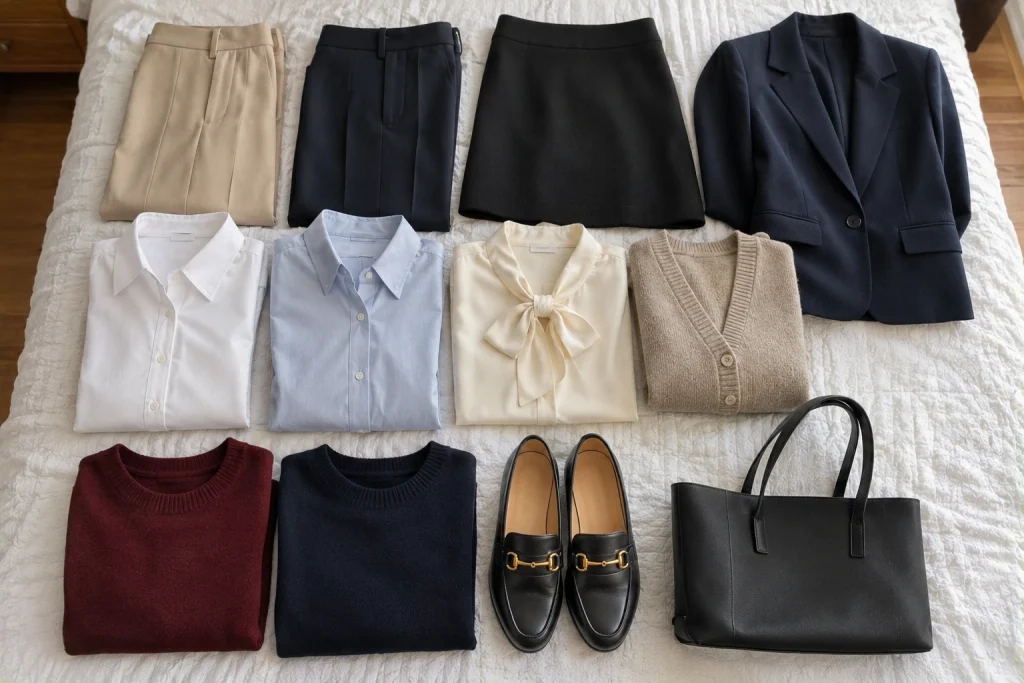
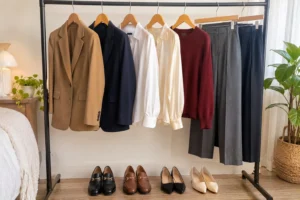
If I were starting a work wardrobe from scratch, I’d buy trousers that fit perfectly before anything else. You don’t need a huge work wardrobe. Around 15 well-chosen pieces in two or three coordinating colors make dozens of outfits:
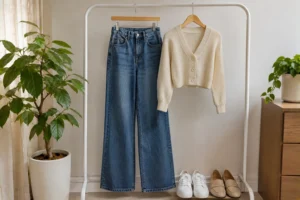
- Bottoms: two pairs of tailored trousers (for example navy and black or gray), one pair of dark, plain jeans if your office allows them, one knee-length or midi skirt.
- Tops: two button-down shirts, two blouses, two fine-knit sweaters, and a couple of plain knit tees or shells for layering.
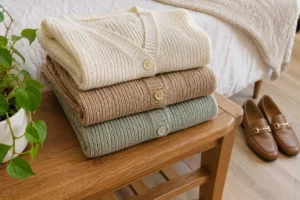
- Layers: one blazer in a neutral color and one cardigan.
- Dresses: one simple sheath or wrap dress.
- Shoes: loafers, pointed or almond-toe flats, and either low block heels or polished ankle boots.
- Bag: a structured tote that fits a laptop if you carry one.
Navy, black, gray, camel, cream and white are the easiest base colors. Add one or two accent colors you enjoy, such as burgundy, soft blue or olive, in tops and knitwear.
10 business casual outfits for women
- The classic: navy tailored trousers, white button-down shirt, camel blazer, loafers.
- Soft polish: gray trousers, cream silky blouse, navy fine-knit cardigan, pointed flats.
- Knit day: black trousers, burgundy merino crewneck, simple pendant necklace, ankle boots.
- Skirt and sweater: camel midi skirt, cream fine-knit sweater tucked in, brown belt, knee boots in winter or flats in summer.
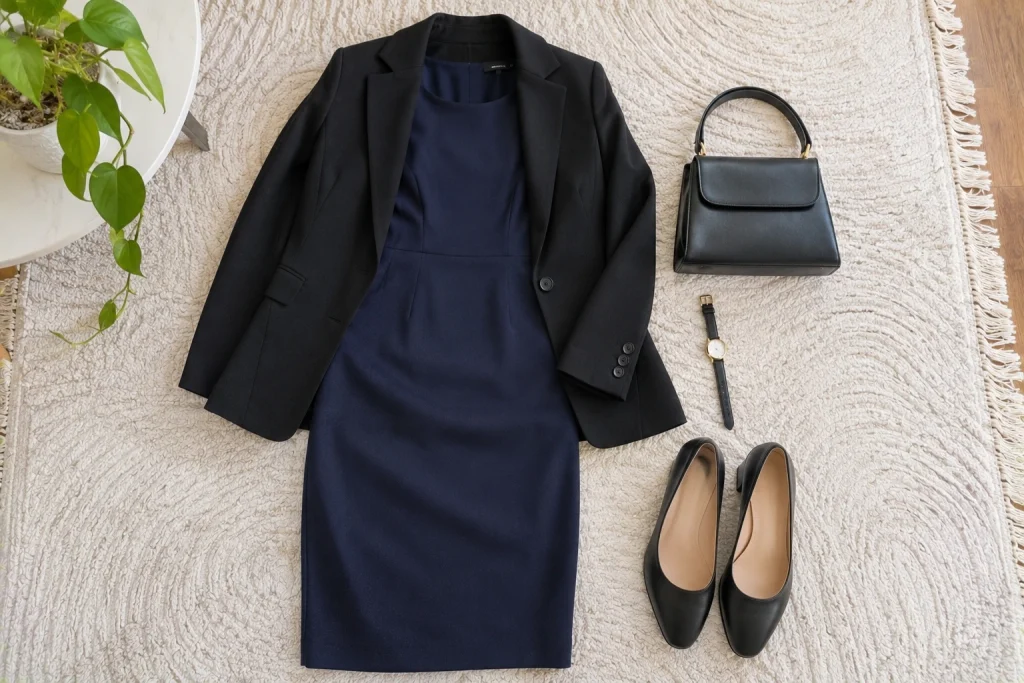
- Dress and blazer: navy sheath dress, black blazer, low block heels.
- Friday, relaxed office: dark straight jeans, striped button-down, navy blazer, loafers.
- Layered collar: chinos, button-down shirt with a sweater over it and the collar showing, loafers.
- Wide-leg trousers: cream wide-leg trousers, fitted black knit top, structured bag, pointed flats.
- Monochrome: all-gray or all-camel trousers and knit, with one contrasting accessory.
- Summer office: linen-blend trousers, sleeveless shell top, light cardigan for air conditioning, leather sandals if allowed.
What usually isn’t business casual
Rules vary, but these items are commonly considered too casual for most business casual offices:
- Ripped, faded or very light-wash jeans
- Leggings worn as trousers, and athletic wear
- Flip-flops and beach sandals
- Tank tops with thin straps, unless covered by a layer
- Graphic tees and hoodies
- Very short skirts and very low necklines
- Wrinkled, stained or pilled clothes
Fit, fabric and grooming matter most
Simple clothes look professional when they fit and are cared for. A few habits make a big difference:
- Trousers should sit smoothly at the hips without pulling, and the hem should graze the top of your shoe.
- Blazer shoulders should sit at your shoulder line, and you should be able to button it without strain.
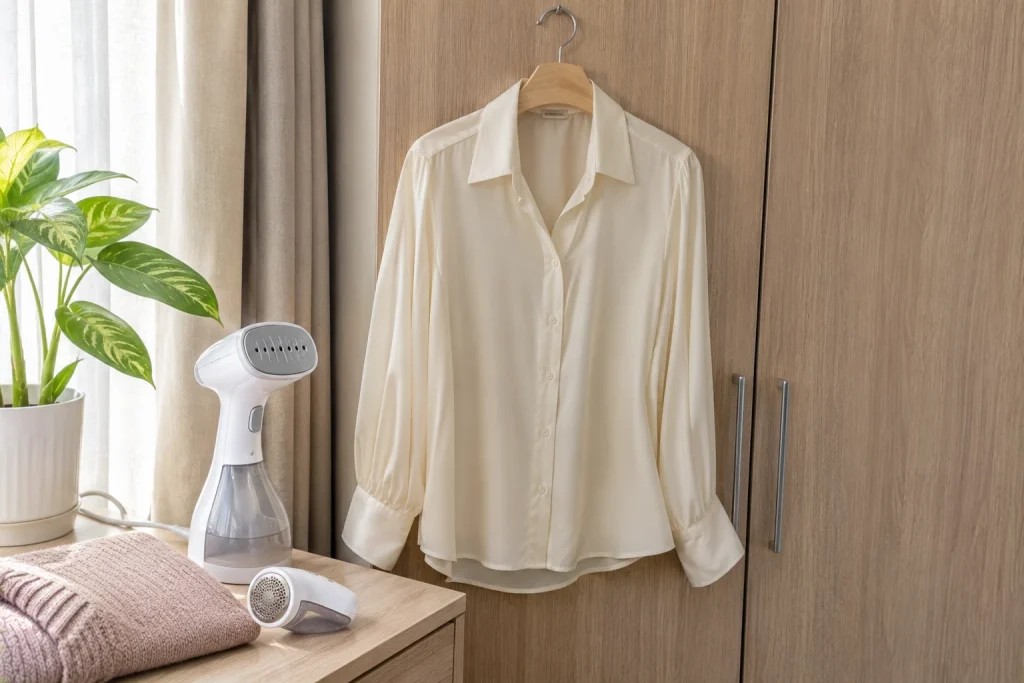
- Steam or iron shirts and blouses; a handheld steamer is quick in the morning.
- Remove pilling from knits with a fabric shaver.
- Keep shoes clean and repair worn heels.
Basic tailoring, such as hemming trousers or taking in a waist, is inexpensive and makes affordable pieces look far more polished.
Business casual through the seasons
Summer: choose breathable fabrics such as linen blends, cotton and lightweight wool. Sleeveless shells and short-sleeve blouses work in many offices, with a light cardigan for air conditioning. Midi skirts and cropped trousers keep you cool without looking too casual.
Winter: layer fine merino knits under blazers, swap flats for polished ankle boots, and add wool trousers or tights with skirts. A long wool coat over business casual outfits looks smart on the commute.
Spring and autumn: blazers and cardigans do most of the work, layered over shirts and knit tops you can strip back to as the day warms up.
Business casual on a budget
A tailor is a better investment than a pricier label. Building a work wardrobe doesn’t have to be expensive. Start with the pieces you’ll wear most, such as trousers, one blazer and comfortable shoes. Secondhand and consignment stores are excellent for blazers, wool trousers and leather bags, which last for years. Buy in a tight color palette so every new piece works with what you already own, and add one piece at a time as you notice gaps.
Shoes for business casual
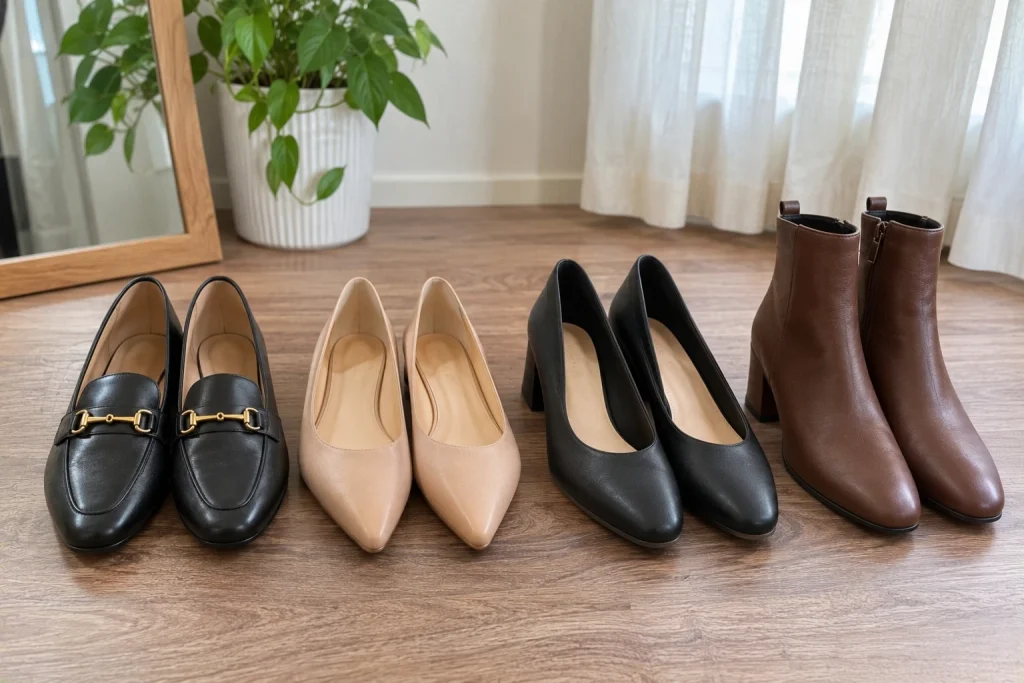
My rule: if you can’t walk a few blocks in them, they’re not work shoes. Comfort matters, because you may walk and stand more than you expect. Loafers, pointed or almond-toe flats, low block heels and sleek ankle boots cover almost every business casual office. In relaxed offices, clean, minimal leather sneakers are often fine. Keep a pair of office shoes at your desk if you commute in sneakers or boots.
Accessories
Keep accessories simple: a watch, small earrings, a delicate necklace and a structured bag look polished in any office. A silk scarf adds color to a neutral outfit, and a belt finishes a tucked-in shirt or sweater. Save very large, noisy or flashy pieces for after work.
When in doubt, I’d dress one step smarter than you think you need to for the first few weeks. It’s much easier to relax your outfits later than to recover from looking too casual on day one.
For relaxed office outfits, these casual blazer outfits show how far one blazer can go. On warm days, these linen shirt outfits work well in many business casual offices.