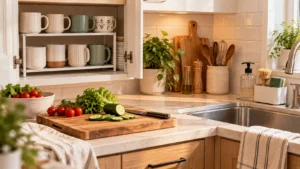
If making dinner starts with moving things off the counter, the problem is often where those things live. A prettier collection of containers will not help much without a clear place for chopping, mixing, and setting down a hot dish safely.
These small kitchen counter organization ideas start inside the cabinets. The aim is one dependable working area rather than a kitchen that stays perfectly empty.
This article contains affiliate links. As an Amazon Associate I earn from qualifying purchases.
1. Move the mug overflow into unused cabinet height
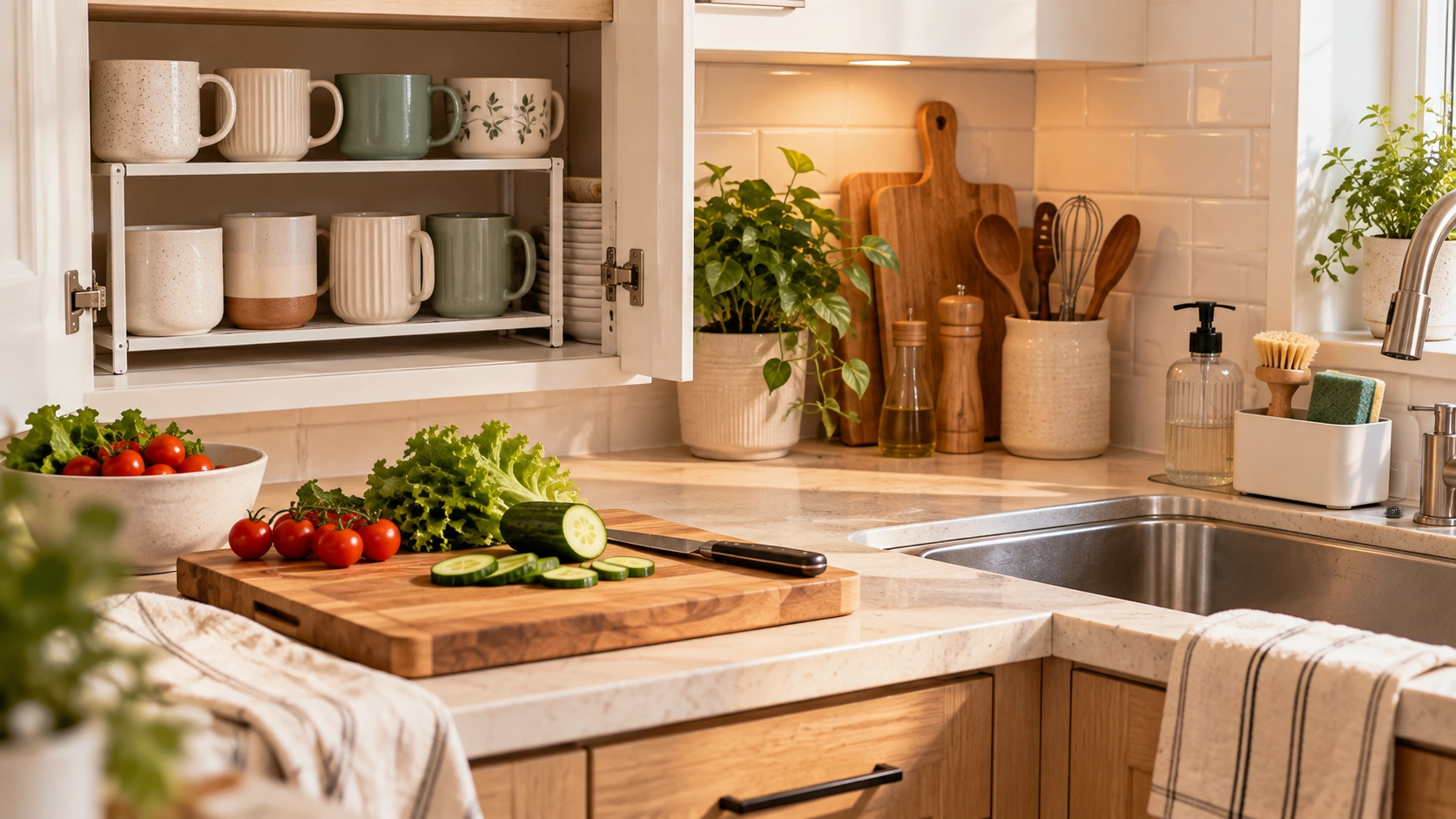
A metal cabinet shelf organizer (paid link) can create another level for compatible cups or dishes. The linked Simple Houseware option has a steel shelf surface. Measure the cabinet opening and the items you plan to store before choosing it.
Check the usable space below the shelf as well as above it. Your tallest mug needs room to move in and out. The shelf’s legs also take up space. A product’s outside dimensions alone do not tell you whether your dishes will fit.
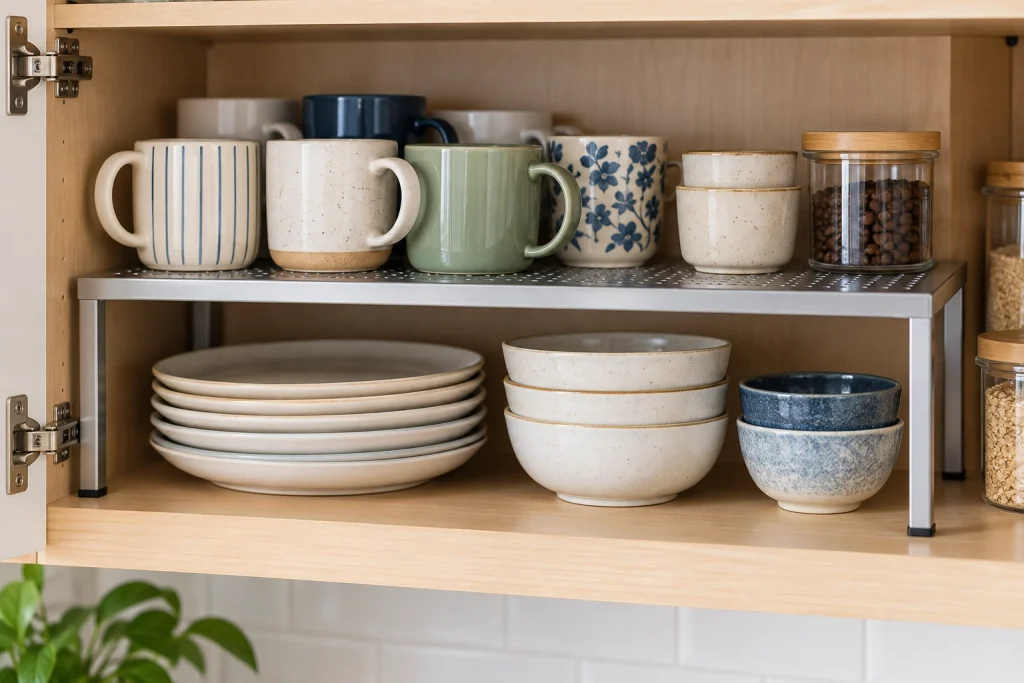
Try a paper footprint inside the cabinet before buying. Keep the shelf clear of hinges. Check the manufacturer’s load guidance for the actual arrangement. Avoid a top-heavy stack that feels unstable when you reach for a cup.
The benefit comes from returning countertop items to the cabinet. Do not automatically put the organizer on the counter. That may create another visible storage area without recovering any preparation space.
If the cabinet is already packed, remove the rarely used mugs first. Keep the daily ones near the kettle or coffee maker. Store occasional pieces elsewhere if you have a suitable spot.
2. Plan small kitchen prep space around your cutting board
Place your largest everyday cutting board on the counter. Notice the room needed for ingredients beside it. This is a more useful test than trying to leave an arbitrary percentage of counter space empty.
Keep this area free from permanent decor. A plant may look attractive beside the board but become another item to move during every meal. Put decorative pieces on a nearby shelf when practical.
Choose the working area around your kitchen layout. It should allow safe food handling and convenient cleanup. Keep it away from locations where a door, drawer, or passing person repeatedly interrupts the task.
Return the board to its usual storage place after cleaning. The empty surface still needs to remain available for the next meal. Treat it as a work area rather than an invitation for mail or shopping bags.
3. Keep only the appliances that earn their counter space
Look at the appliances you actually use during a normal week. A daily coffee maker may deserve a permanent position. A blender used occasionally may work better in an accessible cabinet.
Consider lifting and setup before moving a heavy appliance. A storage location is not useful if retrieving the machine becomes awkward or unsafe. Keep its manual’s ventilation and operating clearances in mind too.
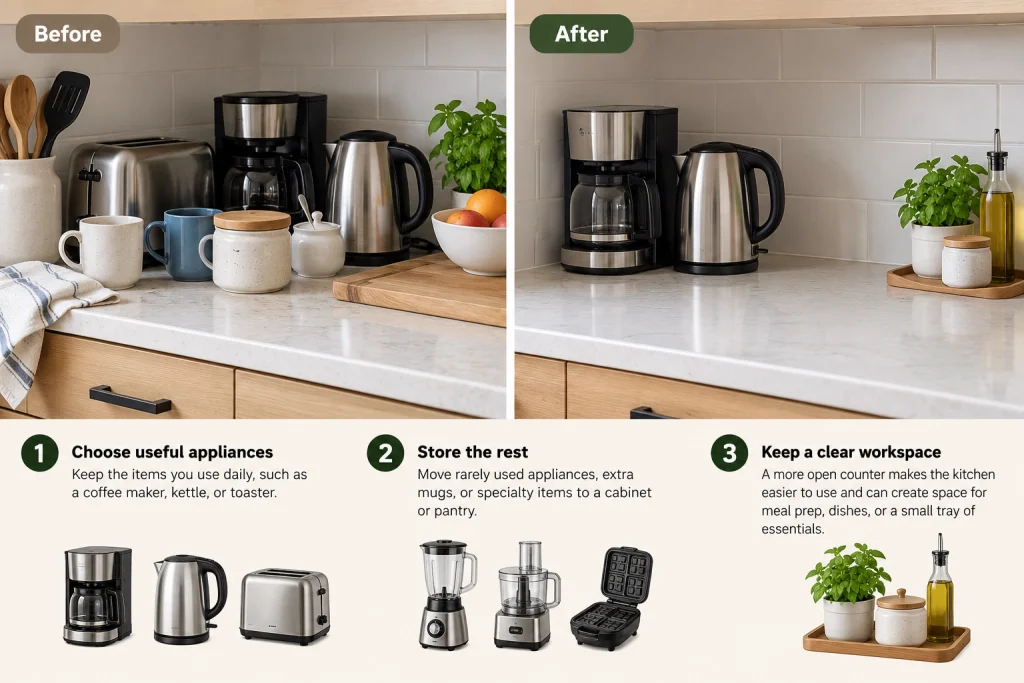
Avoid storing an appliance so tightly that you cannot access its water tank, lid, or removable bowl. Some machines need more room during use than their closed dimensions suggest.
Do not buy a new cart simply to hold rarely used equipment. First test whether the equipment needs to stay in the kitchen. A suitable nearby storage area may free space without adding another furniture footprint.
4. Keep kitchen sink organization focused on washing
Group the soap and cleaning tool you use every day. Keep refills elsewhere. Several half-used bottles can make a small sink area feel crowded without improving the routine.
Choose a holder with drainage appropriate for its location. Clean and dry the area beneath it regularly. An attractive tray that traps water may create another maintenance job.
Match the drying setup to your dishes. A large rack may be useful in one household. Another may manage with a smaller rack and prompt put-away. Test the smaller routine before replacing anything.
Leave the faucet, handles, and outlets accessible. Avoid balancing bottles on a narrow ledge. The arrangement should stay easy to use with wet hands.
5. Stop unrelated objects at the kitchen entrance
Keys, receipts, and unopened mail often arrive on the nearest clear counter. Give those items a different landing place. A bowl on an existing entry shelf may be enough for keys. Paper needs a separate place for decisions and recycling.
Watch what returns to the kitchen during the next few days. Move the new storage spot closer to the actual drop point if everyone ignores it. A system that fits the habit usually works better than a rule nobody remembers.
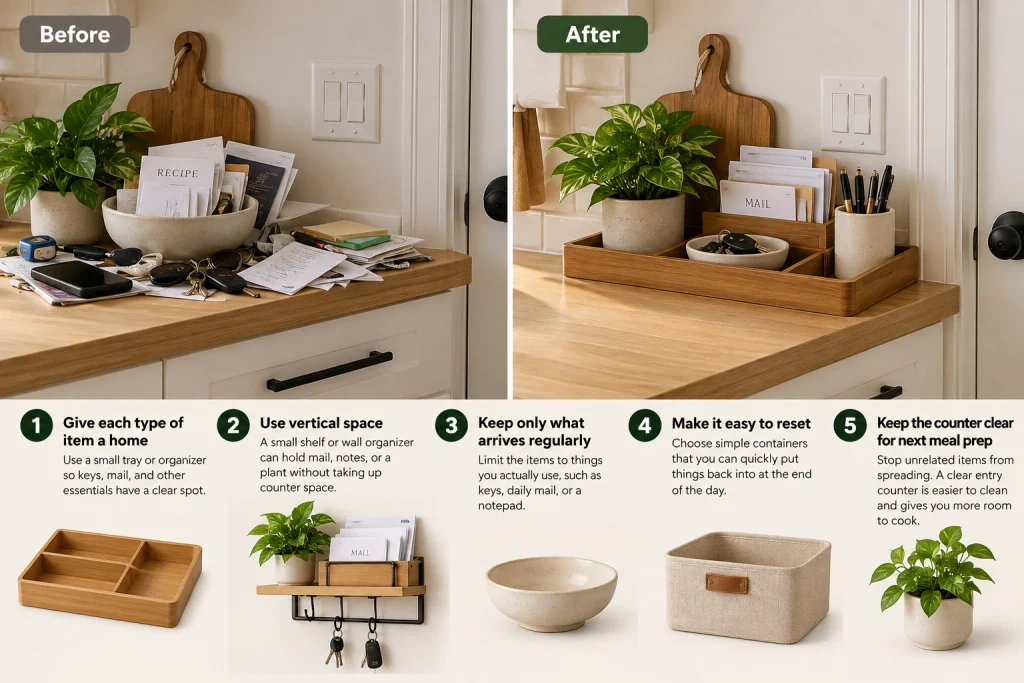
End the evening by restoring the cutting-board space. Put away only what blocks that area first. You will have a usable kitchen the next morning without resetting every cabinet or polishing every surface.
The measure of successful small kitchen counter organization is the next meal. If you can prepare it without relocating a row of containers, the arrangement is helping. Keep the storage that supports that result. Reconsider anything that makes the kitchen look organized while leaving you with nowhere to cook.